
 Mastering Geotab
★ Fleet GPS Trackers · Geotab Products
The complete Geotab lineup as it stands in late 2026, explained by installers who put these units in vehicles. What each product is, what it's built for, the specs that matter on the job, and how to pick the right one. Harnesses have their own page.
Every Geotab tracker, camera, asset tracker and add-on module in one place. Harnesses are on their own page.


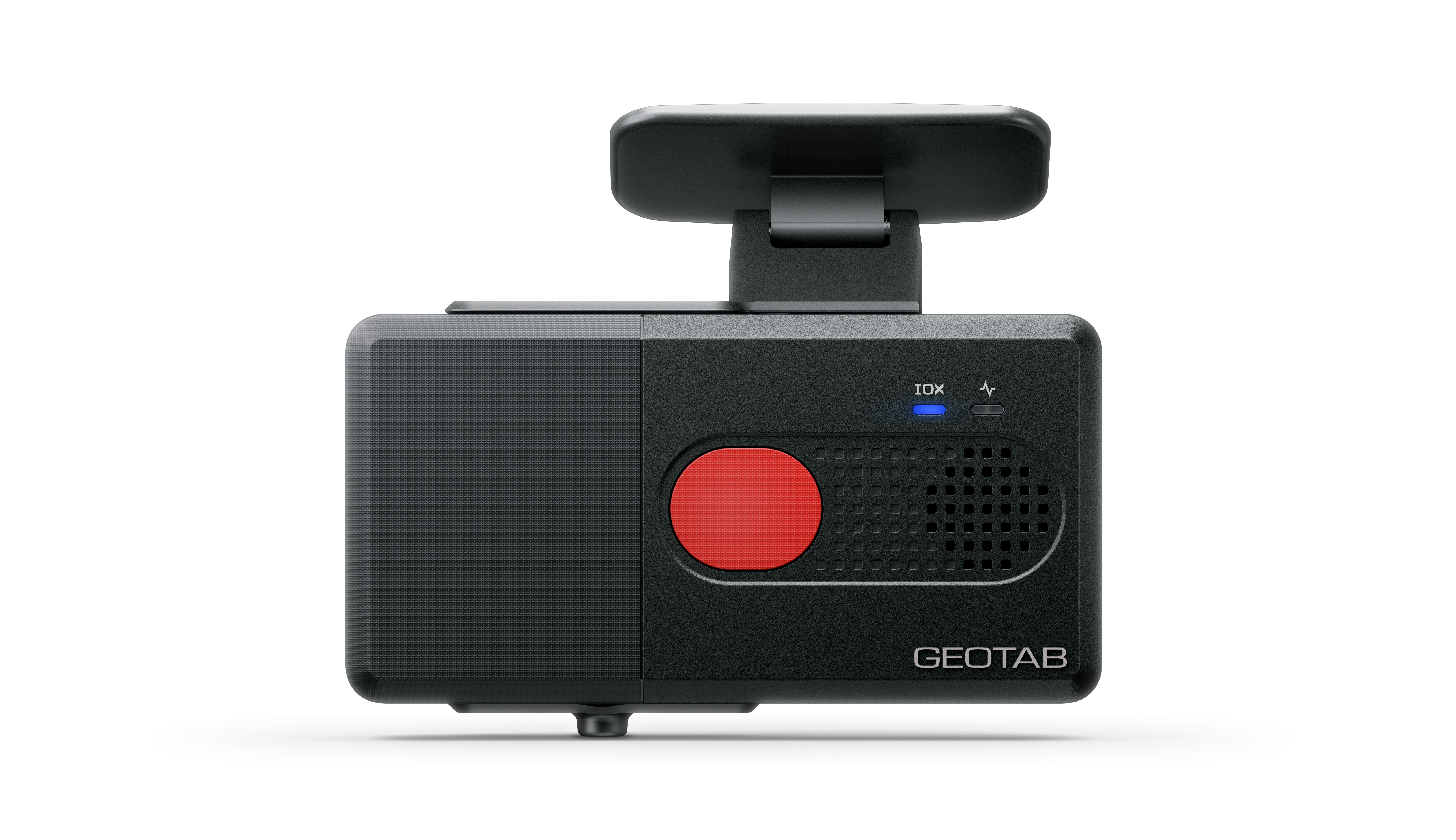


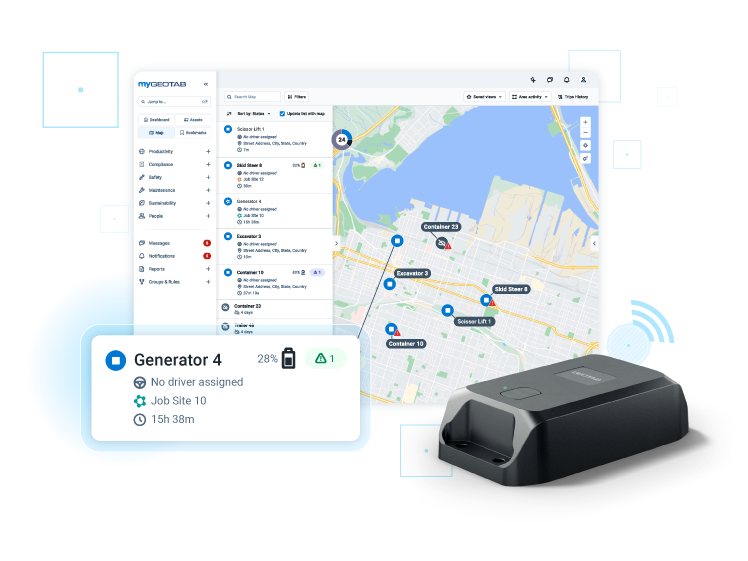


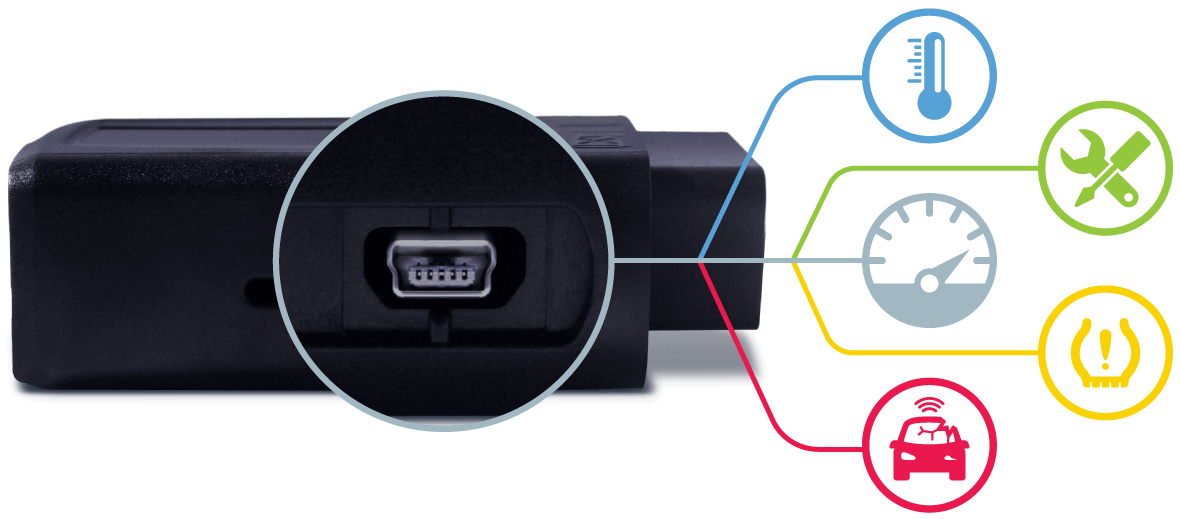


Geotab hardware falls into four groups. The GO devices are the trackers that go in the vehicle and read its data. The GO Focus cameras add video and connect to those trackers. The GO Anywhere family covers trailers and equipment that may have no power at all. And the IOX modules are add-ons that plug into a GO device to give it extra jobs, from reading a driver's ID badge to watching a snow plow's spreader.
Every one of these reports into the same MyGeotab account, so a fleet can mix and match them. A typical service fleet might run GO10 trackers in its trucks, GO Focus Plus cameras in the ones that see the most miles, GO Anywhere units on its trailers and an NFC reader so each driver signs in.
The current flagship, released in the US and Canada in April 2026. It's designed for vehicles built from roughly 2010 on and reads standard OBD-II, the J1939 heavy-truck standard and several manufacturer protocols. It connects over LTE on AT&T, Verizon and T-Mobile, locates itself with four satellite systems (GPS, GLONASS, Galileo and BeiDou) and has Bluetooth 5.4 for driver apps and asset tags. It has four configurable inputs and one output through a separate I/O harness, which is how PTO, seatbelt, door and immobilizer signals get wired in. A built-in capacitor sends a final tamper alert if someone pulls its power. Up to five IOX add-ons can stack on it.
On the job: the GO10 always goes in with a Geotab harness and uses a new connector, so older GO9 harnesses won't plug straight in. It measures about 110 by 57 by 25 millimetres and draws around 10 milliamps when the vehicle is asleep.
Everything the GO10 does, plus a Wi-Fi hotspot for in-cab tablets, satellite-ready connectivity through select carriers for areas without cell coverage, and an internal battery that keeps about five seconds of high-detail collision data if power is lost in a crash. It shares the GO10's I/O harness. Geotab announced it alongside the GO10 in February 2026; full specifications were not yet published when we wrote this.
The workhorse of the past several years and still fully supported. It has a three-axis accelerometer and gyroscope, location accuracy of about two metres, LTE on the major US carriers and support for up to five IOX add-ons. It plugs into the diagnostic port or goes in with a two or three-wire install on older vehicles and equipment. It's a small unit, about 75 by 50 by 23 millimetres.
A revision of the GO9 with more on-board storage and improved battery sensing. Its real value today is that it keeps the older diagnostic protocols the GO10 dropped, including J1850 and the J1708 heavy-truck bus. That is why Geotab still recommends the GO9B for vehicles built before the early 2010s.
A GO9 with a faster LTE modem and an on-board Wi-Fi hotspot that handles up to ten connections. It suits fleets that want connectivity in the cab without a separate router.
A sealed version built for heavy equipment, agriculture, oilfield and anything that gets pressure-washed. It is rated IP68 and IP69K, so water and dust aren't a concern, and it is much larger than a standard GO at about 159 by 122 by 31 millimetres. It goes in with a rugged harness or a three-wire install, and IOX add-ons need their own rugged harness.
| Device | Best for | Network | Install |
|---|---|---|---|
| GO10 | Most vehicles from about 2010 on | LTE Cat 1 bis | Geotab harness |
| GO10 Plus | Fleets wanting Wi-Fi or satellite backup | LTE, satellite-ready | Geotab harness |
| GO9 | General fleet use | LTE Cat 1 | Port, harness or wired |
| GO9B | Pre-2010s vehicles | LTE Cat M1 | Port, harness or wired |
| GO9+ | In-cab Wi-Fi | LTE Cat 4 | Diagnostic port |
| GO9 RUGGED | Equipment, ag, washdown | LTE | Rugged harness or 3-wire |

All three cameras pair with a GO9 or newer tracker, so video and vehicle data line up on the same timeline in MyGeotab.
A road-facing camera that records around key driving events. Its on-board AI watches following distance and detects collisions. It is the entry point for fleets that want video evidence of what happened in front of the truck without a camera pointed at the driver.
Adds a driver-facing infrared camera to a 1080p road camera, with AI that spots phone use, fatigue, smoking and unbuckled seatbelts, plus tailgating and collision-risk warnings, all spoken to the driver in the cab. It has tamper-proof storage starting at 128 GB, and a road-only version exists for fleets that don't want the cabin camera. Power comes from a smart cable, a three-wire install or an OBD cable.
New in 2026 and built for larger vehicles. On top of the road camera and an optional cabin camera, it takes up to five extra sealed cameras for sides, rear and cargo, giving a full 360-degree view. Its AI covers forward collision, traffic lights, licence plates, blind spots and people near the vehicle, and it can identify the driver by badge or face. It holds up to 2 TB across two cards and can drive a live monitor for backing and docking.
A tracker for trailers and powered equipment. It wires to 12 or 24 volt power with a three-wire install so it can log engine hours, and a backup battery lasting three to five years keeps it reporting if power drops. It can fall back to direct-to-cell satellite through T-Mobile and Rogers, reads Bluetooth tags while wired, and is sealed to IP67 and IP69K.
A battery-only tracker for anything without power: dry vans, roll-off containers, dumpsters, generators. Geotab rates its battery at up to ten years with hourly updates, and it can switch to a 15-minute theft mode. There are no wires; it mounts with screws or adhesive.
The earlier battery tracker, running on three non-replaceable lithium cells rated for three to five years. It is still documented and supported.
Small battery beacons for tools and portable equipment, made by a Geotab Marketplace partner. They don't report on their own; a GO10, a wired GO Anywhere Plus or an IOX-BT module reads them as the vehicle passes, so the office can see which truck the generator or the laser level is riding in.
IOX modules plug into the side of a GO device and chain together. They're how a basic tracker becomes a driver ID system, a cold-chain monitor or a remote immobilizer. These are the modules on Geotab's current list.
| Module | What it does |
|---|---|
| IOX-NFCREADERA | Driver sign-in with an NFC badge |
| IOX-BUZZ | Louder in-cab buzzer for driver alerts |
| IOX-GOTALK | Spoken alerts and coaching for the driver |
| IOX-AUXM | Watches up to eight on/off signals such as PTO, doors or lights |
| IOX-OUTPUTM | Lets the office switch a relay remotely, for example to immobilize |
| IOX-USB | USB power for phones and tablets in the cab |
| IOX-RS232 | Brings serial data from scales, sensors and other equipment into MyGeotab |
| IOX-CAN | Reads third-party CAN data such as tire pressure systems |
| IOX-WRKS | Plow and spreader data for public works and winter fleets |
| IOX-BT | Reads Bluetooth tags and sensors |
| IOX-SATIRDv2 | Iridium satellite communication where there's no cell signal |
| IOX-ALERT | Driver panic button |
| IOX-KEYLESS | Keyless vehicle access for shared fleets |
| IOX-BATTERY | Battery backup for the GO9 and GO9 RUGGED |
| IOX-COLD | Temperature monitoring for refrigerated loads |
| IOX-ANALOG | Reads analog voltage such as fuel level senders (still in beta) |
Start with the vehicle, not the feature list. The year of the vehicle decides between a GO10 and a GO9B, the environment decides whether you need the RUGGED, and whether the asset has power decides which GO Anywhere fits. Only then add cameras and IOX modules for the problems you actually have, because every add-on is another thing to wire, power and maintain.
The most common mistake we see is ordering the right device with the wrong harness, which turns a 25-minute install into a return trip. Check the harness before the order goes in.
Sources: Specifications come from Geotab's published product documentation on support.geotab.com, its product pages on geotab.com and its 2026 product announcements. Product images © Geotab Inc. GEOTAB is a registered trademark of Geotab Inc. API Signal is an independent installer and is not Geotab. Specifications change; confirm current details before ordering.
Tell us how many vehicles and what they are. We'll quote the hardware and the install together.