 Mastering Geotab
★ Geotab Products · IOX Add-On
The IOX-RS232 connects serial equipment on a vehicle to the Geotab GO device so its readings show up in MyGeotab next to GPS and engine data. Here is how the three versions differ and what an install involves.
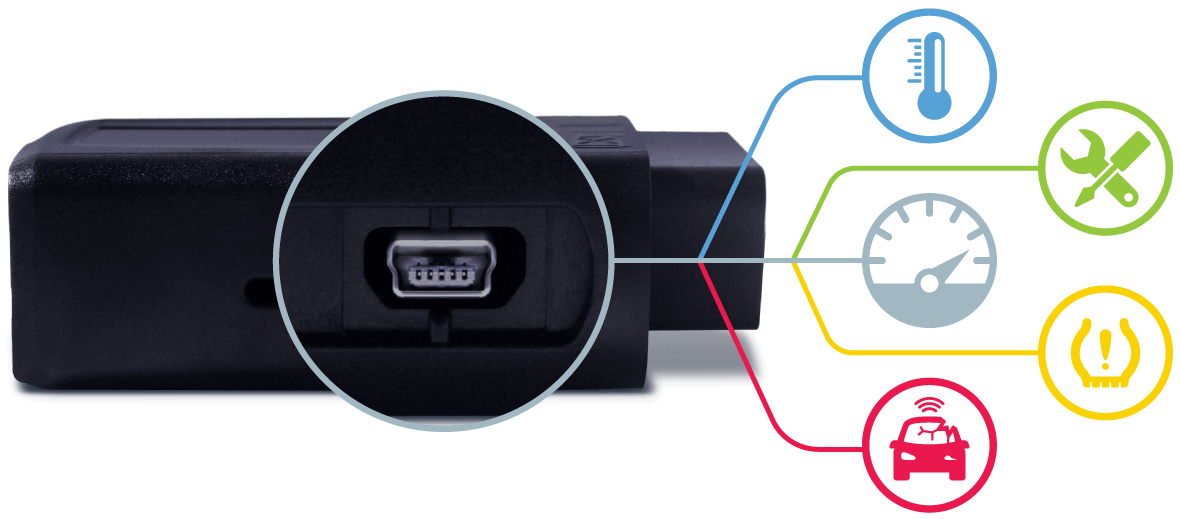
A lot of work equipment still talks over RS232, the serial standard behind the classic DB9 connector. Onboard scales, gas detection monitors and pressure monitors are examples Geotab names. On their own, those devices keep their readings to themselves, or to a display only the operator sees. The IOX-RS232 plugs into the GO device's IOX expansion port and gives that equipment a path to MyGeotab.
Once data arrives, it sits in the same platform as location, trips and engine data, and can be pulled back out through Geotab's SDK for custom reporting. The module uses Geotab's standard third-party Add-On Protocol, so the connected device or its integration has to speak that protocol.
| Spec | Detail |
|---|---|
| Versions | IOX-RS232F (female DB9), IOX-RS232M (male DB9), IOX-RS232D (Aptiv 3-way) |
| Serial rate | 300 to 115,200 baud |
| DB9 male pinout | Pin 2 RX, 3 TX, 4 DTR, 5 signal ground, 7 RTS |
| DB9 female pinout | Pin 2 TX, 3 RX, 5 signal ground, 6 DTR, 8 RTS |
| Aptiv 3-way pinout | A ground, B RX, C TX |
| Input voltage | 12 V / 24 V nominal |
| Current draw | 40 mA typical, 100 mA maximum operating; 0.4 mA sleep |
| Overall length | 1260 mm (DB9); 1090 mm (Aptiv) |
| Weight | 100 g (DB9); 68 g (Aptiv) |
| Extension cables | HRN-UD03S6, S7, S8, S9 for the Aptiv version, 6 to 14 ft |
| Operating temperature | -40 °C to +85 °C |
| Compatibility | GO7 and newer; ProPlus plan |
The first job is matching the connector to the equipment, because receive and transmit sit on different pins in the male and female DB9 versions. The red and black pair is meant to power the third-party device only; Geotab is clear that it must not be connected to any vehicle power source, and unused leads get insulated. GO device placement limits where the IOX can sit, and for the Aptiv version Geotab offers extension harnesses from 6 to 14 feet. As with every IOX, the GO device is unplugged first, the 90 degree connector is zip tied without crushing it, and only the last module in the chain keeps its termination shunt. Geotab calls for professional installation on this module. Hardware is only half of it; the equipment or its integration must send data in Geotab's Add-On Protocol, which we confirm with the customer before the truck comes in.
The IOX-RS232 fits fleets that already run serial equipment and want its data in MyGeotab, with ProPlus plans on those vehicles. It is a data bridge, not a sensor, so it does nothing until a compatible device is attached. Equipment that only switches on and off is better served by the IOX-AUXM. Third-party sensors built around CAN, such as some temperature and tire pressure systems, use the IOX-CAN instead.
Only with equipment, or an integration, that communicates using Geotab's third-party Add-On Protocol. Having a DB9 port is not enough by itself.
It depends on the connector on the equipment. The DB9 versions carry flow control pins if the device needs them; the Aptiv version exposes only receive, transmit and ground for OEM-style connections.
Geotab's marketplace lists ProPlus as the required plan. We can supply and install the correct version and check the plan on each vehicle first.
Once the equipment and protocol are confirmed, API Signal supplies the matching IOX-RS232 version and installs it on site at your yard. Call 803-513-1009 or open Get a Quote to line up the job.
Sources: Geotab IOX-RS232 support document; Geotab Marketplace IOX-RS232 listing. GEOTAB is a registered trademark of Geotab Inc. API Signal is an independent installer and is not Geotab.
Tell us how many vehicles and what they are. We'll quote the hardware and the install together.