
This is how API Signal runs large installations: one written scope, one install standard, one crew accountable for every vehicle — so the data coming off vehicle 200 matches the data coming off vehicle 1. We come to your yards across Georgia, South Carolina, North Carolina, Tennessee, Virginia, Alabama, Florida and Mississippi, and we work around your dispatch rather than the other way round.
One install standard, every vehicle, every site.
Trackers, dash cams and the rest of the equipment a fleet runs, matched to each vehicle type.
The equipment beyond GPS and dash cams that transit, school and service fleets rely on.
How we plan, schedule and document a fleet install so vehicle 47 matches vehicle 3.
The same per-vehicle starting prices as every job, then one written quote for the whole rollout.
API Signal installs for fleets of every size. On larger fleets the install itself is the easy part. What decides whether the system earns its money is consistency: whether vehicle 47 was wired the same way as vehicle 3, whether the crew working one yard used the same ground point as the crew in the next city, and whether anyone wrote it down. We put that in writing before the first vehicle, and every vehicle after it is held to the same page.
It is the same technicians and the same 12-volt standard we bring to a single vehicle. What is added is the structure around it: a written spec per body type, a schedule your dispatcher can live with, verification on every unit before we leave the yard, and one person you can call from the first walkthrough to the add-on vehicles two years from now.
Why It Is Built This WayBecause differences multiply. One vehicle installed inconsistently is one vehicle to revisit. Two hundred vehicles installed inconsistently produce a dataset nobody trusts, and the fleet manager who paid for the system is the one asked to explain numbers they never controlled. Installation quality decides the accuracy of idle time, harsh braking, fuel burn, odometer readings and engine fault codes, and those five feed almost every decision made about a fleet.
The other reason is time. A rollout that stops vehicles from working costs more than the hardware does. We stage units in advance, build the schedule around dispatch, and work early mornings, evenings and weekends so the vehicles keep earning during the day. On a staged rollout we install 15 to 20 vehicles a day per technician.
Four steps, in this order, every time.
We look at a representative vehicle from each body type in your fleet and write the spec for each one. A box truck, a service van and a Class 8 tractor do not share a power source or a dash cam angle, and none of that gets guessed from a spreadsheet. This is also where takeouts get identified, because an old system left half-wired behind the dash is the most common surprise on a rollout.
We install a small first group, run the data for a few days, and confirm the reports say what they should before we scale. It is the step that keeps a single wiring decision from becoming a fleet-wide correction, and it costs almost nothing compared to redoing 200 vehicles.
Waves sized to your operation, on your schedule, with a running count of what is done. Multi-yard fleets run as one project with one standard, so a vehicle in one city is built exactly like a vehicle in another. Vehicles that are out working get caught on the next wave.
You get the spec sheets, the per-vehicle verification record and the photo set. One step stays human: somebody on your side confirms the vehicle list is current before we start, because a yard list that is three months old is the most common cause of a wasted trip. We will ask for it plainly.
We recently installed GPS telematics on 70 vehicles for a South Carolina city fleet and removed the previous provider's devices, working in 7 visits of 10 vehicles each.
The city could only take 10 vehicles off the road at a time, so we came back seven times. Large fleets rarely park everything at once, and we schedule around the vehicles you can spare.
The equipment beyond GPS and dash cams that transit, school and service fleets rely on.
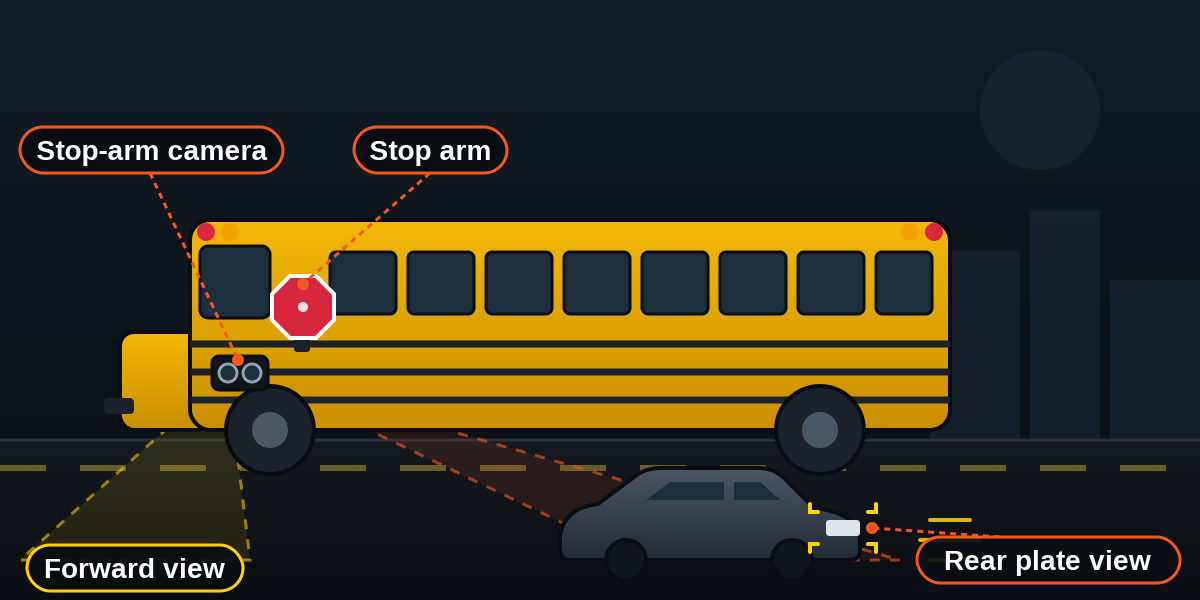
Side cameras on the side of the school bus, wired to start recording when the stop arm goes out, to catch drivers who pass it.
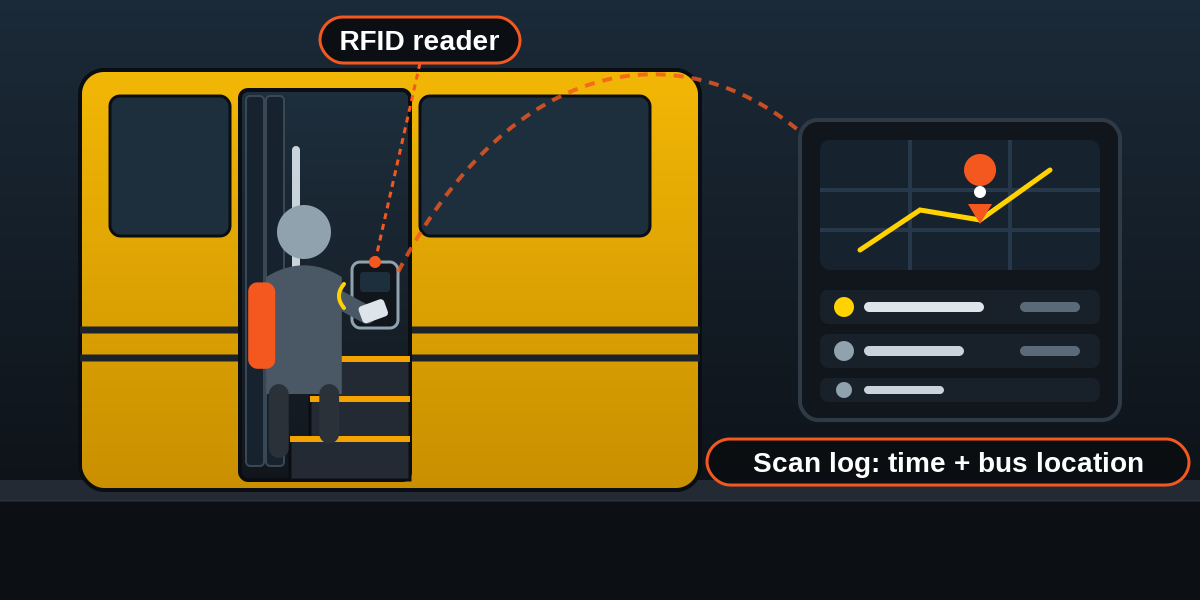
Card readers at the bus door that log each student on and off, with the time and the bus location.
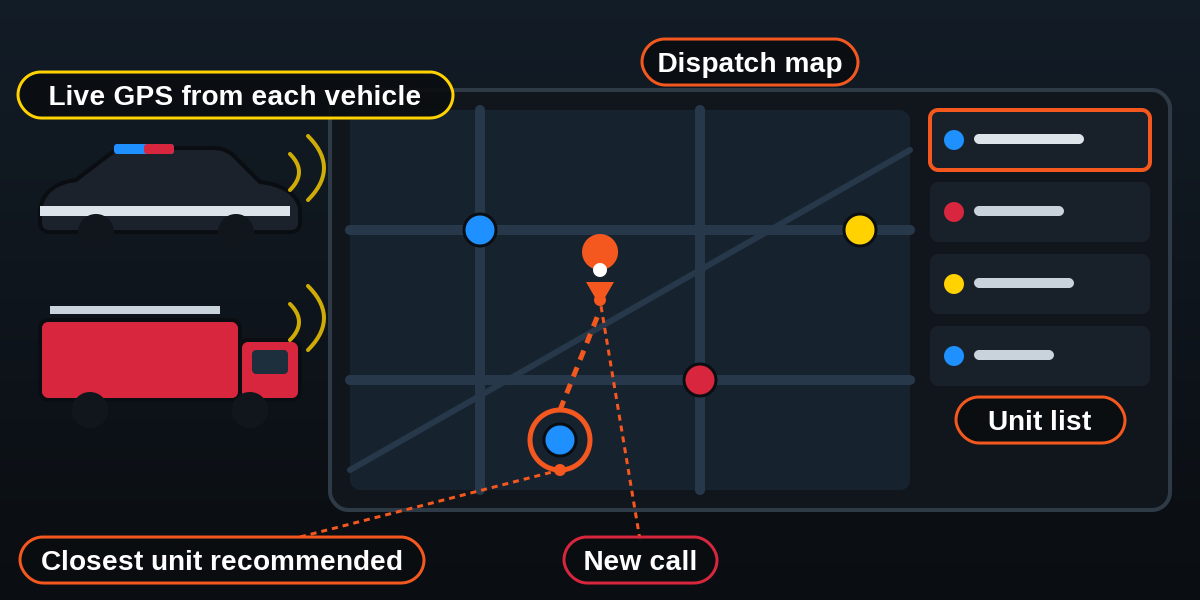
Vehicle location and status sent to dispatch in real time, so the closest available unit gets the call.
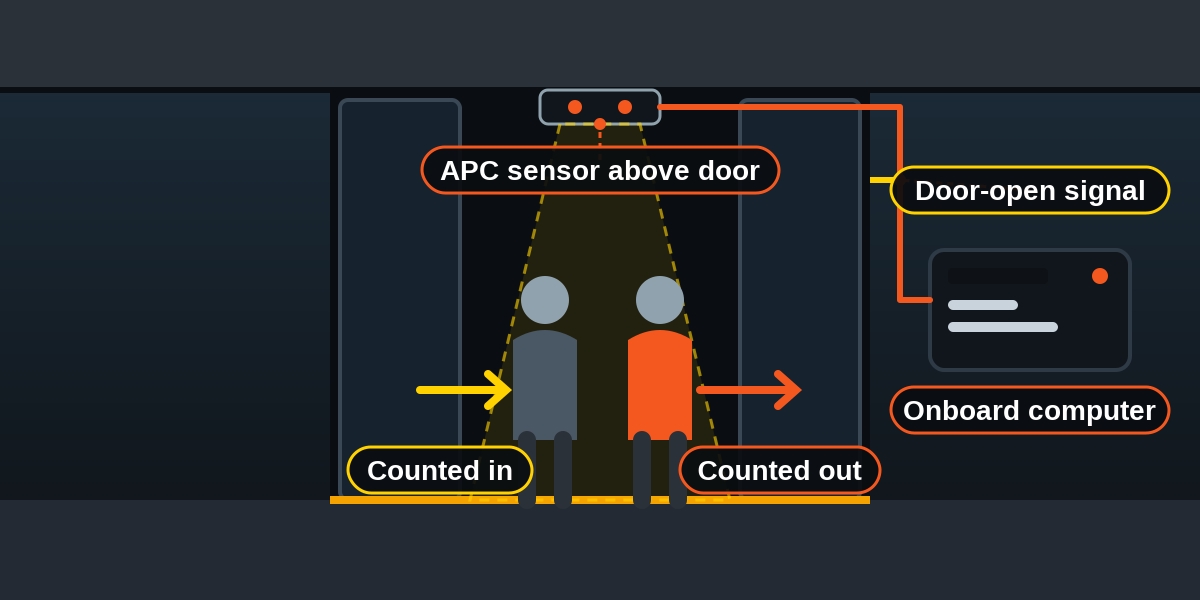
Sensors over the doors that count riders on and off at every stop, for ridership numbers you can report.
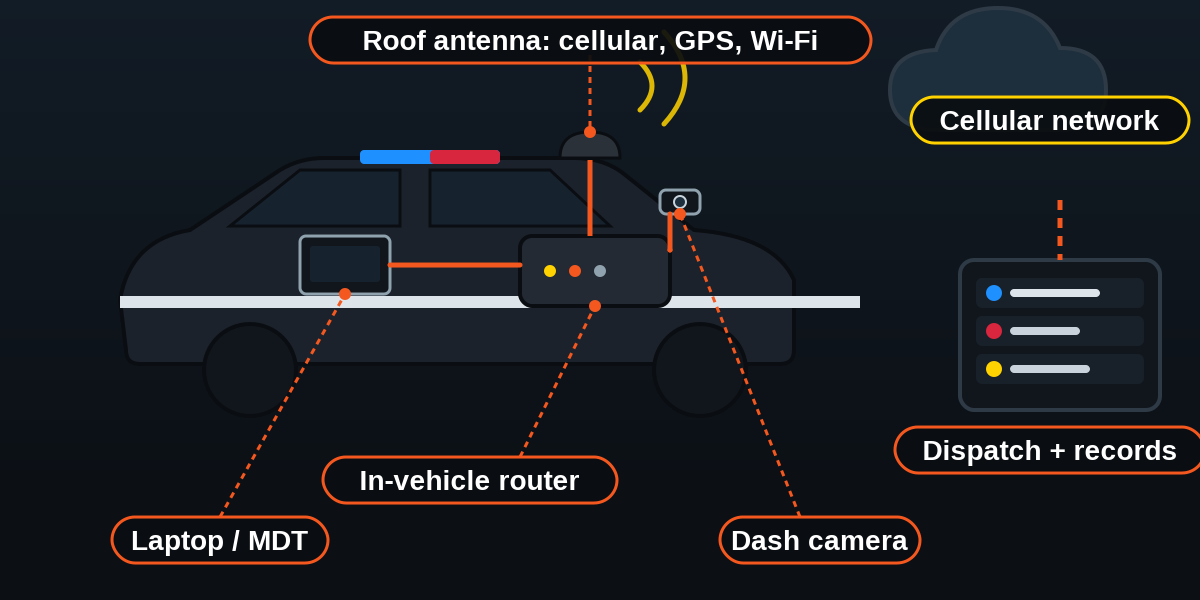
In-vehicle routers and roof antennas that connect the dash cams, laptops and riders on board.
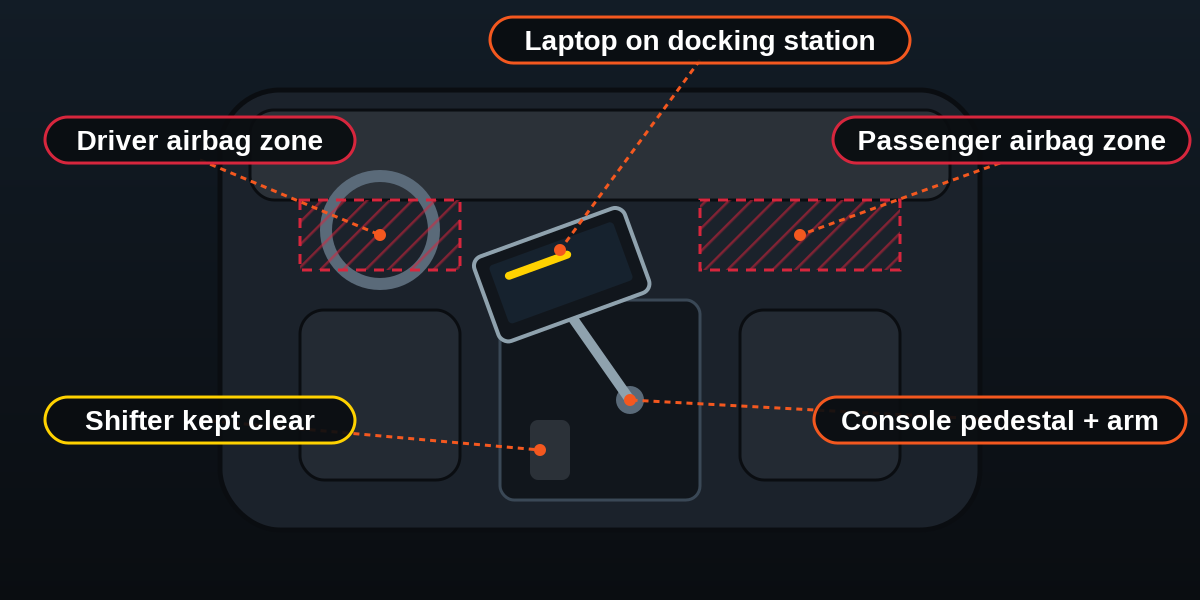
Laptop and tablet mounts, docks, power and antennas fitted clear of the airbags and the driver's controls.
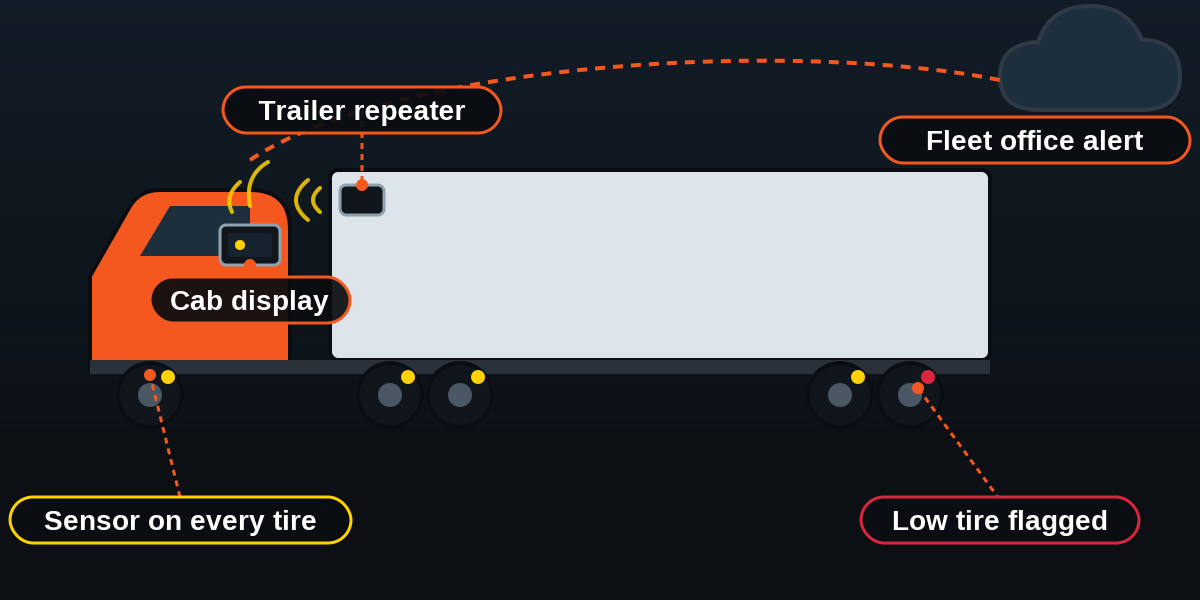
A sensor on every tire, with low-pressure alerts sent to the cab and the shop, including on trailers.
A mixed fleet that grew through three different buying decisions is normal. We handle all of it in one visit rather than one brand at a time.
We also handle the work that sits around the device: PTO and hydraulics, lift gates and dump bodies, spreaders and sweepers, boom lifts, compressors and pumps, plus backup and multi-camera systems. If it runs on twelve volts and it belongs on the vehicle, it is ours to install.
An ELD (electronic logging device, often called an electronic logbook) records a driver’s hours of service automatically from the truck’s engine, and most commercial trucks whose drivers keep logs are required by the FMCSA to run one. It replaced the paper logbook: it reads drive time, engine hours, miles and location straight from the engine, so the log matches what the truck actually did.

Most carriers and drivers who are required to keep records of duty status. The common exceptions are short-haul drivers on time cards, drivers who keep logs 8 days or fewer in any 30-day period, driveaway-towaway moves, and trucks older than model year 2000.

A loose plug or a bad tap makes an ELD drop its connection and log a malfunction, which is the last thing a driver wants at a roadside inspection. We secure the harness, confirm the device is reading engine data, and test it before the truck leaves.

Most ELDs today are also the fleet’s GPS tracker, and many pair with a dash cam. We install all of it on the same visit, any brand: Motive, Samsara, Geotab, Verizon Connect and more.
Bought trackers or dash cams and did your own install — but devices aren’t reporting, dash cams drop offline, or something just isn’t right? We diagnose and fix self-installs every week. Quick audit, clean rewire, done right the first time.
Get it checked →Multi-location fleets with vehicles across several yards, cities or states, where the real risk is each site quietly getting done a little differently.
Mixed-brand fleets running more than one platform at once, often because the fleet grew by acquisition or by changing providers mid-stream.
Fleets already reporting data they do not trust, where the hardware tests fine and the numbers still make no sense.
Municipal and public-sector fleets with procurement paperwork, fixed windows and a standard that has to survive an audit. Our municipal fleet work runs on the same program.
Growing fleets adding vehicles a few at a time that still have to match the original build exactly.
Fleet Calculators
Five tools for putting real numbers on a rollout before you commit to one. Nothing is stored and nothing is sent anywhere.
| Calculator | What it answers | |
|---|---|---|
| Downtime Cost | What taking vehicles off the road actually costs you while they are being fitted | Open → |
| Install Time | How many working days the job takes, by what you are fitting and how many crews | Open → |
| Fuel Savings | What a small drop in fuel burn is worth across the fleet over a year | Open → |
| Dash cam Payback | How long a dash cam rollout takes to pay for itself against incidents and claims | Open → |
| Compliance Exposure | What violations, fines and out-of-service time are costing you in a year | Open → |
No. We install on one vehicle or hundreds, with the same technicians and the same install standard. From about eleven vehicles up we also put that standard in writing, because that is the point where keeping every vehicle straight from memory stops working.
Yes. We schedule multi-site rollouts as a single project on one standard, so a vehicle in one yard is built exactly like a vehicle in another. You get one schedule and one point of contact, not one per location.
They get caught on the next wave. We plan around the vehicles that are hardest to pin down rather than assuming the whole fleet parks on the same night, and we come back for the stragglers.
Yes. We diagnose it on the vehicle, correct the installs, and tell you which historical metrics were affected so you know which reports to set aside and which ones you can keep trusting.
Yes. We install what you have, whatever brand it is and whatever mix of hardwired and OBD-II units it includes. If you have not settled on hardware yet, we will tell you what installs cleanly on your body types before you commit.
A current vehicle list with VINs and where each one sits, and one person we can reach during the rollout. That is it. We handle the rest.
Yes. Takeout and new install happen in one visit, so a vehicle comes off the line once rather than twice, and the old wiring is removed rather than left behind the dash.
Vehicle count, body types, how many yards, and whether anything needs removing first — that is enough for us to tell you what the rollout looks like and what it costs before you commit to anything.
Tell us about your fleet, your yards and the hardware, and we'll come back to you with what the rollout looks like and what it costs.
Answer a few quick questions and we will build your custom quote in minutes.
Get a Free Quote