
API ProFleet installs tire pressure monitoring systems (TPMS) on tractors, trailers, buses and service trucks across Georgia, South Carolina and North Carolina. We fit the sensors, the in-cab receiver or telematics link, and any trailer repeater, then pair and test every wheel position before the vehicle goes back in service.
A sensor on every tire reads its pressure and temperature and radios it to a receiver, which warns the driver and, on most fleet systems, the maintenance shop too.
Cars and light trucks have had factory tire pressure monitoring for years, because the federal rule (FMVSS 138) covers vehicles of 10,000 pounds or less. Most heavy trucks, buses and trailers sit above that line, so on a large fleet tire monitoring is usually an add-on the fleet chooses. That is where we come in.
There are three main kinds: sensors that screw on in place of the valve cap, sensors strapped inside the tire to the wheel, and sensors built into a flow-through valve stem.
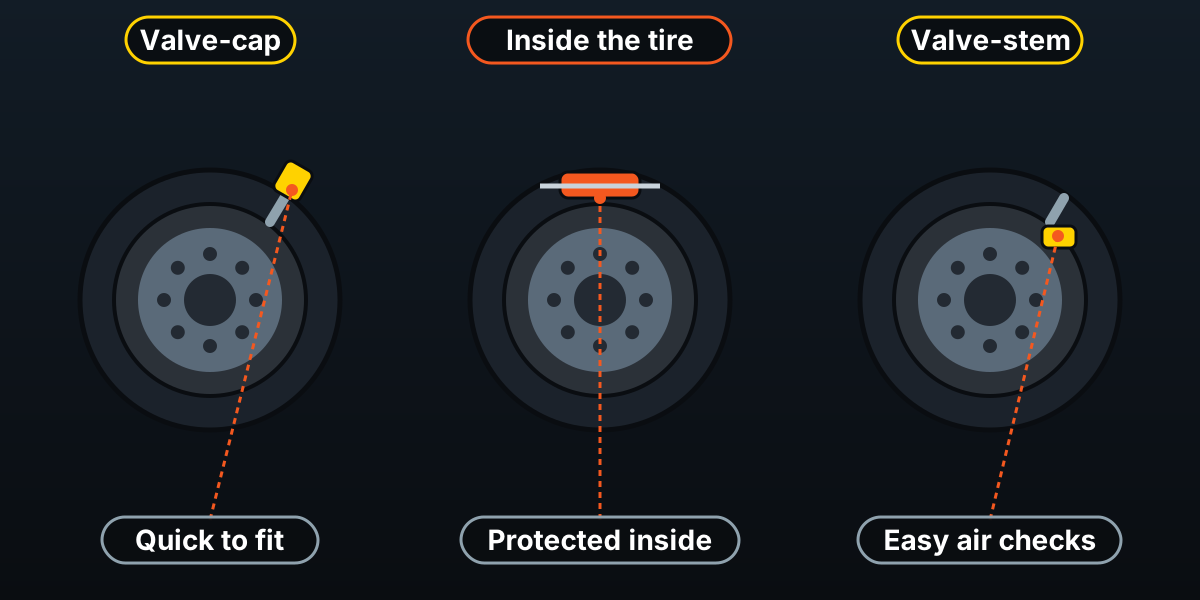
The right choice depends on how often your tires are changed, who does your tire work and how much your trucks sit in open yards. We walk through that before you buy sensors, not after.
Every tire on the tractor and the trailer gets a sensor, and a repeater at the front of the trailer relays the trailer readings to the cab, because a long steel trailer can block the weak sensor signal.
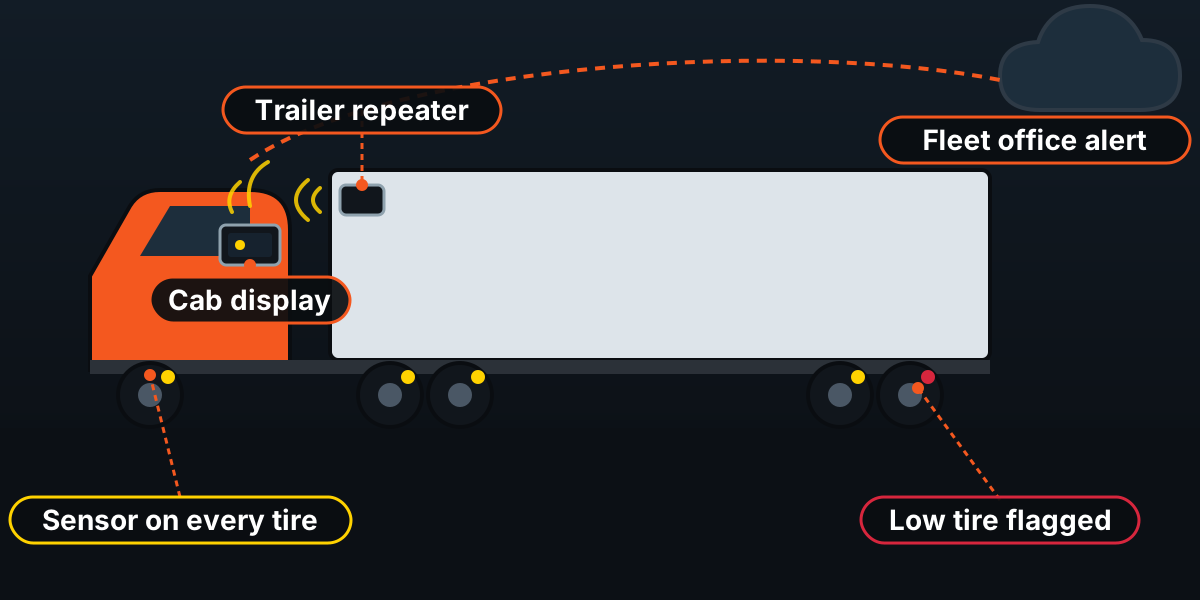
A typical five-axle rig runs 18 tires: two steer, eight drive and eight on the trailer. Every one of them needs its own sensor, and every sensor has to be tied to the right wheel position, or an alert sends the tech to the wrong tire.
Drop-and-hook fleets have one more decision to make. A trailer that moves between tractors either needs its own reporting unit, or a way to pair with whichever tractor picks it up. Systems handle this differently, so we settle it with you before the install, not in the yard.
It can: in a year-long federal field test of tire pressure monitoring and automatic inflation systems, the test fleets saw a 1.4 percent improvement in fuel economy and fewer roadside tire calls.
That test was run by FMCSA with two working fleets, Sheetz and Gordon Food Service. Tire wear data from the food service fleet also pointed toward longer tire life. Keep in mind the results covered monitoring and automatic inflation together, so they are a guide, not a promise for any one fleet.
The driver gets a warning in the cab, and on connected systems the shop gets the same alert with the truck number and the exact wheel position.
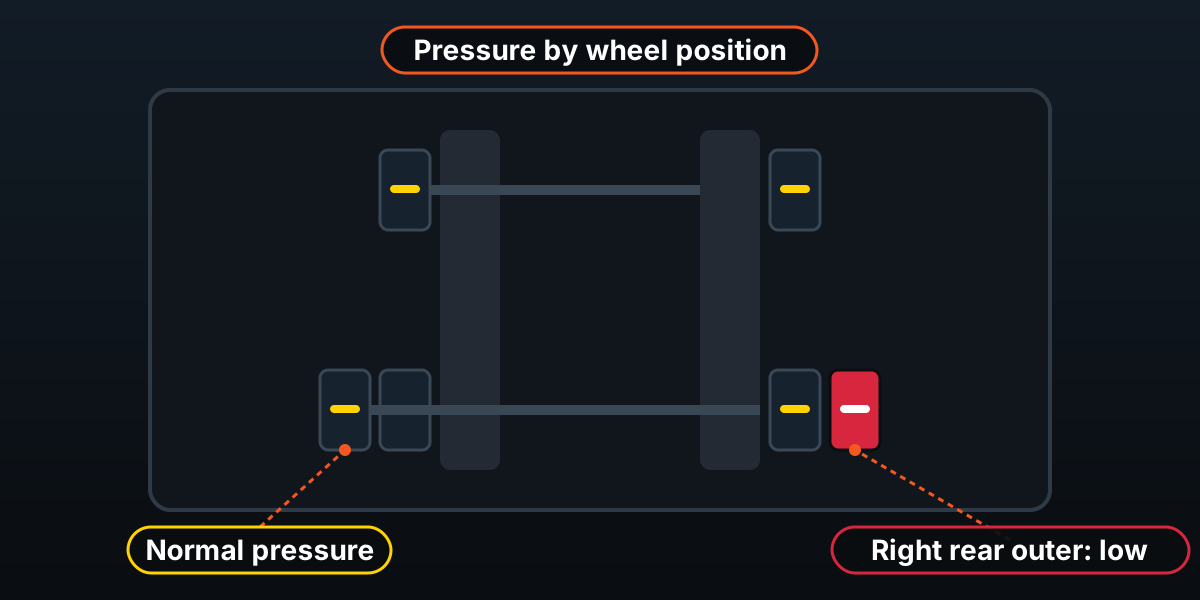
Most systems warn for low pressure, fast pressure loss and high temperature. A slow leak shows up as a trend long before the tire is flat, so the shop can plan the fix for the next stop instead of sending a truck to the side of the road.
One honest limit: tire monitoring warns you. It does not replace the driver's pre-trip tire check, and it cannot see a cut sidewall or a tread problem.
We map every tire position, fit and pair a sensor to each one, mount the receiver and any repeater, then confirm each position reads correctly before the vehicle goes back out.
For inside-the-tire sensors, the tires have to come off the rim. We coordinate that with your tire vendor or schedule it with your planned tire changes.
Most do. The battery is sealed inside the sensor and lasts years, and when it runs out the sensor is replaced rather than recharged.
Often, yes. Many tire monitoring systems can send alerts through a telematics platform, but it depends on the brands. We check compatibility before you buy anything, and we install across many telematics brands, not just one.
Yes, where the system supports it. Some trailer systems report through the trailer's own tracking unit, so they work no matter which tractor pulls it.
It happens, especially in open yards. Locking sensors help, and inside-the-tire or valve-stem sensors avoid most of the problem.
No. It watches pressure and temperature between checks. Drivers still need to look for cuts, bulges and tread wear.
It depends on the sensor type and the number of tires. Valve-cap and valve-stem sensors are much faster than inside-the-tire sensors. We give a time per unit in the quote once we know the fleet.
Running 1 to 10 vehicles, or fitting your first tracker or camera? API FleetStart brings the same technicians and the same install standard to your trucks — one visit, any brand, a straight per-vehicle price. See API FleetStart →
Vehicle count, body types, how many yards, and whether anything needs removing first — that is enough for us to tell you what the rollout looks like and what it costs before you commit to anything.
Tell us about your fleet, your yards and the hardware, and we'll come back to you with what the rollout looks like and what it costs.
Answer a few quick questions and we will build your custom quote in minutes.
Get a Free Quote