API ProFleet installs student ridership and RFID card readers on school buses across Georgia, South Carolina and North Carolina, so every tap on and tap off is logged with the time and the bus location. Each reader is mounted at the door, tied into the bus GPS system and tested with a real card before the bus goes back on route.
Student ridership tracking logs every time a student gets on or off a school bus, usually by tapping an RFID card on a reader at the door, and records the time and the bus location with each tap.
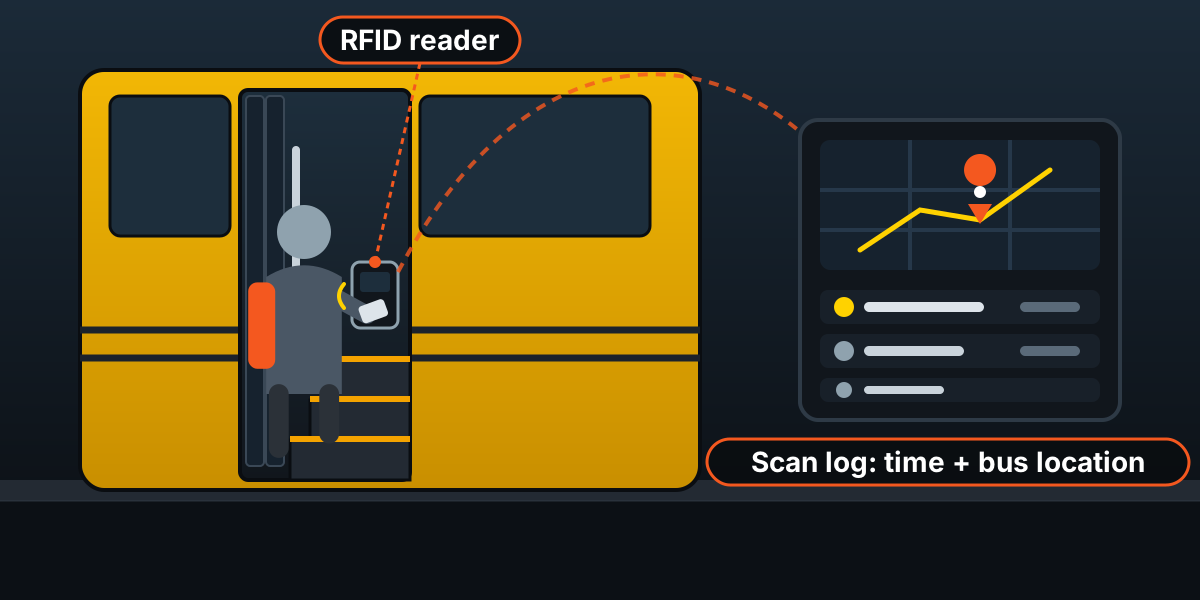
It replaces the paper manifest. Transportation staff can see who is on a bus right now, which stop a student got off at, and whether a child boarded the wrong bus, without radioing the driver. If something happens on a route, the district knows exactly who was on board. Over a semester, the same records show actual ridership against assigned riders, which is what route planners need to cut empty stops and rebalance crowded runs.
Districts are adopting it quickly. In a 2026 industry survey published by Zonar, 41 percent of responding districts said they already use ridership tracking, and another third called it a near-term priority.
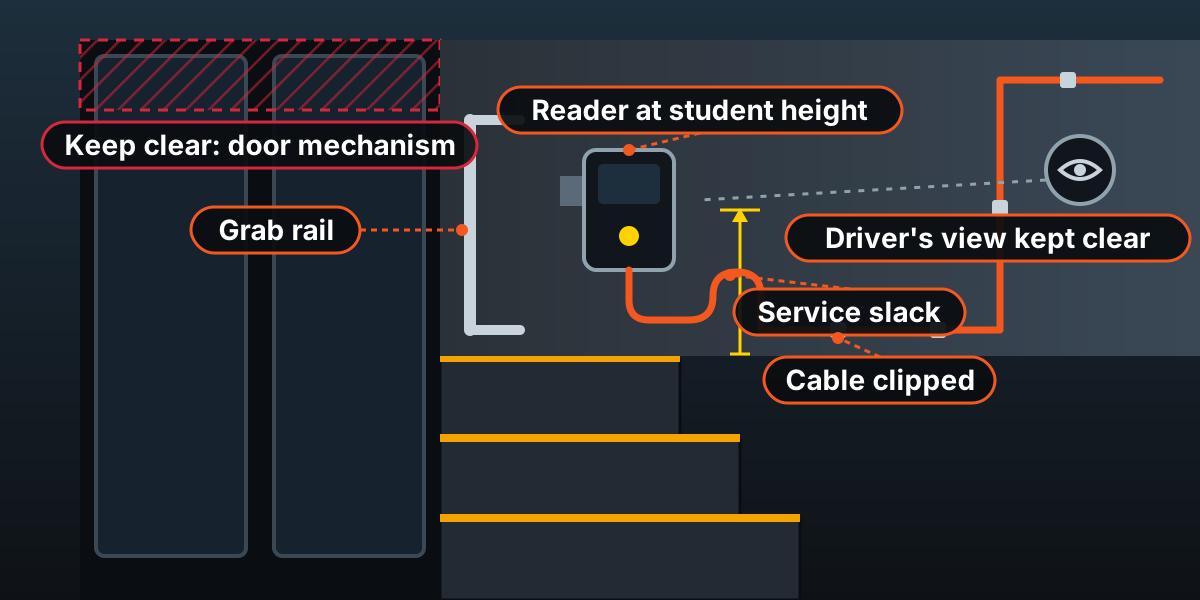
The reader goes at the entrance door, at a height and angle a student can reach while climbing the steps, without blocking the driver's view or catching on backpacks.
The reader ties into the bus GPS, telematics or CAD/AVL unit, which adds the time and location to every scan and sends it to the district's ridership software.
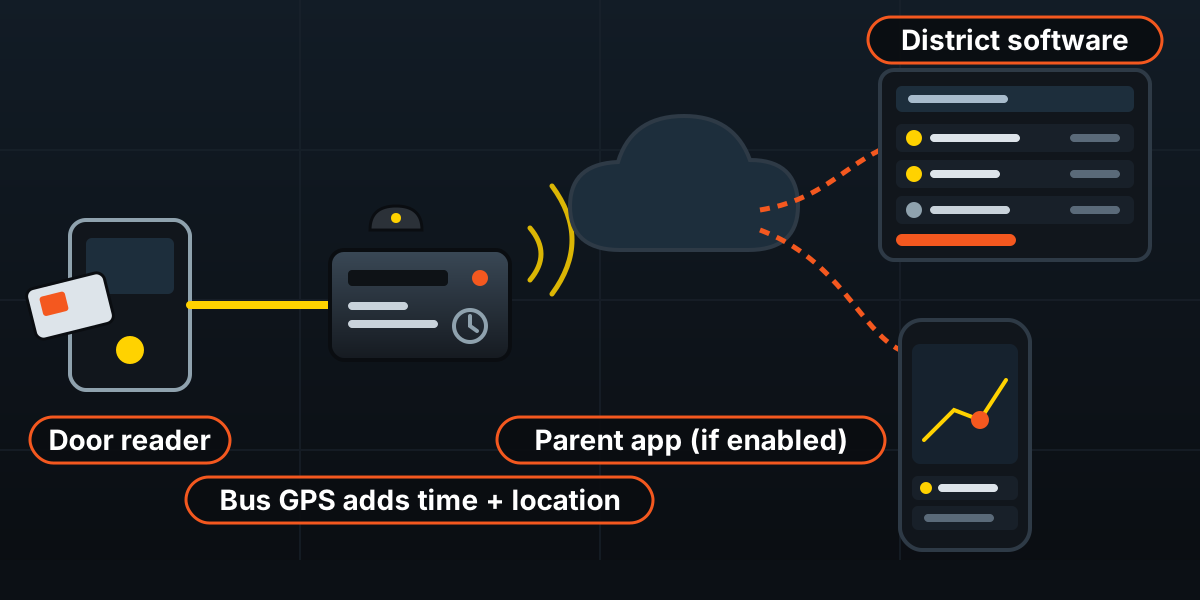
That link is the whole point: a scan without a location is just a name. So the reader and the GPS unit have to be wired, powered and configured as one system. If a bus does not have tracking yet, we install both on the same visit. Many districts also pair ridership with stop-arm cameras and interior video, and we fit those together so each bus comes out of service once.
With the bus running, we confirm the reader shows ready, tap a real test card, and check that the scan appears in the district's software against the right bus, with the right time and location.
A reader that lights up is not the same as a reader that reports. The test is not finished until the scan is visible on the district side. Each bus is then photographed and recorded against its bus number and VIN, so the transportation office has a clean record of what was fitted and where.
Yes. We schedule district rollouts around bus routes, working between runs, after afternoon routes, on weekends and over school breaks.
Summer break is the easiest window, because no bus is needed on a route and a whole yard can be done in sequence. Every bus is built to the same written standard, the same approach behind every API ProFleet rollout, so a reader on bus 90 is mounted, wired and tested exactly like the one on bus 9. See everything we install on large fleets.
It depends on the system the district has chosen. Many use RFID cards or tags issued by the district, and some systems can read existing student ID cards. We fit and test the reader against the cards the district is actually using.
We install the system your district has chosen and work to that manufacturer's installation requirements. The mounting, power, cabling and testing follow the same standard whatever the brand.
Yes. Where the system supports it, the reader ties into the GPS unit already on the bus. If a bus has no tracking yet, we can install both on the same visit.
The district does, through its own ridership software. Parents only see scans if the district turns on a parent app. We install and test the hardware; the student data stays with the district.
Running 1 to 10 vehicles, or fitting your first tracker or camera? API FleetStart brings the same technicians and the same install standard to your trucks — one visit, any brand, a straight per-vehicle price. See API FleetStart →
Vehicle count, body types, how many yards, and whether anything needs removing first — that is enough for us to tell you what the rollout looks like and what it costs before you commit to anything.
Tell us about your fleet, your yards and the hardware, and we'll come back to you with what the rollout looks like and what it costs.
Answer a few quick questions and we will build your custom quote in minutes.
Get a Free Quote