API ProFleet installs CAD/AVL systems on transit buses, police cars, fire apparatus and public works trucks across Georgia, South Carolina and North Carolina. Every vehicle gets its onboard computer, antenna, power and driver display fitted to one standard and tested until it shows up correctly on the dispatch map.
CAD/AVL stands for computer-aided dispatch and automatic vehicle location: every vehicle reports its GPS position to the dispatch center, and the dispatch software uses those positions to assign work and track the fleet in real time.
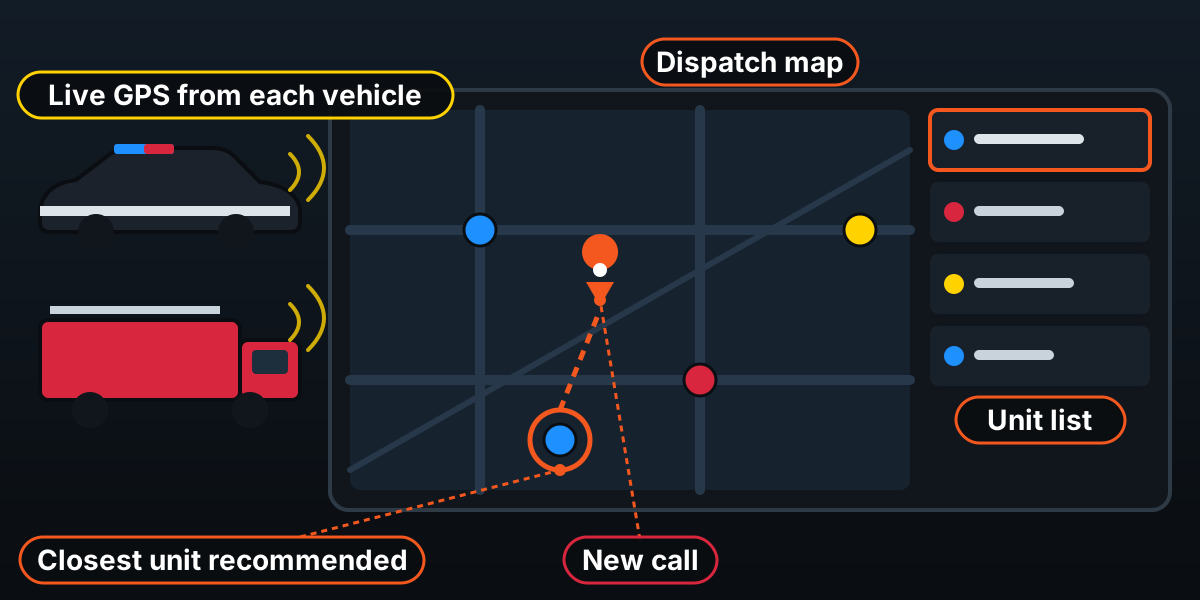
For police, fire and EMS, the payoff is speed. When a call comes in, the system can recommend the closest available unit instead of the dispatcher guessing from memory, and some agencies set it to weigh actual drive time rather than straight-line distance. For transit agencies, the same position data drives real-time arrival predictions for riders, on-time performance reporting and the stop announcements on the bus itself.
All of it depends on one thing we control: whether each vehicle reports its position reliably. A unit with a weak antenna or a power connection that drops when the engine cranks shows up as a vehicle frozen on the map, and dispatchers stop trusting the system.
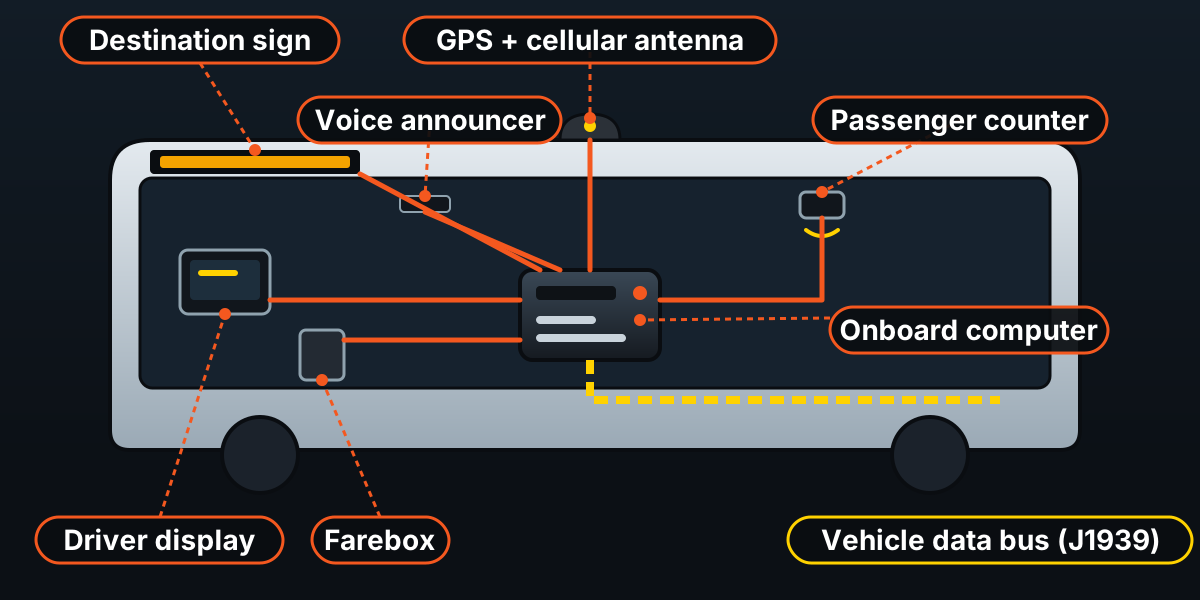
A CAD/AVL install puts an onboard computer on the vehicle, connects it to a GPS and cellular antenna and a driver display, and on transit buses links it to the other onboard systems.
The onboard computer needs fused constant power, a separate ignition-sense wire and a clean chassis ground, and the antenna cable needs a drip loop and secure routing all the way to the unit.
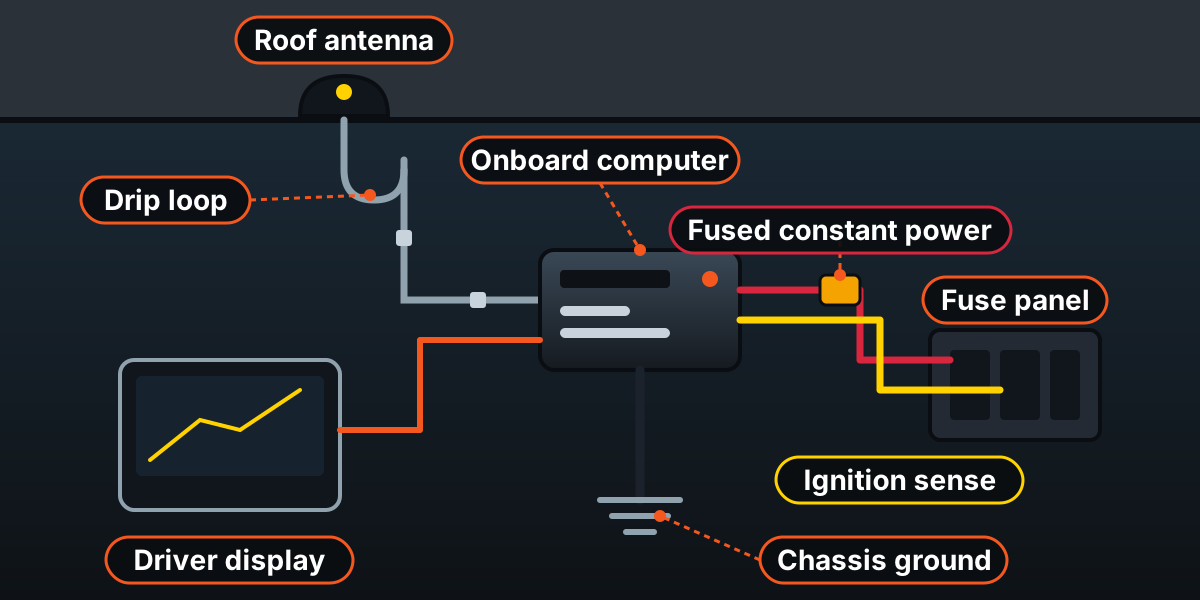
Constant power keeps the unit alive long enough to report after the key is off. Ignition sense tells it when the vehicle is actually running. A poor ground causes random resets that look like software faults. The antenna cable gets a drip loop so water runs off instead of following the cable inside, and it is clipped along its run so it cannot chafe through against a body panel. None of this is exotic, but it is exactly where rushed installs fail, and on a police car or an ambulance that failure shows up in the middle of a call.
Transit agencies, police departments, fire departments, EMS providers and public works departments all run CAD/AVL, and many cities run several of those fleets at once.
That matters for scheduling. A city may want patrol cars done one shift at a time, fire apparatus done without taking a station out of service, and buses done between runs. We plan each group around how it actually operates, and build every vehicle to the same written standard behind every API ProFleet rollout. Transit buses often get CAD/AVL alongside ridership readers and cameras, and we fit those together so each bus comes out of service once. See everything we install on large fleets.
We start the vehicle, confirm the unit powers up and locks onto GPS, and check with dispatch that the vehicle appears in the right place on the map and updates as it moves.
We also confirm it keeps reporting after the engine is cranked, that the driver display logs in, and on transit buses that the signs and announcements respond. Each vehicle is photographed and recorded against its unit number and VIN, so the agency has a clean record of what was installed where.
We install the system your agency or city has chosen and work to that manufacturer's installation requirements. The mounting, power, antenna and testing follow the same standard whatever the brand.
Both. We install for transit agencies, cities and counties directly, and for the vendors who deliver CAD/AVL systems and need a local installation crew.
Yes. We fit the vehicle mount, the modem, the roof antenna and the power so the unit reports its position to dispatch from the moment the vehicle starts.
Yes. Old units, antennas and wiring come out on the same visit the new system goes in, so each vehicle is out of service once.
Running 1 to 10 vehicles, or fitting your first tracker or camera? API FleetStart brings the same technicians and the same install standard to your trucks — one visit, any brand, a straight per-vehicle price. See API FleetStart →
Vehicle count, body types, how many yards, and whether anything needs removing first — that is enough for us to tell you what the rollout looks like and what it costs before you commit to anything.
Tell us about your fleet, your yards and the hardware, and we'll come back to you with what the rollout looks like and what it costs.
Answer a few quick questions and we will build your custom quote in minutes.
Get a Free Quote