API ProFleet installs school bus stop-arm cameras for districts and their enforcement vendors across Georgia, South Carolina and North Carolina. Each camera is mounted at the stop arm, wired to the arm's own trigger circuit, cabled to the recorder and tested on every bus before it goes back on route.
A stop-arm camera is an exterior camera mounted on the driver's side of a school bus that records vehicles passing the bus while its stop arm is out.
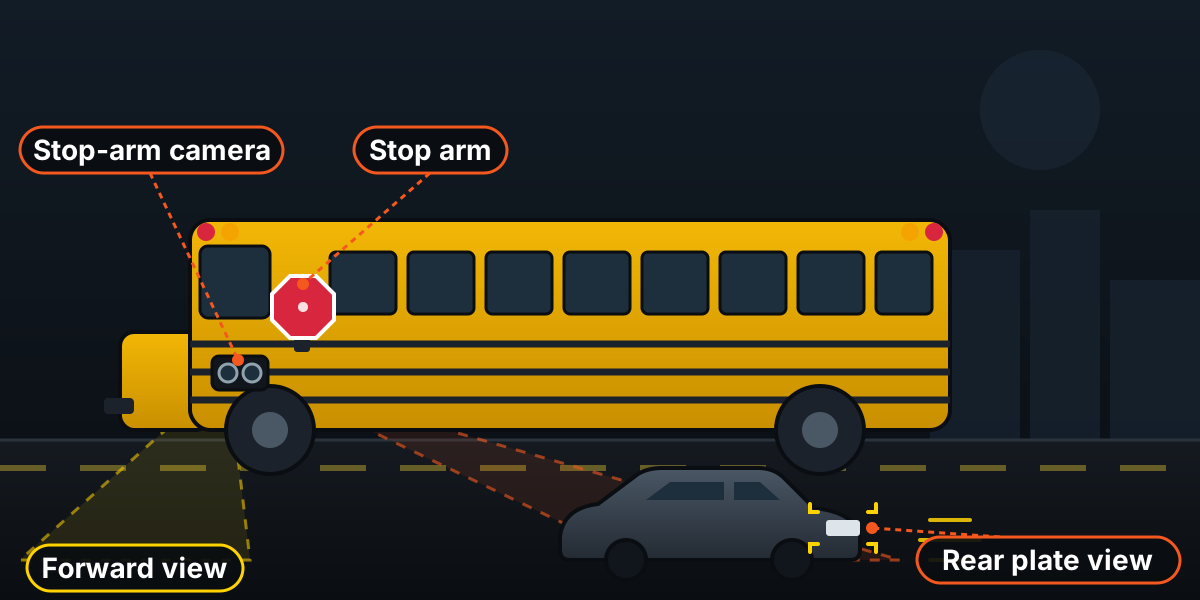
Most systems capture more than one view at the same moment: a wide shot of the road plus a forward and a rear view angled to read license plates. The footage goes to the recorder on the bus and is then uploaded for review, and in many programs it becomes the evidence behind a citation. That only works if the camera sits in the right place, fires at the right moment and produces a plate that can actually be read.
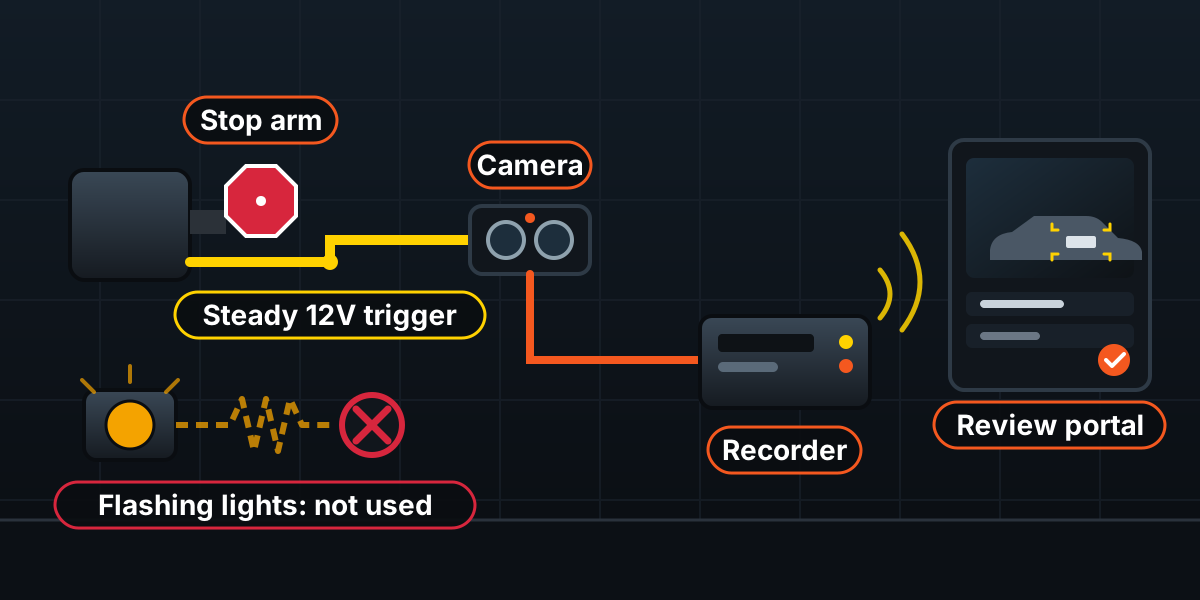
We mount the camera just below and ahead of the stop arm, tie it into the stop arm's activation circuit, run a sealed cable through the body to the recorder, and check every view before the bus goes back out.
Yes. All three states we cover allow school buses to carry cameras that record vehicles passing a stopped bus.
Georgia law (O.C.G.A. § 40-6-163) lets school districts install and operate video recording devices mounted on school buses. South Carolina has allowed buses to carry cameras that record passing traffic since 2014, and a citation can be issued from the recording (S.C. Code § 56-5-2773). North Carolina (N.C. Gen. Stat. § 20-217) authorizes automated camera systems to detect and prosecute violations. Several districts in our area already run stop-arm programs, and more are adding them.
Yes. We schedule district rollouts around bus routes, working between runs, after afternoon routes, on weekends and over school breaks, so no route goes without its bus.
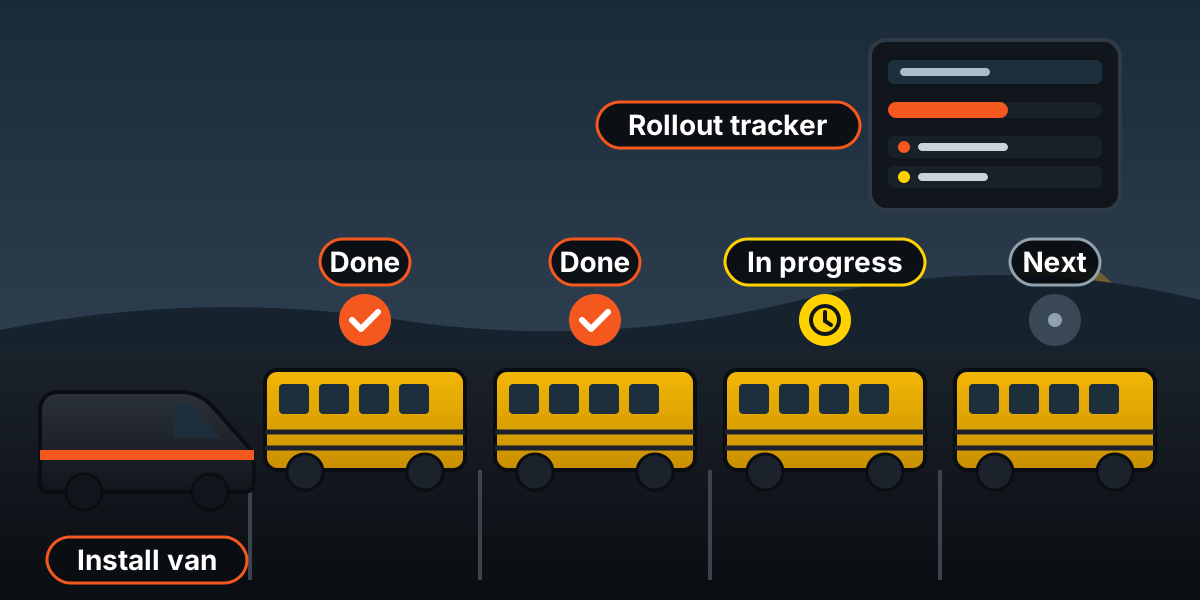
Every bus is built to the same written standard, which matters when the footage has to hold up as evidence: a camera aimed differently on bus 40 than on bus 4 can mean a plate nobody can read. It is the same approach behind every API ProFleet rollout, including the South Carolina city fleet we recently fitted 10 vehicles a day across seven visits.
We install the system your district or its enforcement vendor has chosen.
The mounting, the trigger wiring and the testing are the same craft whatever the brand on the camera. What changes is the recorder, the connectors and how the footage gets off the bus, and we work to each manufacturer's installation requirements. See everything we install on large fleets.
It depends on the system. The trigger we wire from the stop arm tells the system when the arm is out, and the system is set up to capture what happens while it is deployed.
Yes. Many stop-arm cameras connect to the same recorder as the interior cameras, and we fit them without disturbing the system that is already working.
Both. We install for school districts directly and for the enforcement vendors that run stop-arm programs on their behalf.
Yes. Interior cameras, GPS, student ridership readers and onboard wifi can go in on the same visit, so each bus comes out of service once instead of several times.
Running 1 to 10 vehicles, or fitting your first tracker or camera? API FleetStart brings the same technicians and the same install standard to your trucks — one visit, any brand, a straight per-vehicle price. See API FleetStart →
Vehicle count, body types, how many yards, and whether anything needs removing first — that is enough for us to tell you what the rollout looks like and what it costs before you commit to anything.
Tell us about your fleet, your yards and the hardware, and we'll come back to you with what the rollout looks like and what it costs.
Answer a few quick questions and we will build your custom quote in minutes.
Get a Free Quote