API ProFleet installs in-vehicle routers and fleet Wi-Fi on police cars, fire apparatus, ambulances, utility trucks, buses and coaches across Georgia, South Carolina and North Carolina. Each vehicle gets its router, roof antenna and power fitted to one standard, so every laptop, camera and dispatch system on board shares one reliable connection.
An in-vehicle router gives every device on a vehicle one shared, rugged internet connection through a roof antenna, instead of each laptop, camera and tracker fighting for its own weak signal inside a metal cab.
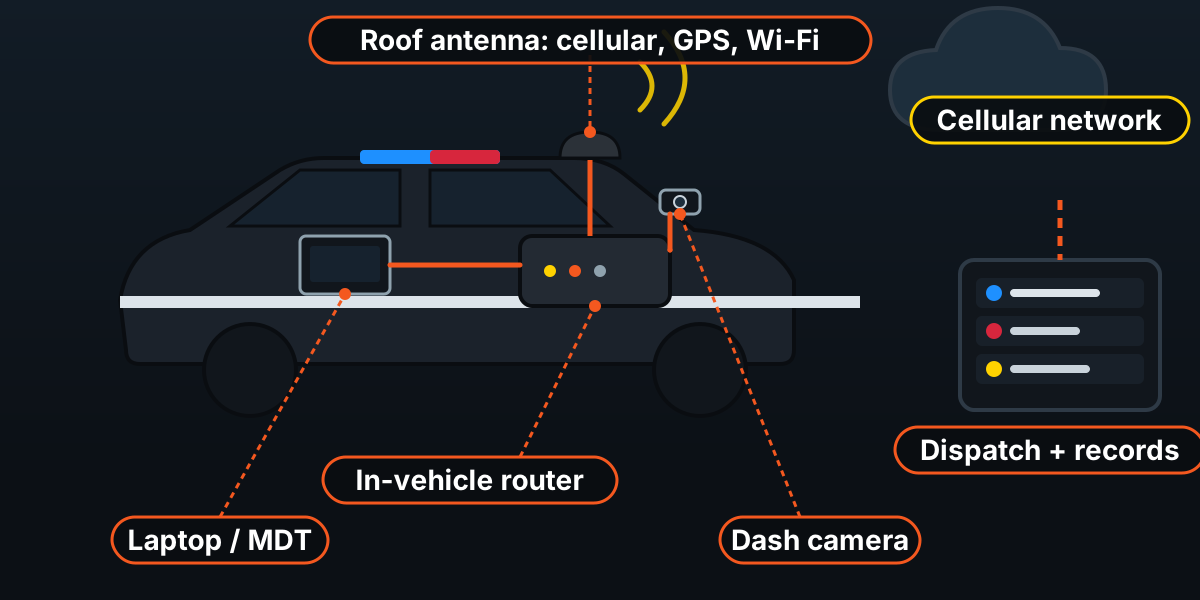
The router sits out of the way under a seat, in the console or in a rear compartment. It connects to a combination antenna on the roof that carries cellular, GPS and Wi-Fi, then shares that connection with the devices inside by Wi-Fi or cable. The laptop or mobile data terminal stays online at the scene, camera footage uploads without a trip back to the station, and CAD/AVL keeps reporting the vehicle's position.
Police, fire and EMS fleets rely on them most, followed by utilities, public works, transit agencies and coach operators.
On the roof, as close to the middle as the vehicle allows, with open metal around it and clear of the light bar and the radio antennas.
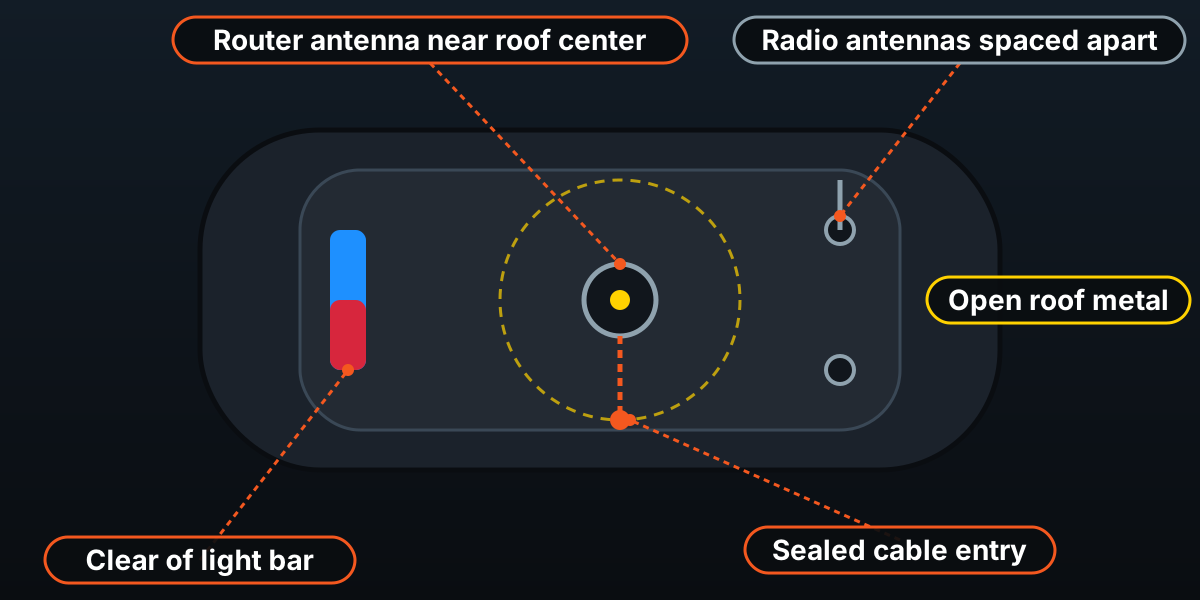
The roof acts as part of the antenna, so a centered mount on open metal performs best. Light bars, ladder racks and radio antennas all compete for the same space, and a router antenna crowded against a two-way radio antenna can hurt both. Where a router runs two cellular modems at once, manufacturers generally recommend separate antennas for each. Public safety agencies on FirstNet also need an antenna that covers Band 14, the spectrum reserved for first responders. The cable enters through a sealed fitting so the roof stays watertight.
We wire it with constant power, a separate ignition-sense wire and a shutdown delay, so it stays on after the key is off long enough to finish uploads, then turns itself off.
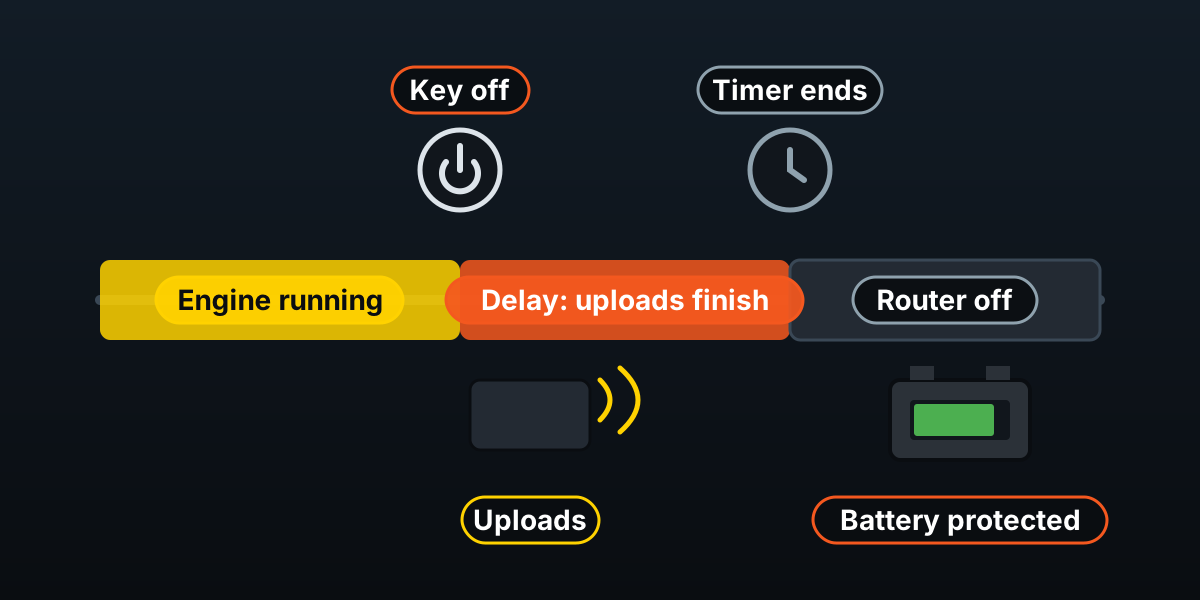
Wired straight to a battery, a router runs all night and leaves a flat vehicle in the morning. Wired only to ignition, it drops the moment the key turns, cutting off camera uploads mid-file. The delay sits between the two, and it is set to suit how each fleet actually works. Every connection is fused and grounded to the chassis.
We confirm the router connects to the carrier with a usable signal, that each device on board is online through it, and that it shuts down on schedule after the key is turned off.
Each vehicle is photographed and recorded against its unit number and VIN. Every install follows the same written standard behind every API ProFleet rollout. See everything we install on large fleets.
Yes. We install the router and roof antenna your agency has chosen, including FirstNet-ready equipment. Activating the SIM and the service plan stays between your agency and its carrier.
Usually, yes. That is the point of an in-vehicle router: one connection for every device on board, instead of a separate modem for each one.
Not when it is wired properly. With an ignition-sense wire and a shutdown delay, the router turns itself off a set time after the key is off.
Yes, where the system provides a passenger network. It is normally kept separate from the operations network the driver, cameras and dispatch use.
Running 1 to 10 vehicles, or fitting your first tracker or camera? API FleetStart brings the same technicians and the same install standard to your trucks — one visit, any brand, a straight per-vehicle price. See API FleetStart →
Vehicle count, body types, how many yards, and whether anything needs removing first — that is enough for us to tell you what the rollout looks like and what it costs before you commit to anything.
Tell us about your fleet, your yards and the hardware, and we'll come back to you with what the rollout looks like and what it costs.
Answer a few quick questions and we will build your custom quote in minutes.
Get a Free Quote