 Mastering Geotab
★ Fleet GPS Trackers · Brand Guide
What Geotab is, what the hardware actually does once it is in a truck, what fleets really pay, and the honest places it fits and doesn't. Written by API Signal, a Geotab certified installer that installs every other major platform too, so nothing here is a sales pitch for one brand.
Geotab was founded in 2000 in Oakville, Ontario, by Neil Cawse, who still runs it as CEO. It began as a two-person company and passed five million connected vehicle subscriptions in 2025, its 25th year. Geotab's own figures now put the count at roughly six million vehicles and assets, more than 100,000 customers and around 100 billion data points processed every day.
Two things set Geotab apart from most of the field. First, it builds its own hardware, its own firmware and its own software, rather than buying a tracker from one supplier and a platform from another. Second, it sells almost entirely through a network of more than 700 partner companies instead of a direct sales force. In early 2025 ABI Research ranked Geotab the number one commercial telematics vendor in the world for the fourth year in a row.
What that means for a fleet owner is simple. You will almost never buy Geotab from Geotab. You buy it from a partner who sets your price, writes your contract and handles your support, and the quality of that partner shapes your experience as much as the product does.
Every Geotab setup has the same three layers, and it helps to know them before you talk to anyone about price.
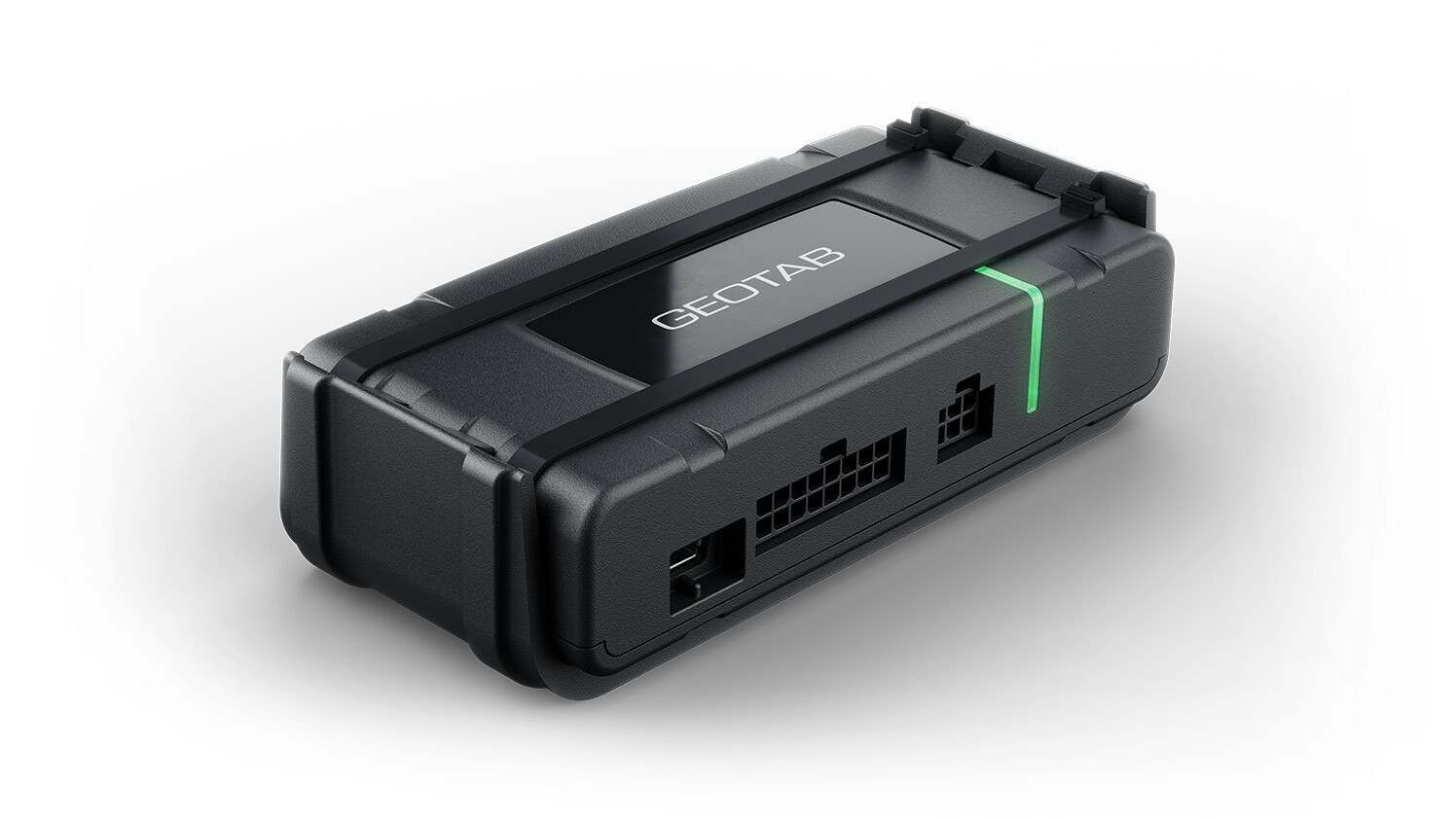
Geotab's lineup changed in 2026. The new GO10, which Geotab calls the Next Gen GO, went on sale in the US and Canada in April 2026 and is now the flagship. The GO9 family is still supported and still the right answer for some vehicles. Each device gets its own detailed page in this guide; this is the short version.
| Device | Built for | Key specs |
|---|---|---|
| GO10 | Cars, vans and trucks from the early 2010s on | LTE Cat 1 bis on all three US carriers, GPS plus GLONASS, Galileo and BeiDou, Bluetooth 5.4, 4 inputs and 1 output, up to 5 add-ons, tamper alert if power is cut. Requires a Geotab harness. |
| GO10 Plus | Fleets that want more connectivity | Everything in the GO10, plus Wi-Fi hotspot, satellite-ready connectivity and a battery that holds collision data if power is lost. |
| GO9B | Older vehicles | Keeps the legacy diagnostic protocols the GO10 dropped. Geotab still recommends it for vehicles built before the early 2010s. |
| GO9 RUGGED | Heavy equipment, ag, oilfield | IP68 and IP69K sealed for water, dust and pressure washing. Harness or three-wire install. |
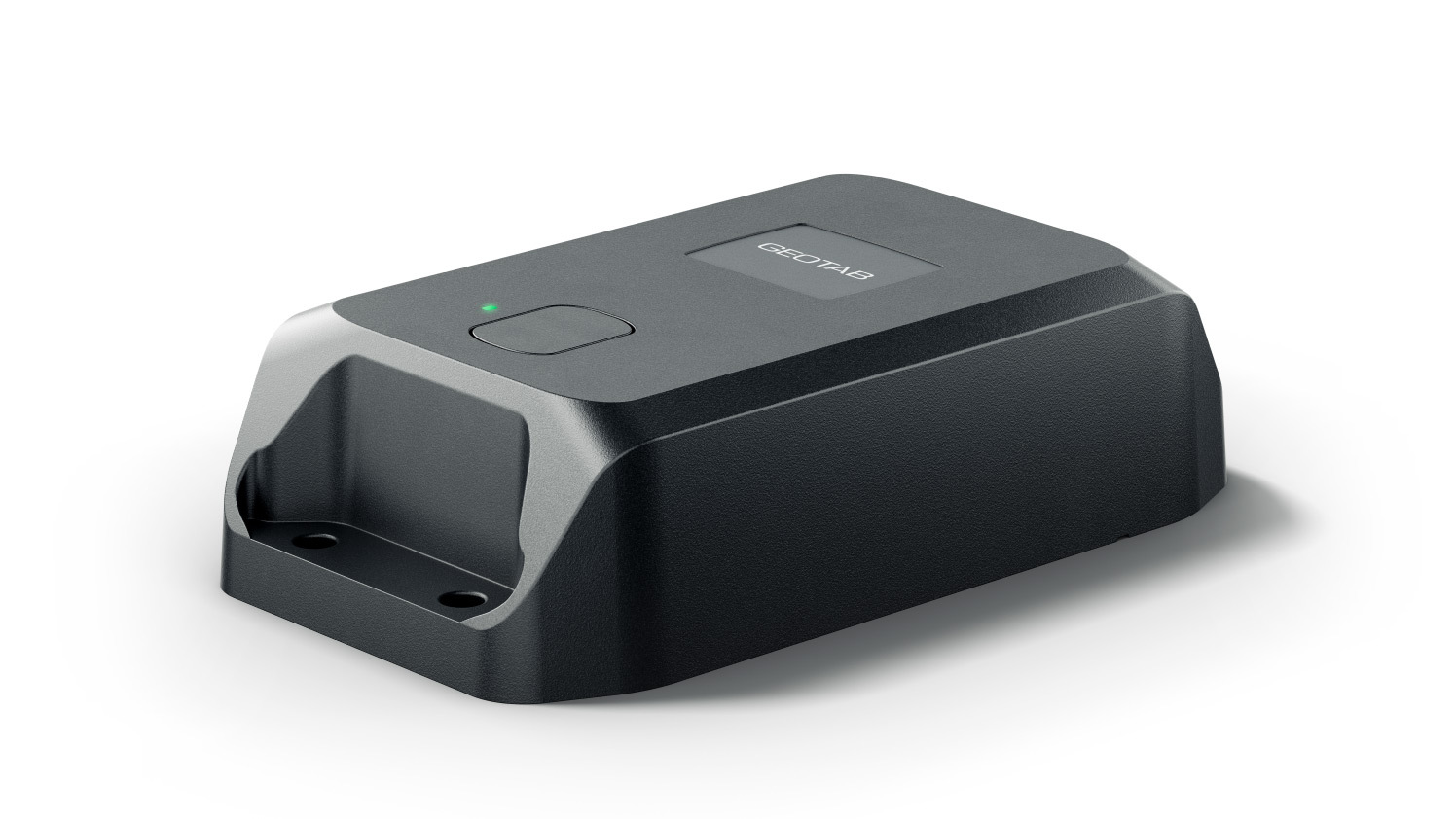
| GO Anywhere | Trailers, roll-offs, unpowered equipment | Battery-only version rated up to 10 years at hourly updates. The Plus version wires to power with a battery backup. |
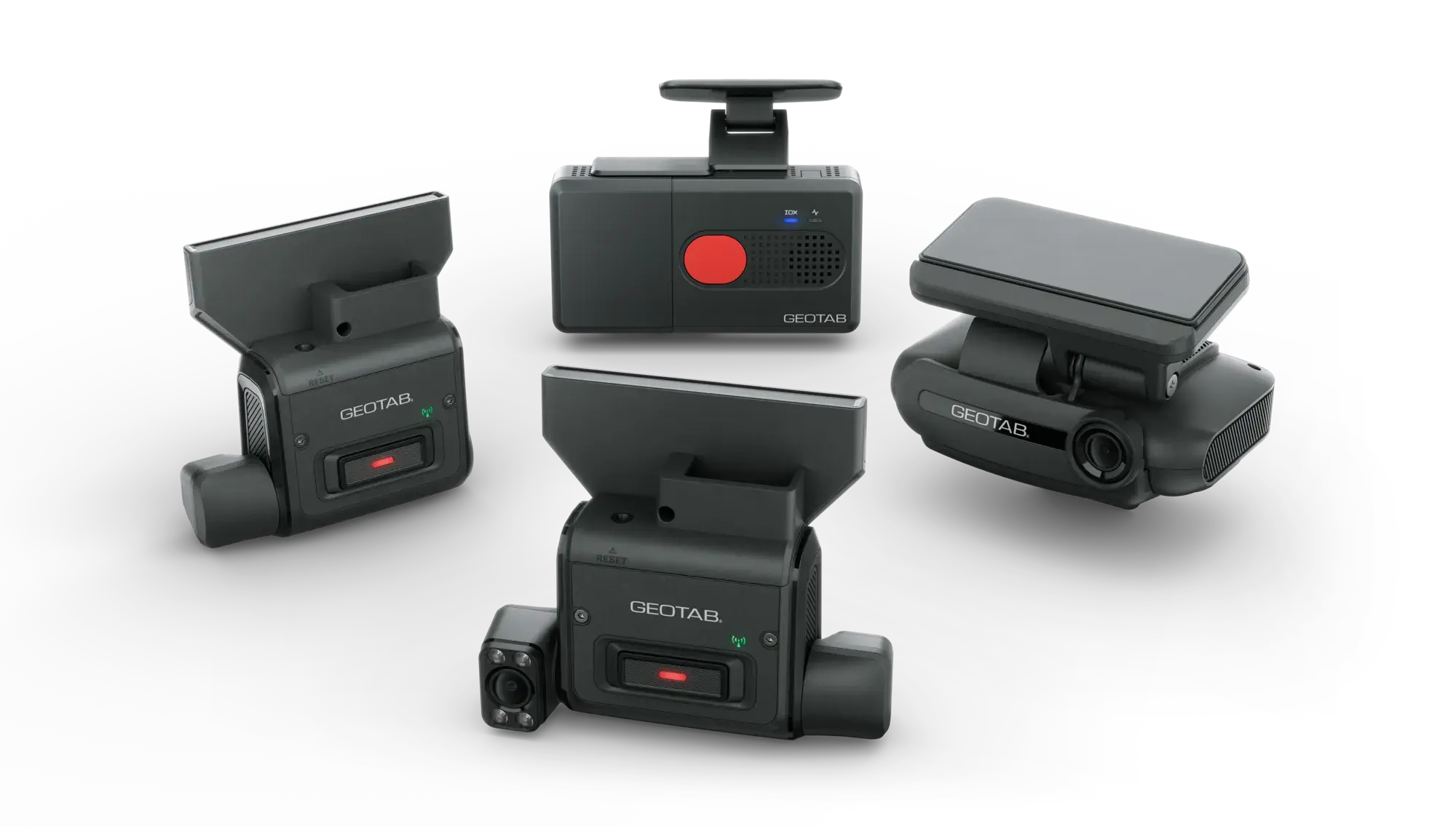
| GO Focus cameras | Video safety | Road-facing GO Focus, road and driver-facing GO Focus Plus, and the 2026 GO Focus Pro with up to five extra cameras for a full 360-degree view. |
The list is long, so here are the parts fleet owners actually use day to day.
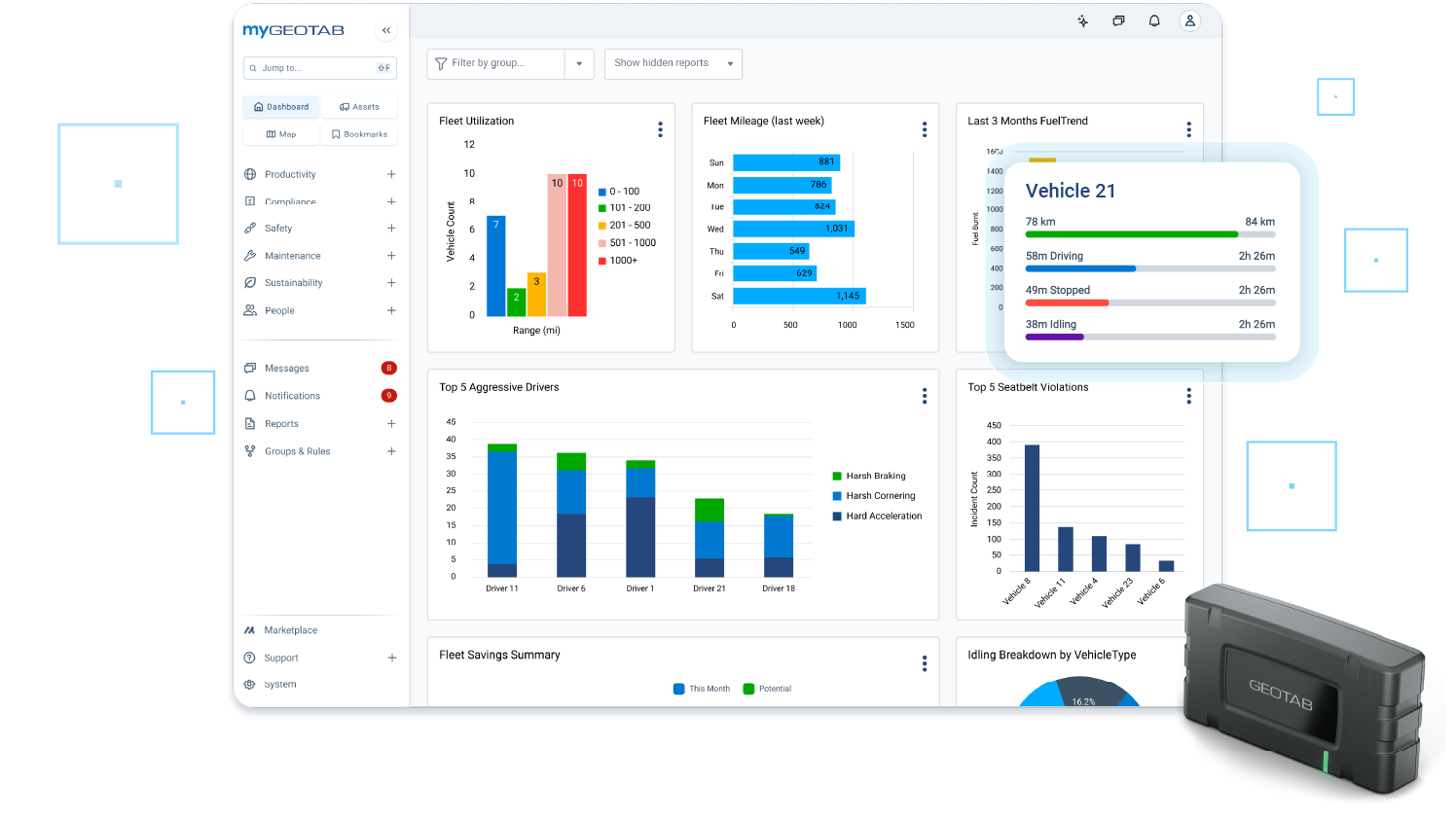
On the software side, Geotab has added an AI assistant called Geotab Ace, which lets the office ask questions in plain English instead of building reports by hand. In June 2026 it also launched a connector that lets outside AI tools read live fleet data, and in October 2026 it announced its own fuel card.
Geotab is a serious, well-built system, and the size of its partner network is a genuine strength: there is very little a fleet needs that someone hasn't already built an add-on for. Security is another real point in its favor. Geotab was the first telematics provider to get its device encryption validated under the federal FIPS 140-3 standard, which matters to government and utility fleets.
The things that decide whether Geotab works well for you are mostly on the install and support side, not the product itself. The GO10 needs the right Geotab harness, the right device has to go on the right age of vehicle, and every unit has to be tied down so it doesn't work loose behind the dash. A badly placed device is the most common reason a fleet decides the data can't be trusted. Get the install right and pick a partner who answers the phone, and Geotab is hard to beat.
Geotab doesn't publish prices, and that is not an oversight. Each partner sets its own rates, plans and contract terms. Independent reviews published in 2026 put typical bundled plans at roughly 30 to 40 dollars per vehicle per month, with hardware bought outright landing at roughly 80 to 120 dollars a unit. Higher-tier plans unlock features such as hours-of-service logging, fuel management and predictive maintenance.
Before you sign, ask three questions: how long is the contract, does the monthly fee go up each year, and what costs extra on top of the base plan. Installation is usually quoted separately, and it is the one line item where cutting corners costs the most later.
Mixed fleets of cars, trucks and equipment; government, utility and municipal fleets that need security certifications; fleets that want to connect tracking to other software; and anyone who wants one platform that grows from five vehicles to five thousand.
You want a published price and a single company to call, or your team has no patience for a learning curve. Reviewers on G2 and Capterra regularly mention a busy interface, reports that take work to set up and support quality that depends on the partner.
For most vehicles built from the early 2010s on, the GO10. For older vehicles, Geotab still recommends the GO9B. Heavy equipment that gets washed down needs the GO9 RUGGED, and trailers without power get a GO Anywhere.
Some units plug into the diagnostic port, but the GO10 requires a Geotab harness. Geotab itself recommends an authorized installer whenever panels have to come off, the port is somewhere risky or the device can't be secured.
Not directly. The GO10 uses a new connector, so it needs GO10 harness kits or Geotab's bridge adapter for specialty harnesses.
Yes. We can supply the equipment along with the installation, or install hardware you have already bought, whatever the brand.
Sources: Facts on this page come from Geotab's own published material, including its About page, device documentation on support.geotab.com and its 2025 and 2026 press releases, plus independent reviews from TechRadar and Tech.co (2026), G2 and Capterra. Prices are third-party estimates; your actual price is set by the company you buy from. GEOTAB is a registered trademark of Geotab Inc. API Signal is an independent installer and is not Geotab.
Tell us how many vehicles and what they are. We'll quote the hardware and the install together.