
A truck clearance sensor, also called an overhead clearance or height warning system, measures what is above the truck and sounds an alarm in the cab when a bridge, fuel canopy, drive-thru or parking garage is too low to pass under. We install clearance sensors on semi trucks, box trucks and work trucks across Georgia, South Carolina, North Carolina, Tennessee, Virginia, Alabama, Florida and Mississippi.
Hitting something overhead is one of the most expensive mistakes a truck can make, and one of the most avoidable. A research report published by the National Academies in 2025 counts an average of about 14,500 crashes a year into bridges in the United States, counting piers and rails as well as overhead beams. Virginia alone spends about $4 million a year repairing bridges hit by vehicles, and a 2020 Chattanooga Times Free Press report put Tennessee at a dozen or more bridge strikes a year, with repairs that can reach a million dollars.
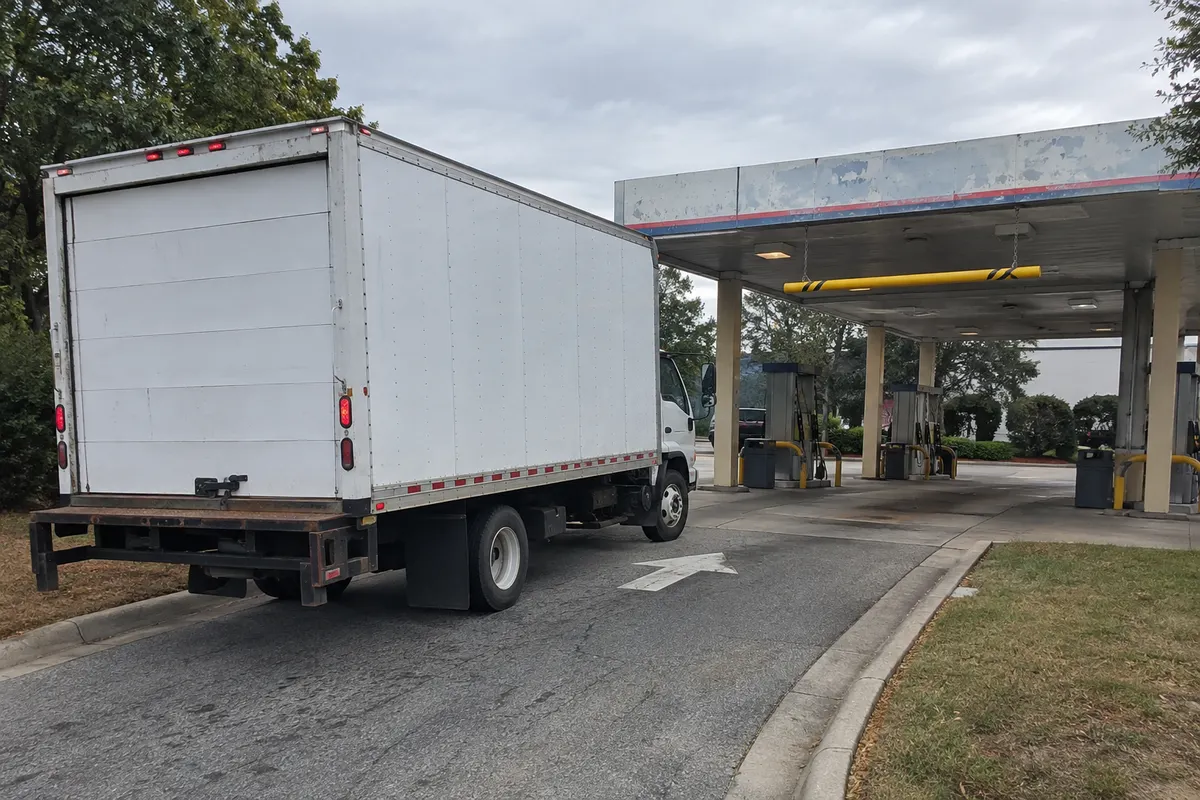
Bridges are only part of it. For a box truck or a bucket truck, the everyday hits are fuel station canopies, bank and restaurant drive-thrus, parking garage entrances, loading dock overhangs and low tree limbs. Each one can mean a torn roof, a damaged boom or body, a claim from the business that owns the canopy, and a truck out of service while it is repaired.
Georgia knows the problem well. The Georgia Department of Transportation funded a research project, published in 2017, to evaluate overhead clearance warning systems because it needed to cut the number of tall vehicles striking low bridges in the state.
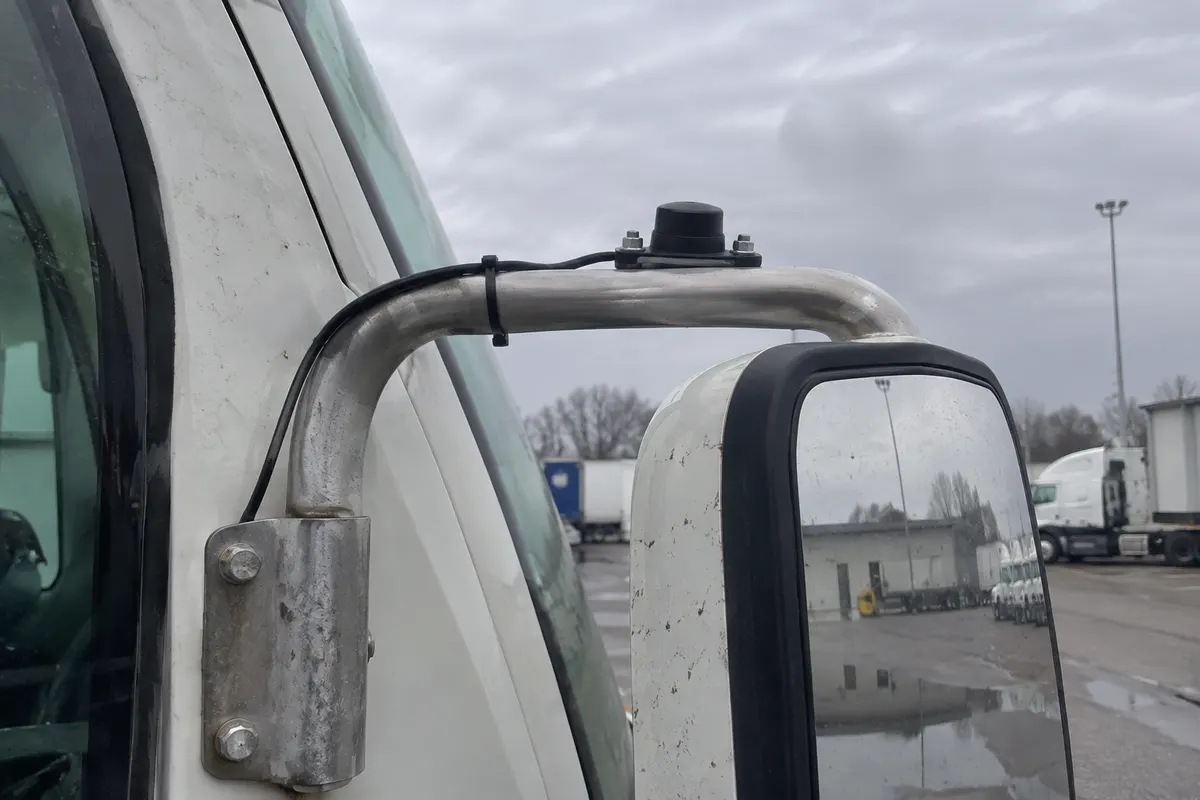
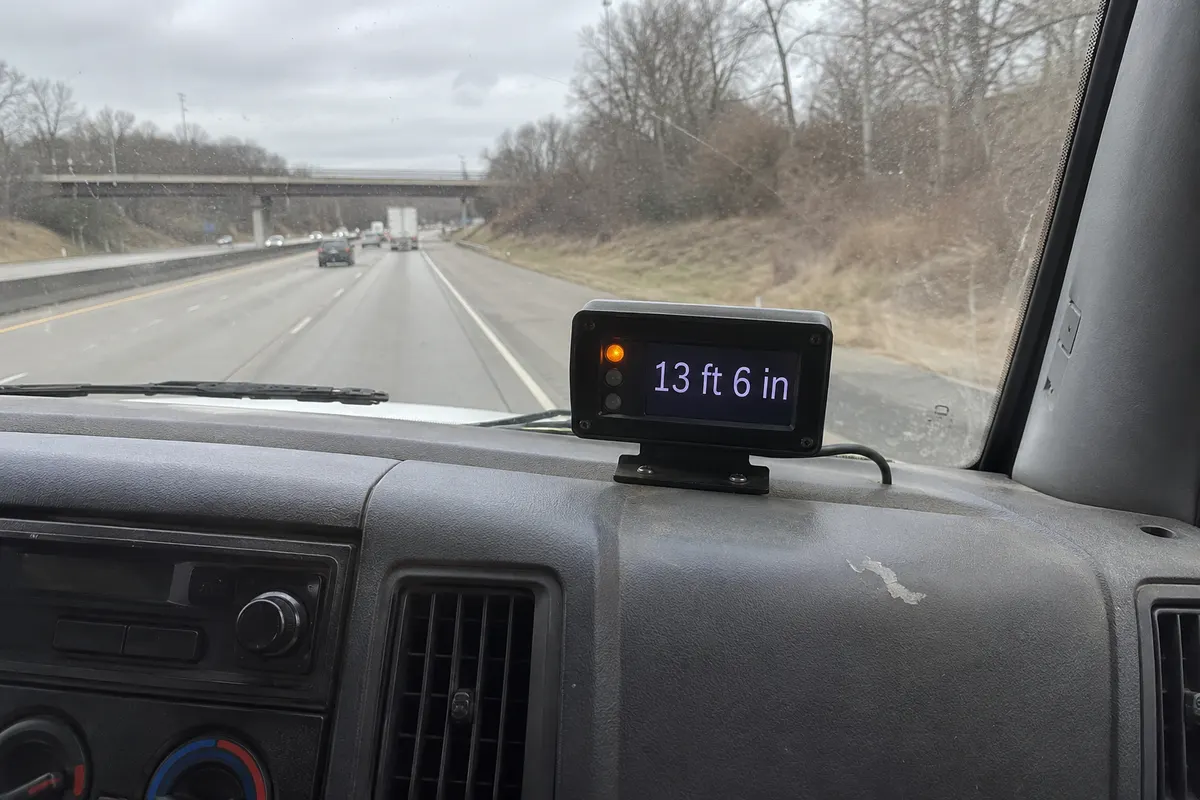
Most systems have two parts: a sealed sensor mounted outside the truck and a display in the cab. The sensor sends sound waves upward and reads how far away the object above is. The driver enters the height of the truck or its load, and when the clearance ahead is lower than that number, the display flashes and beeps so the driver can stop before contact. The GiraffeG4 is one well known example that works this way: a mirror mounted sensor, an in-cab readout that shows the measured height, and a warning when the obstacle is too low.
A clearance sensor is a slow speed tool. It does its best work when the driver slows down or stops at an overhead that is unmarked, damaged or questionable, and reads the real number before committing. Solid objects such as bridges, canopies and garage beams read well. Leaves and thin branches may not.
Not reliably. When the Federal Motor Carrier Safety Administration studied vehicle based low clearance detectors, it noted that GPS was not a complete answer because many low clearance overpasses were not documented in truck navigation databases. A New York State study of over-height truck strikes also found that most of the trucks that hit a bridge were using a consumer GPS, not one built for trucks.
A clearance sensor does not replace good routing or a truck GPS. It covers what they miss: the drive-thru nobody measured, the repaving job that took inches off a posted clearance, the sign that is missing, and the load that is taller than the driver thinks.
The sensor goes at or near the highest point of the cab, usually on the mirror bracket or the roof, where it has a clear view straight up. On a box truck, or a trailer that stands taller than the cab, we talk through where the true high point is before anything is mounted, because the sensor only protects the height the driver tells it to.
The cable is routed into the cab through a proper grommet and secured along the way, never pinched in a door seal where it will wear through. The display is mounted where the driver can see it without looking away from the road, and powered from a fused circuit that switches with the ignition, so it is on when the truck is running and not draining the battery overnight. We meter every circuit before we tap it, and wire colors for your truck are in our Vehicle Wiring Database.
Before we leave, we set the height with the driver, test the warning, and show them how to change the number when the load changes. That last step matters most: the sensor is only as good as the height it was given. We can supply the sensor with the installation, or install one you already have.
For a raised dump bed or a boom that is not stowed, a clearance sensor is the second line of defense. The first is a sensor that tells the driver, and the GPS tracker, that the bed or boom is up before the truck moves. See our dump body sensor and boom stowed switch pages.
A clearance sensor is one of the fleet sensors we install alongside GPS trackers and dash cameras. See all of them on our fleet sensor installation page, and find wire colors for your truck in our Vehicle Wiring Database.
We install clearance sensors alongside trackers from all of these brands. Need heavy duty trackers for trucks or heavy equipment? Every brand below makes them, so pick yours and we install it.
Common questions
They are built for slow approaches. Slow down or stop at any overhead you are unsure of and let the sensor read it before you commit.
Some can. The GiraffeG4, for example, is listed on the Geotab Marketplace. Tell us which platform you run and we check before you buy.
Not when it is installed right. We power the display from a fused circuit that switches off with the ignition.
Large limbs, usually. Leaves and thin branches may not read, so drivers still need to watch for them.
Yes. It is a straightforward 12 volt install, and adding it to a GPS or dash camera job saves a second trip to your yard.
We install across Georgia, South Carolina, North Carolina, Tennessee, Virginia, Alabama, Florida and Mississippi.
We install across Georgia, South Carolina, North Carolina, Tennessee, Virginia, Alabama, Florida and Mississippi, at your yard, on your schedule. Call or text 803-513-1009.
Constant. Ignition. Ground.
API Signal