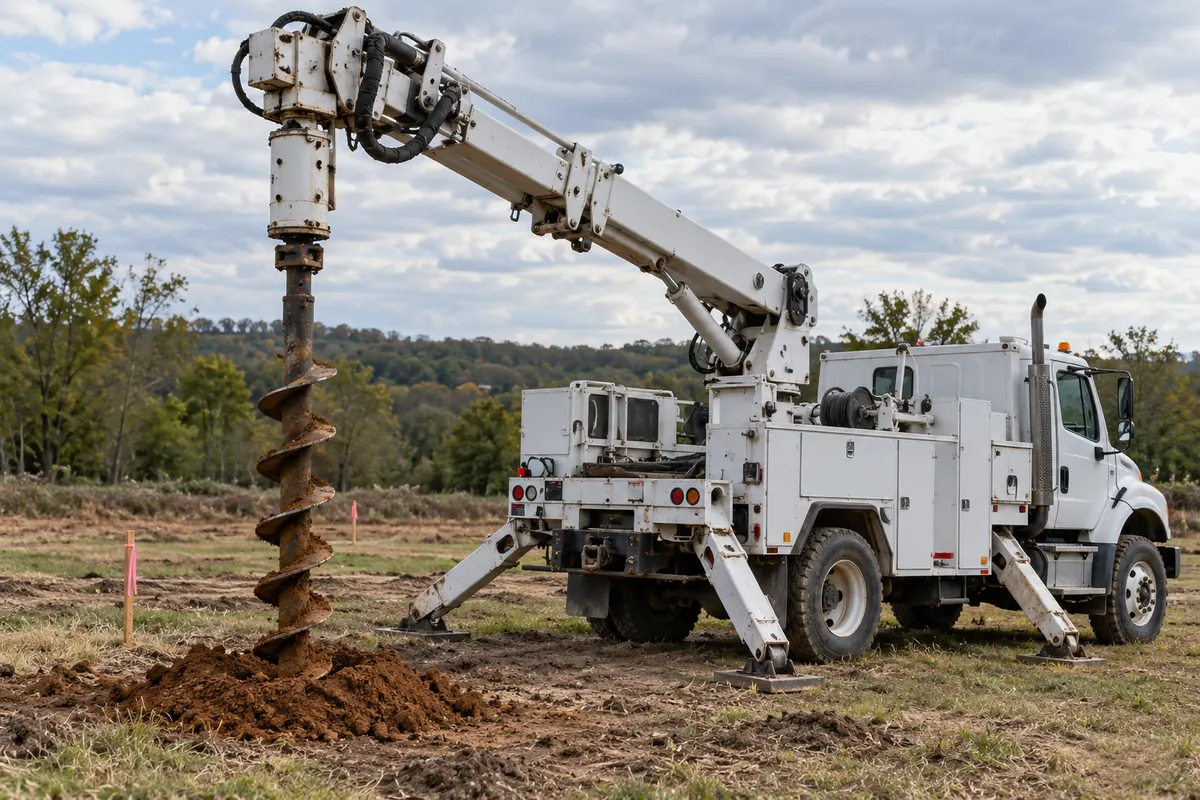
On a bucket truck the expensive part is not the chassis, it is the boom, and the boom is what the office cannot see. We wire the boom, the platform and the PTO into the tracker on utility, tree service, sign and telecom trucks, so every lift is recorded with the time and the place.
Fleet installs from $65 per vehicle. Testing a few vehicles first? We do pilot installs too.
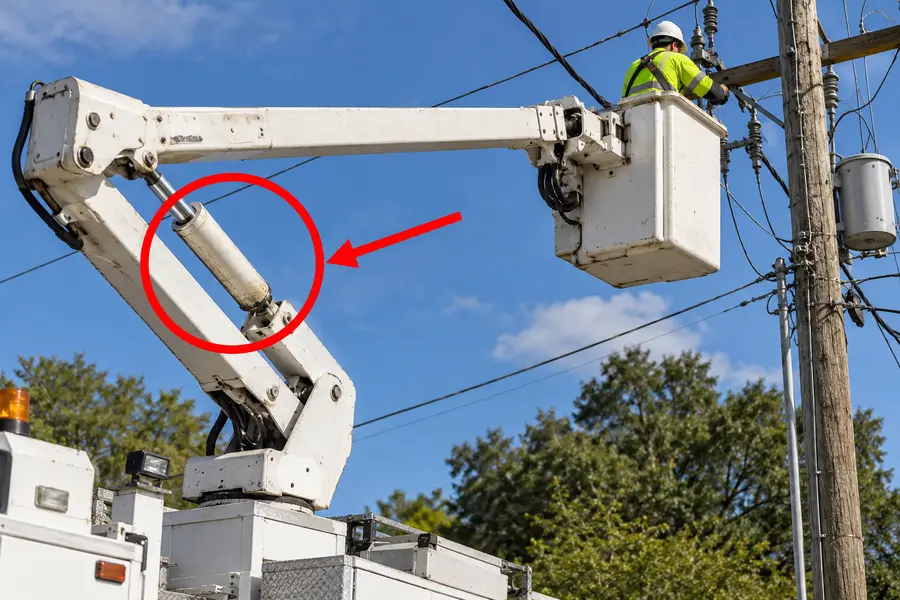
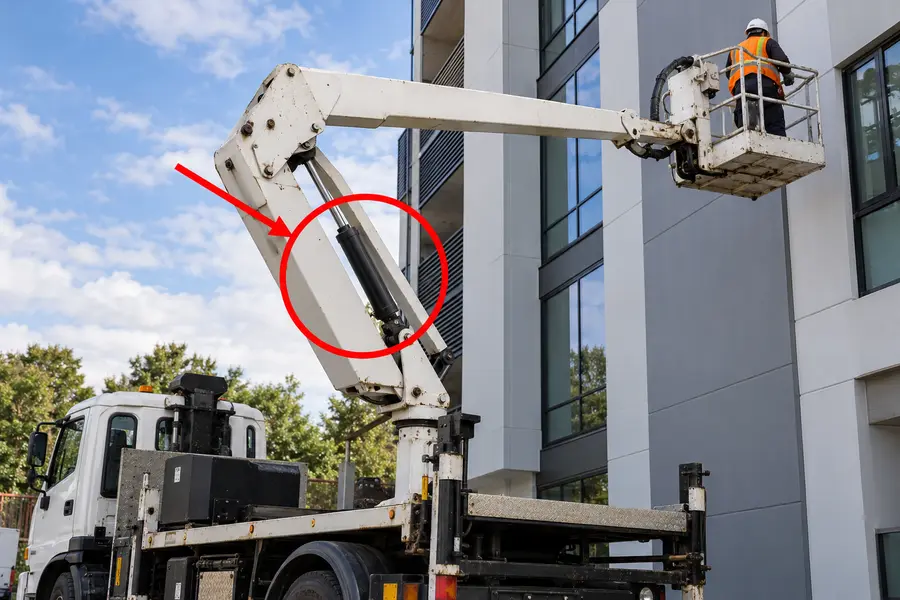
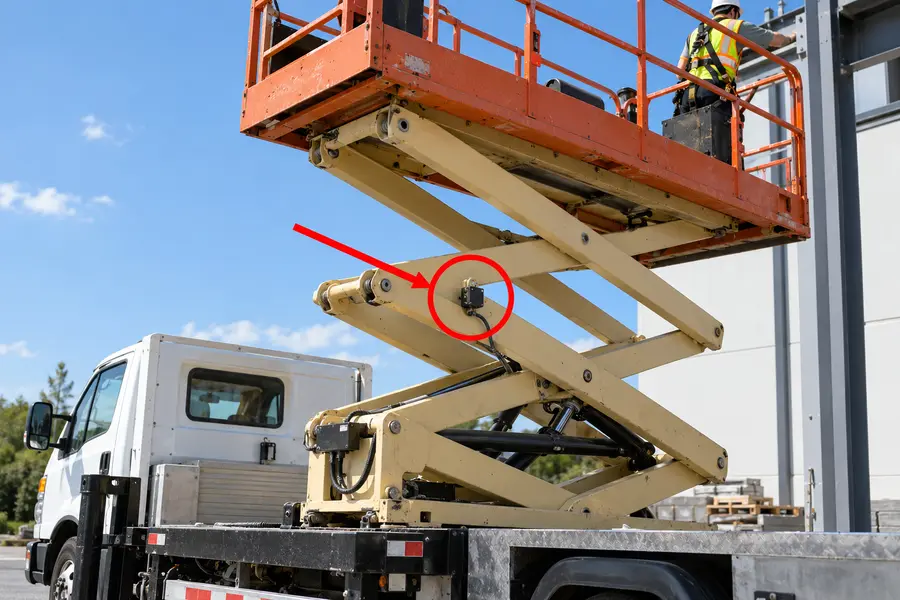
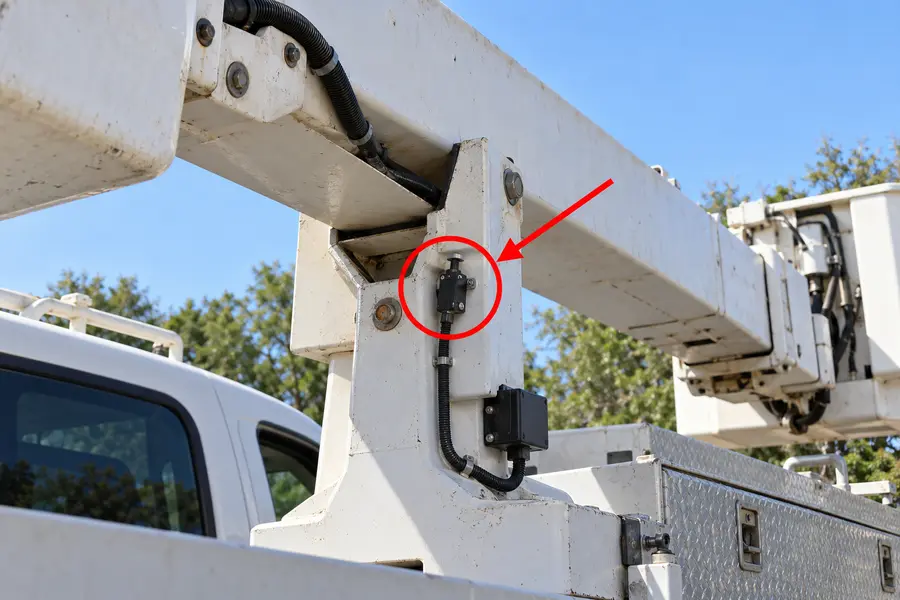
Each picture shows the part that gets wired into the tracker, circled in red. These are illustrations, not photos of customer trucks. The sections below explain how each one is monitored.
The boom on a bucket truck runs on hydraulics, and the hydraulic pump is usually driven by the truck's PTO. Wiring the PTO engaged signal into the tracker records every minute the boom system was powered. Where a fleet wants to know the boom was actually raised, not just powered, a position switch on the boom rest adds that. Together they give boom hours for service intervals and a record of the work done at each pole, which utility contracts often ask for.
On truck-mounted aerial lifts the signal we want is platform up. It usually comes from the lift's own stowed or travel position switch, or from the PTO that runs the hydraulics. Wired to a tracker input, it shows how long the platform was in the air at each address, and it can raise an alert if the truck moves while the platform is not stowed. Sign companies, building maintenance and electrical contractors use it to check job time against invoices.
Yes. A scissor lift mounted on a truck body has a down or stowed switch, and the lift's pump is either PTO driven or electric. Either signal can go to a tracker input. The platform then shows lift time at each stop, which is useful for warehouse, airport and catering trucks where the lift is the work.
A boom stowed switch closes when the boom is sitting in its rest. Wired into the tracker it does two jobs. It records when the boom left the rest and came back, and with an alert rule it warns the office, or the driver, when the truck is moving with the boom out of the rest. Driving off with the boom up is how bucket trucks hit bridges and wires, so this is one of the most asked-for inputs on utility fleets.
A digger derrick drills the hole and sets the pole, and both run off the PTO. We wire the PTO signal for boom and auger time, and the outrigger and boom stowed switches where the fleet wants travel alerts. See our full digger derrick monitoring page for how that install goes.
We meter every signal before we use it, so the tracker records the equipment actually working, not a switch that was only requested. Power connections are fused, wiring is secured away from heat and moving parts, and each input is tested with the equipment running before the truck goes back out. Wire colors for the truck side are in our Vehicle Wiring Database. See all the equipment we monitor for the other trucks and equipment we wire in.
Every major tracking platform can record boom and PTO signals, and we wire them into all of them. Need heavy duty trackers for trucks or heavy equipment? Every brand below makes them, so pick yours and we install it.
Common questions
Yes. We wire the PTO signal, and a boom position switch where the fleet wants true boom up time, into the tracker.
Yes. A boom stowed switch wired to the tracker can trigger an alert when the truck moves with the boom out of its rest.
Most major tracking platforms have inputs for it. We check your devices before the job.
We install across Georgia, South Carolina, North Carolina, Tennessee, Virginia, Alabama, Florida and Mississippi, at your yard or job site.
We install across Georgia, South Carolina, North Carolina, Tennessee, Virginia, Alabama, Florida and Mississippi, at your yard, on your schedule. Call or text 803-513-1009.
Constant. Ignition. Ground.
API Signal