
A driver facing camera, also called a driver monitoring camera or in-cab camera, points at the driver’s seat and records the cab. We install them across Georgia, South Carolina, North Carolina, Tennessee, Virginia, Alabama, Florida and Mississippi. This page gives fleet managers, safety managers and owners a rollout kit: what to tell drivers, what the audio rules are in each state, and what your written policy should cover.
A driver facing camera is a small camera mounted in the cab that records the driver and the inside of the truck. Fleets also call it a driver monitoring camera or an in-cab camera. It usually runs alongside a road facing dash cam on the windshield, so the video from both sides of the glass tells the whole story of an event.
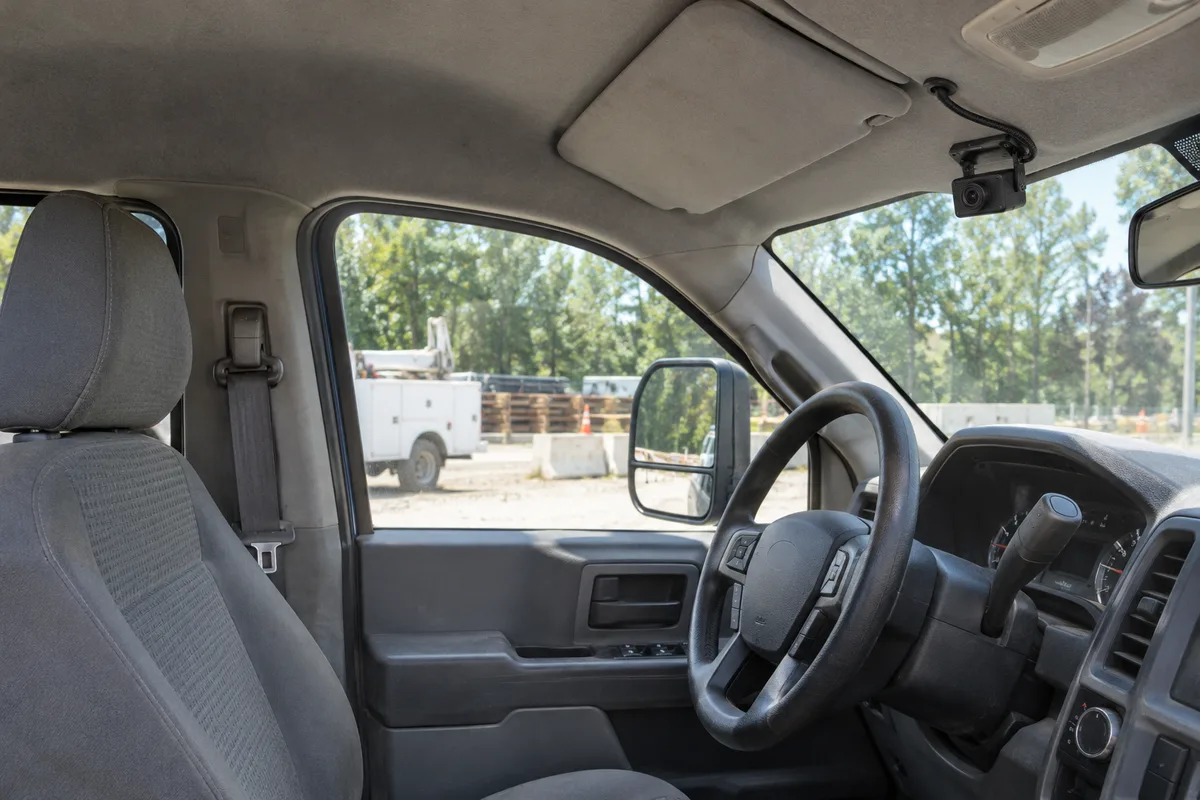
What the camera can flag depends on the platform you choose. Some systems use AI to flag events such as phone use or a seat belt left unbuckled, and others only record video that someone reviews after an event. Ask your platform what it detects before you decide, and write down what you plan to use it for.
The camera is the easy part. What decides whether drivers accept it is what you tell them first. Before the first camera goes in, we recommend a written notice that every driver reads and signs. It should cover these points:
For owners and executives, three questions to ask your fleet manager are what is being recorded, who can see it and how long it is kept. If the answers are not in writing, the policy is not finished.
The road facing camera goes high on the windshield, behind or beside the rearview mirror, where it sees the road ahead and stays out of the driver’s line of sight. The cable is tucked along the edge of the glass and the headliner so nothing hangs loose in the cab.
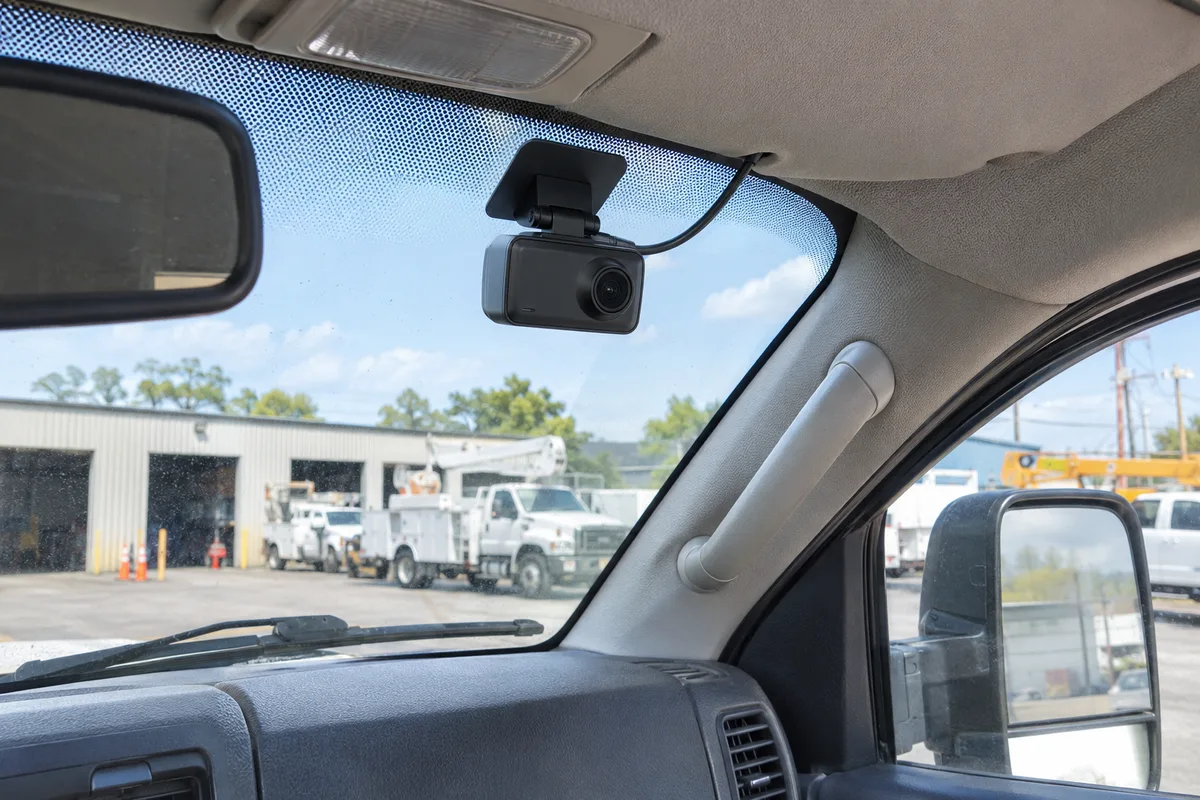
A driver facing camera and a road facing camera together are what most fleets mean by a dual facing dash cam. If you also want mirror cameras and a rear view, see our 4 channel dash cam installation and our 360 camera systems.
For audio, yes. Florida is an all party consent state for recording conversations (Florida Statutes 934.03), which means every person in the conversation has to agree. Georgia, South Carolina, North Carolina, Tennessee, Virginia, Alabama and Mississippi are one party consent states, where one person in the conversation agreeing is enough.
Video of the road is a different question from audio in the cab. Because a rule can turn on who is in the truck and where it is, we recommend leaving in-cab audio off unless you have a reason to record it and have given drivers written notice. A truck that runs into Florida, or that carries passengers, is the case to ask your lawyer about.
This is general information, not legal advice. Our summary comes from a 50 state survey of recording laws, so check the current statute with your lawyer before you rely on it. Tracking is a separate subject: see our GPS tracking laws for all eight states.
Every camera feeds a recorder, and the recorder is where an install is won or lost. We mount it on a bracket out of the way, run the cables in split loom, tie them down so nothing rubs or hangs, and connect power to the three wires every install depends on: constant, ignition and ground. We check every camera channel on the recorder before the truck leaves.
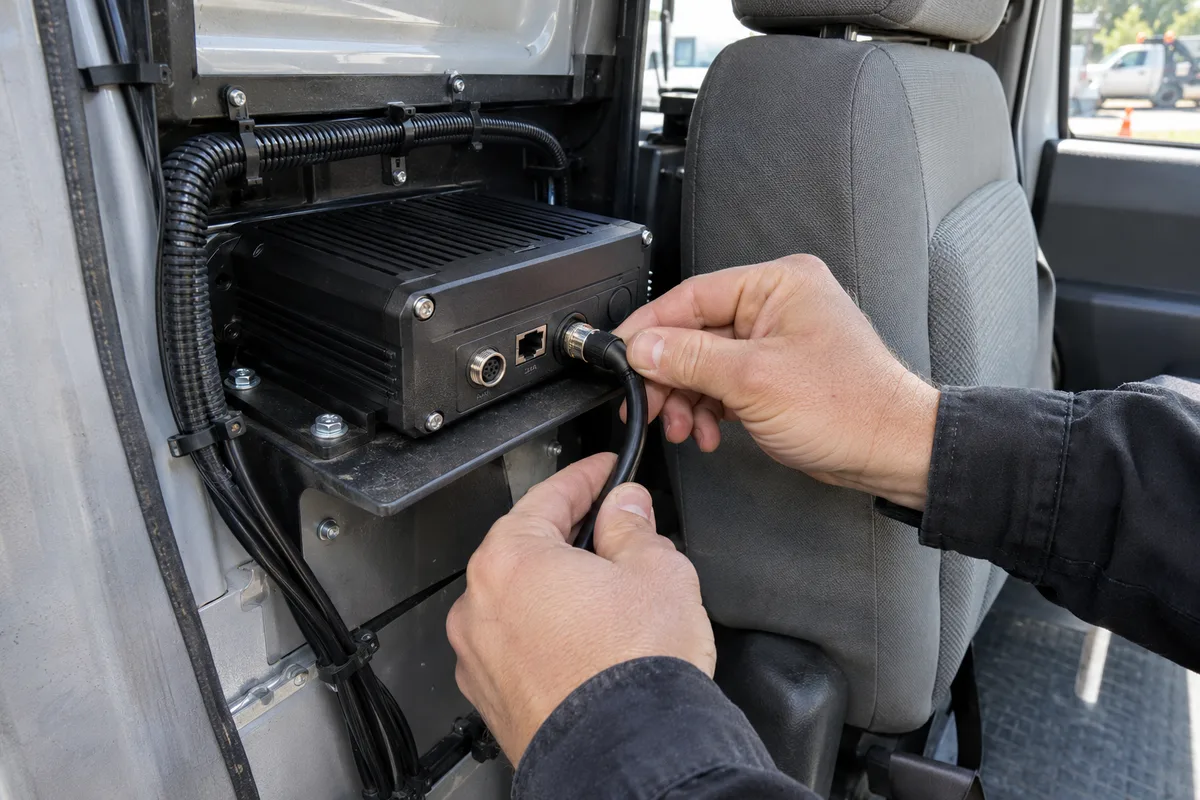
Find the right wires for any vehicle in our Vehicle Wiring Database, or see all of our camera installation services. We supply the equipment along with the installation, or install what you have already bought, whatever the brand.
Built by installers, for installers.
Constant. Ignition. Ground. API Signal.
Many of these brands sell cameras alongside their trackers, and we install both. Need heavy duty trackers for trucks or heavy equipment? Every brand below makes them, so pick yours and we install it.
Common questions
A camera mounted in the cab that records the driver and the inside of the truck. It is also called a driver monitoring camera or an in-cab camera, and it usually runs together with a road facing dash cam on the windshield.
No. Video can be recorded without audio on systems that let you turn audio off, so ask your platform before you buy. Florida requires everyone in a recorded conversation to agree, and the other seven states we serve require one person’s consent, so we recommend leaving in-cab audio off unless you have a reason and written notice. This is general information, not legal advice.
We recommend yes, in writing, with each driver signing the notice before the first camera is installed. The notice covers what is recorded, who can watch it, when it is reviewed and how long it is kept.
What is recorded, whether audio is on, who can watch the footage, when it is reviewed, how long it is kept, how it is used for coaching, and what happens to the footage after a crash or a claim.
High on the windshield behind or beside the rearview mirror, out of the driver’s line of sight, with the cable tucked along the glass and the headliner.
Yes. We install across Georgia, South Carolina, North Carolina, Tennessee, Virginia, Alabama, Florida and Mississippi, at your yard, on your schedule, and we can supply the equipment along with the installation.
We install across Georgia, South Carolina, North Carolina, Tennessee, Virginia, Alabama, Florida and Mississippi, at your yard, on your schedule. Call or text 803-513-1009.
Constant. Ignition. Ground.
API Signal