
A 4 channel dash cam records four cameras at once: the road ahead through the windshield, both sides of the truck from the mirrors, and a fourth view at the back or inside. We install 4 channel truck camera systems across Georgia, South Carolina, North Carolina, Tennessee, Virginia, Alabama, Florida and Mississippi, with the cables routed, the recorder mounted out of the way and every channel checked before the truck leaves.
Testing a few trucks first? We do pilot installs too.
A 4 channel dash cam is a truck camera system built around one recorder with four camera inputs. In the fleet world the recorder is often called an MDVR, short for mobile digital video recorder. Each camera records on its own channel, so after an incident you can play back the front, left, right and rear views from the same moment.
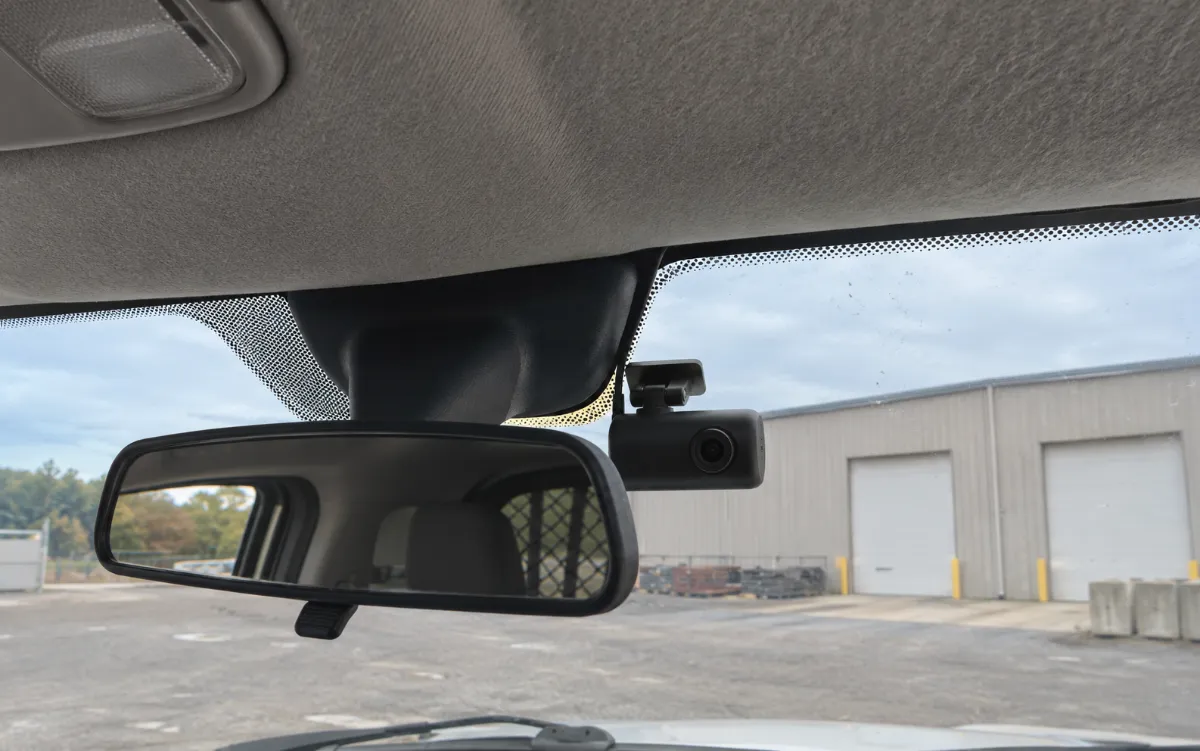
On most work trucks the four cameras are a road-facing dash cam on the windshield, a camera on each mirror arm and one more camera where the truck needs it most: on the back of the body, inside the cab, or in the cargo area. Many systems also carry GPS and a cellular connection, so footage can be pulled up from the office without anyone walking out to the truck.
Toward the back of the truck. The mirror cameras are aimed rearward along the side of the body so they record lane changes, the blind spot beside the box or trailer, and anything that scrapes the side of the truck. That is the footage that settles a side-swipe claim, and it is the angle a single windshield camera can never see.
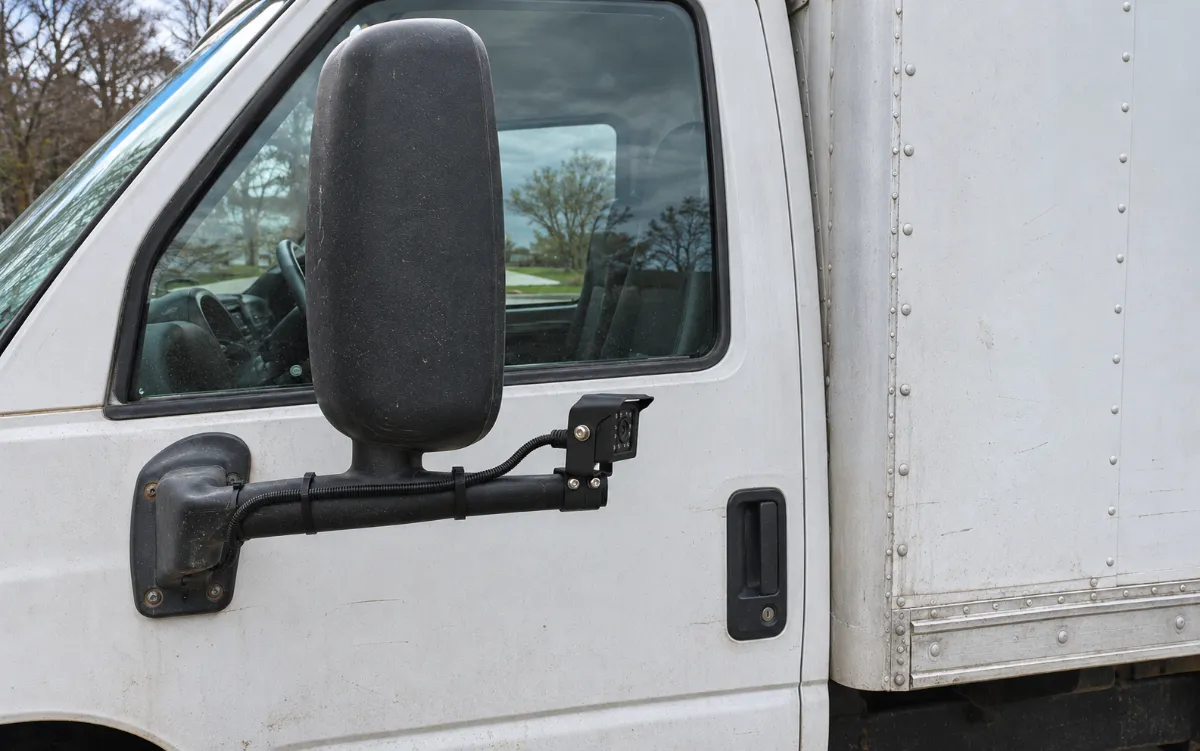
The passenger side matters most, because it is the side the driver sees least. On some trucks we also angle a camera down at the front right corner, which covers the spot where a car or a person disappears below the hood. That is an added camera, not part of the standard four.
Each mirror camera mounts to the mirror arm with a bracket, and its cable runs along the arm, through the door hinge area and into the cab with a grommet and a drip loop, so water does not follow the wire inside. The dash cam goes high on the windshield, behind the rearview mirror and out of the driver's line of sight. The fourth camera is mounted and sealed wherever the fleet chose to put it.
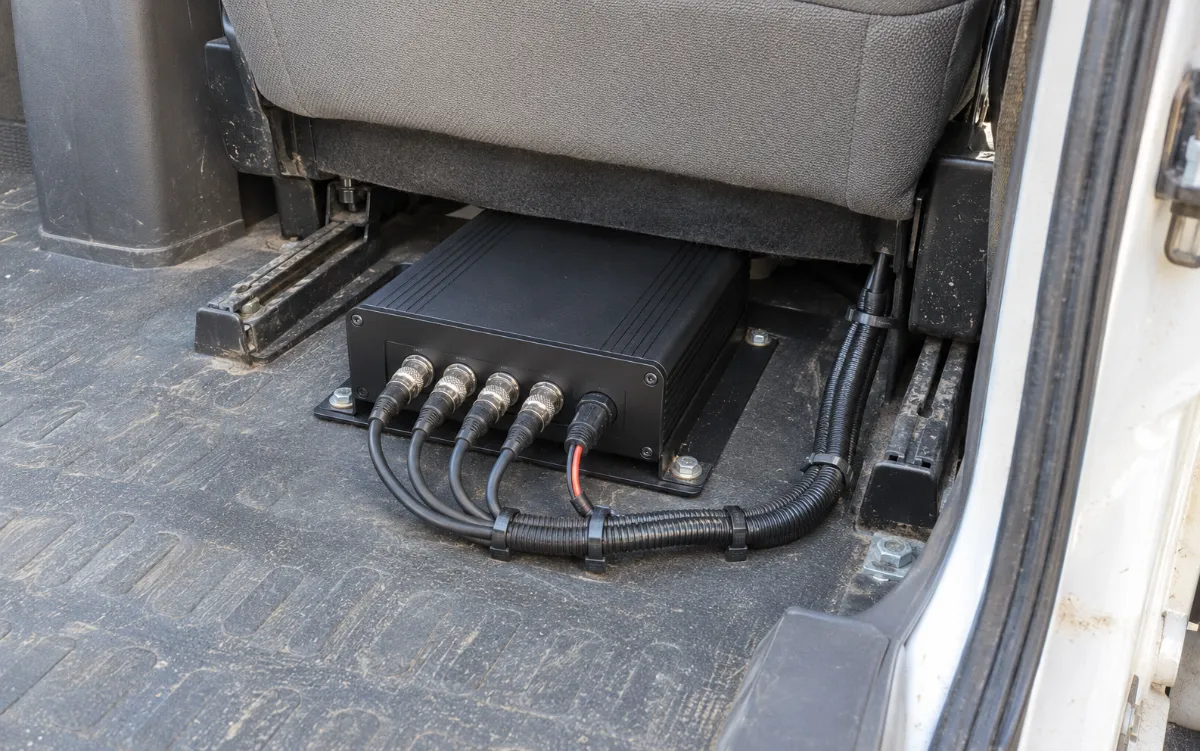
The recorder itself is bolted down, usually under or behind a seat, with all the cables loomed and tied together. Power is the same as every install we do: constant, ignition and ground, each on the right circuit and fused. If the vehicle's wiring is new to you, look it up in our Vehicle Wiring Database before you start. Before the truck goes back into service we check that all four channels record, that the date and time are right, and that the footage plays back.
No. A 4 channel dash cam records four separate views, so you have evidence of what happened. A 360 camera system stitches its cameras into one live top-down picture, so the driver can see all around the truck while backing and parking. One is mainly a record, the other mainly a driving aid.
Some trucks need both, and they can share a cab. If your drivers are hitting things at low speed in yards and at loading docks, look at our 360 camera system installation. If you need to know what happened out on the road, a 4 channel system is the place to start.
Decide what the fourth camera is for: backing, the driver, the cargo, or equipment like a lift or a dump body. Decide how long the recorder needs to keep footage, and whether you want it on a cellular plan so the office can see it, or only saved on the truck. And decide who will actually review the footage, because a camera nobody checks only helps after something has already gone wrong. If that camera is for the driver, read our driver facing camera installation and rollout kit.
Plan more time per truck than a single dash cam. Two mirror runs and a recorder take longer than one camera on the windshield, and a rushed cable through a door hinge is the first thing to fail. For every other camera we fit, see our fleet dash cam installation page.
Many of these brands sell cameras alongside their trackers, and we install both. Need heavy duty trackers for trucks or heavy equipment? Every brand below makes them, so pick yours and we install it.
Common questions
A camera system with one recorder and four camera inputs, usually a windshield dash cam, a camera on each mirror and one rear or cab camera, all recording at the same time.
Toward the back of the truck, aimed along the side of the body, so they record lane changes and the blind spot beside the box or trailer.
A mobile digital video recorder, the box that records every camera on the truck. On a 4 channel system it takes four cameras.
No. A 4 channel dash cam records four separate views. A 360 system stitches its cameras into one top-down picture for the driver.
Usually bolted under or behind a seat, out of the way of the driver and the cargo, with every cable loomed and tied.
We install across Georgia, South Carolina, North Carolina, Tennessee, Virginia, Alabama, Florida and Mississippi, at your yard, on your schedule. Call or text 803-513-1009.
Constant. Ignition. Ground.
API Signal