
A 360 camera system puts cameras on all four sides of a truck and joins them into one top-down picture, so the driver can see everything around the vehicle at once. We install 360 systems on box trucks, buses and large work trucks across Georgia, South Carolina, North Carolina, Tennessee, Virginia, Alabama, Florida and Mississippi, mounted, wired and calibrated so the picture lines up.
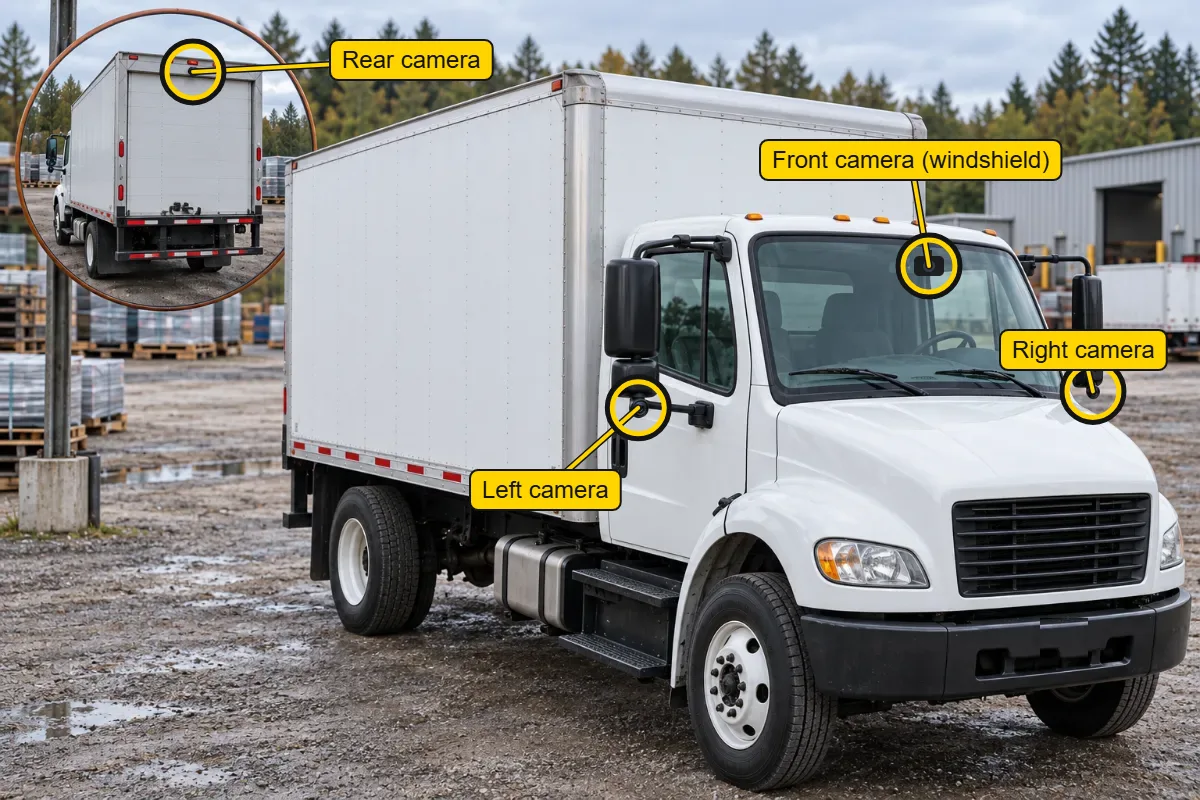
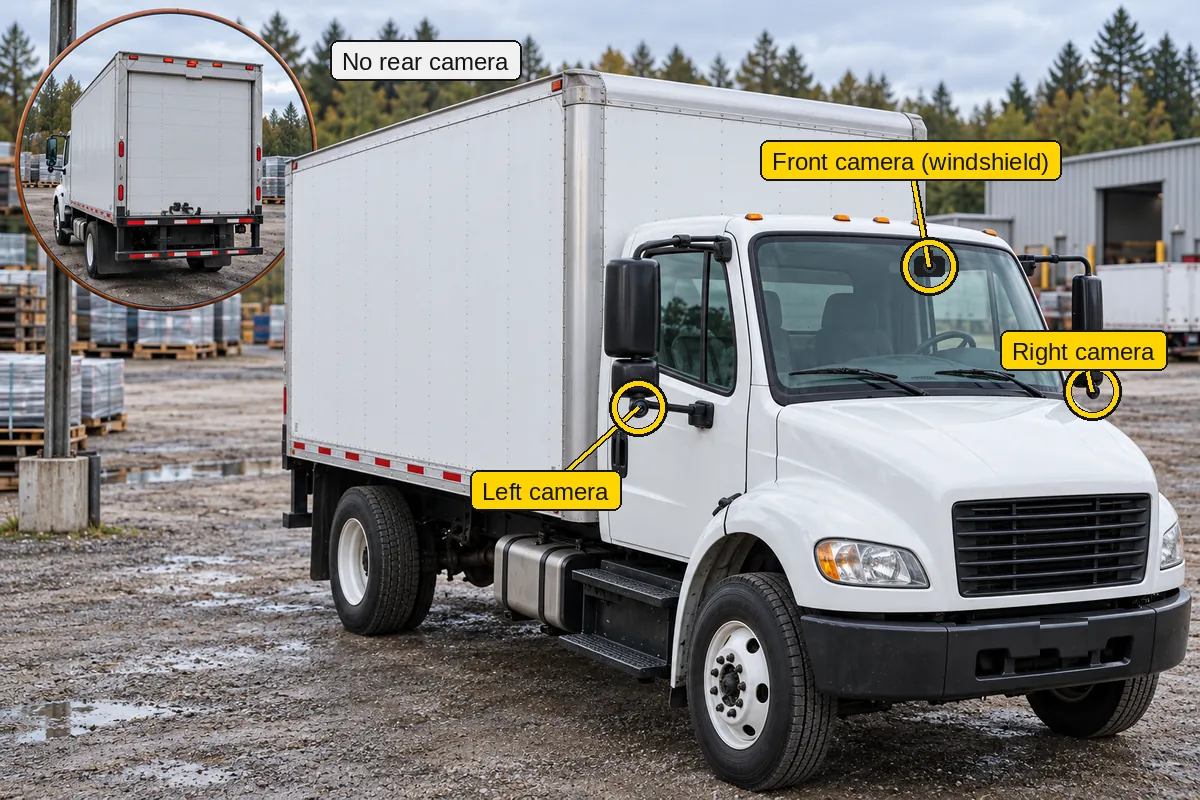
A 360 camera system, also called a surround view or bird's-eye view system, uses four or more cameras: a front camera, usually the windshield dash cam, one on each side and one at the back. A control box takes the four pictures and stitches them into a single view from above, as if a camera were hovering over the truck. The driver sees the truck in the middle of the screen with everything around it.
Most systems also show each camera on its own, and switch to the side or rear view automatically when the driver signals or shifts into reverse. Many record all four cameras, which gives a full record of what happened around the truck, not just in front of it.
Any vehicle where the driver can't see what is right next to it. The passenger side of a box truck, the front bumper of a tall cab-over, the area around a bus at a stop, the corners of a refuse truck working a tight street. Those are the places where low speed collisions with people, posts and parked cars happen.
For a van or pickup, a backup camera usually covers the problem; see our backup camera installation page. A 360 system earns its place on the bigger trucks where the blind spots are on more than one side.
Each camera mounts at a fixed spot and angle: the front camera is usually the dash cam on the windshield, the side cameras go under or beside each mirror, and the rear camera goes high on the back of the body. The cables run back to a control box in the cab, which powers from ignition and takes signals from the turn signals and reverse circuit to switch views. On a box truck the rear cable runs the full length of the body, so it is routed along the frame and sealed wherever it passes through metal. Wire colors for the signal circuits are in our Vehicle Wiring Database.
The stitched picture only lines up if the system knows exactly where each camera is. After the cameras are mounted, calibration targets or mats are laid out around the truck at set distances and the system is calibrated against them. Skip that step, or do it on uneven ground, and the top-down view shows curb lines that bend and objects that jump between cameras.
Calibration also matters later. If a camera gets knocked by a branch or a dock and moves, the view goes out of line and needs recalibrating. That is worth knowing before you buy: a 360 system needs a bit more care than a single camera.
Allow more time per truck than a dash cam install, and space around the truck for calibration. Decide whether you want the four cameras recorded or just a live view, and whether the system needs to work with your existing dash cams or telematics. Tell us the make and body of the trucks so we can plan camera positions before we arrive. See all the types of GPS trackers and fleet systems we install for how 360 systems compare with the other options.
Common questions
Usually four, one on each side of the truck, joined into one top-down picture. Some larger vehicles use more.
Many do. Recording depends on the system, so check before you buy if you want footage from all four cameras.
The stitched picture only lines up when the system knows where each camera sits. Calibration is done with targets laid around the truck after the cameras are mounted.
Usually not. A backup camera covers most van blind spots. 360 systems are for bigger trucks with blind spots on several sides.
We install across Georgia, South Carolina, North Carolina, Tennessee, Virginia, Alabama, Florida and Mississippi, at your yard, on your schedule. Call or text 803-513-1009.
Constant. Ignition. Ground.
API Signal