
Drayage trucking runs on turn times, chassis and driver hours. We install GPS, truck dash cams and trackers on drayage trucks, yard trucks and container chassis at your lot in eight states, and we send every other port to a partner installer.
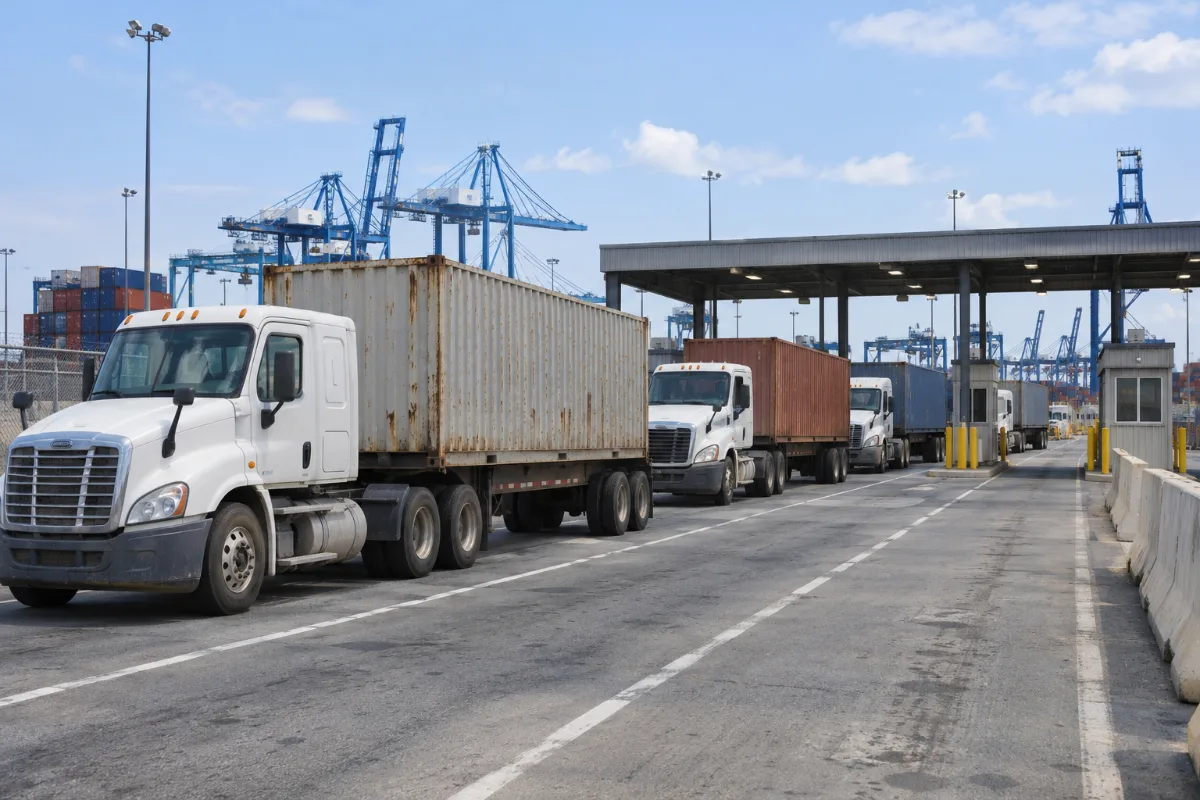
Drayage is the short haul that moves a container between a port terminal and the places around it: warehouses, distribution centers, empty depots and rail ramps. A drayage truck can make several of these trips in a shift, and every trip starts and ends in a line at a terminal gate. That is why drayage trucking is a tracking job before it is a driving job. Dispatch needs to know where each truck is, how long it has sat in line, and which container and chassis it is pulling.
GPS answers the first two questions. A truck dash cam answers the question that comes up after a gate dispute, a yard bump or a claim: what actually happened. We install both on drayage tractors, so the location record and the video record come from the same visit.
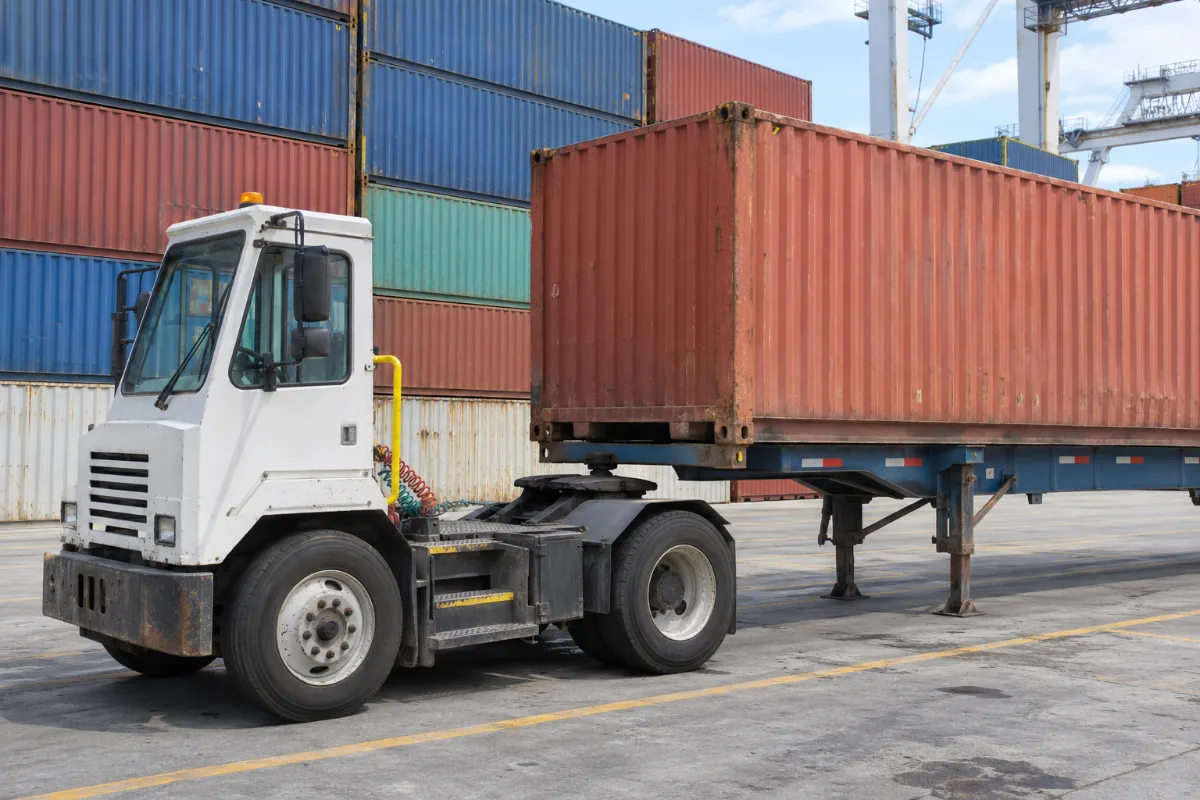
A yard truck, also called a hostler truck or a terminal tractor, rarely leaves the yard, so mileage tells you very little. Hours tell you more. Engine hours, idle time and where the truck spent the shift show whether a hostler is moving boxes or waiting for the next move. Yard trucks also take more bumps than road tractors, so a camera on the cab earns its keep.
Container chassis are the third piece. A chassis has no engine of its own, so a tracker on the frame is what tells you which chassis is where, how long it has been out and whether it came back. We mount trackers on chassis frames and match them to the trucks that pull them. For the Southeast version of this work, see our page on GPS and cameras for drayage, chassis and yard trucks around Savannah and Charleston.
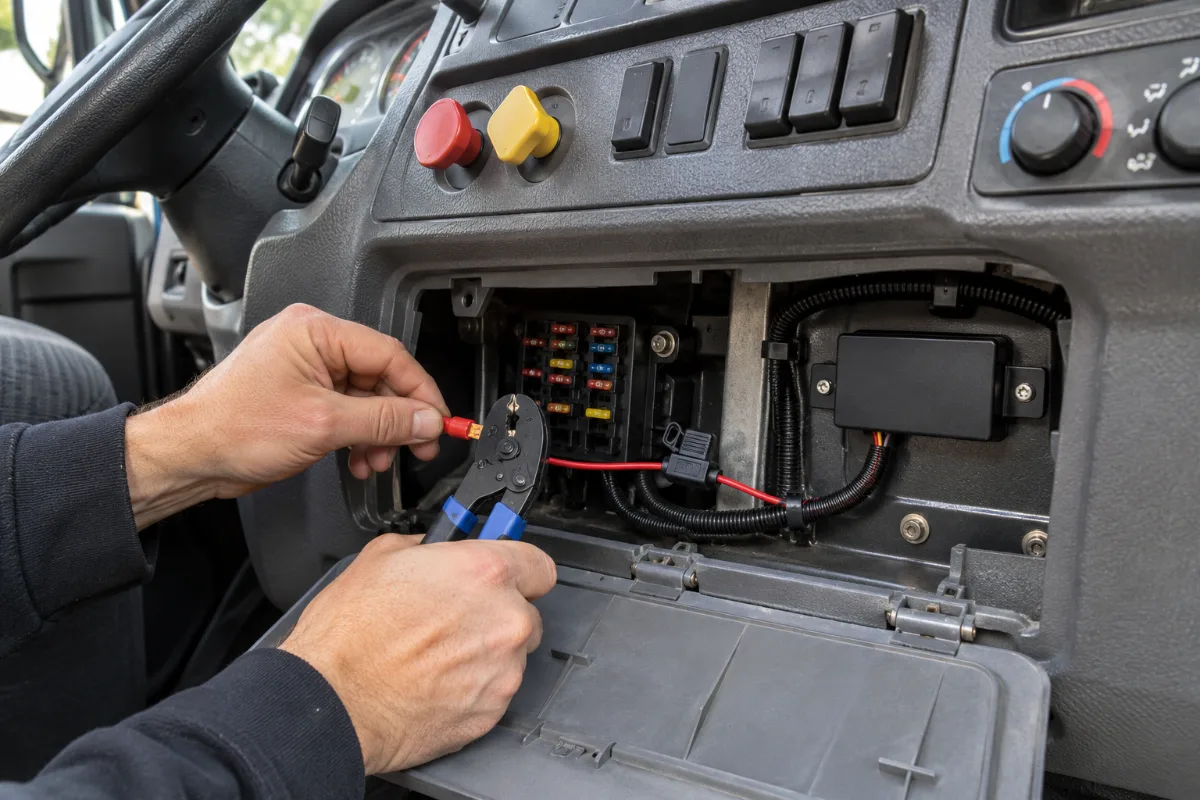
We install at your lot, so the truck goes back to work the same day. On a drayage tractor the job is the same wiring we do on any heavy truck: constant power, ignition and ground taken from the right places, a fuse in the line, and the device mounted where it can see the sky. We hardwire it. A device that only plugs into the diagnostic connector can be knocked loose by the first driver who reaches for it, and a drayage driver climbs in and out of the cab all day.
Dash cameras go on the windshield, with the wire routed along the headliner and pillar to the same fused power. If you want the sides and rear covered as well, ask about our 4 channel dash cam systems. Many drayage fleets start with GPS on every truck and add cameras once they see the data. Wire colors for a specific truck are in our vehicle wiring database.
We cover eight states: Georgia, South Carolina, North Carolina, Tennessee, Virginia, Alabama, Florida and Mississippi. That includes the container ports in them, such as Savannah, Charleston, Wilmington, Hampton Roads, Jacksonville, Miami, Port Everglades, Tampa, Mobile and Gulfport. For a port in any other state, we send the job to a partner installer near the port. Tell us the port and we will tell you plainly who will do the work and when.
Ports differ a lot in size. The Georgia Ports Authority reported nearly 5.7 million TEUs through Savannah in 2025 (a TEU is one twenty-foot container). JAXPORT reported nearly 1.4 million TEUs in its 2025 fiscal year, and Oakland handled about 2.25 million TEUs in 2025, according to Transport Topics. A small port fleet and a Savannah fleet have the same tracking needs. The difference is how many trucks are waiting in line.
FreightWaves reported that the Los Angeles and Long Beach complex has 13 container terminals, each with its own rules for appointments, procedures on the terminal and hours. It also reported that a new driver can take up to 30 days to learn how each terminal works. A missed appointment or the wrong equipment can create a trouble ticket, and the Harbor Trucking Association said that happens on roughly 3 percent of trips and can cost a driver hours. At the Port of Virginia, FreightWaves reported trucks moving through the gates in an average of 36 minutes.
Those are the minutes GPS turns into numbers. A geofence around each terminal gate shows time in line, time on the terminal and time to the warehouse for every truck, so you can see which terminal, which hour and which driver is costing you the day.
Drayage carriers and owner operators who run containers out of the port, trucking companies with their own chassis pools, warehouses and distribution centers that run yard trucks, and rail ramp operators with equipment on the road.
If you also run box trucks, flatbeds or heavy equipment, the same visit can cover them. See our semi truck GPS installation page for the tractor side, and our dash cam installation page for cameras.
We wire cameras and lift signals into trackers from all of these brands. Need heavy duty trackers for trucks or heavy equipment? Every brand below makes them, so pick yours and we install it.
Common questions
GPS installs run $65 to $125 per vehicle and dash cams $85 to $135, depending on the truck and the device. Hardware is separate, and we can supply it.
We install at your yard or lot, outside the terminal gates. Secure areas of a port require a TWIC card, so if the equipment lives inside a terminal, bring it out for the install or tell us when you call.
We send those jobs to a partner installer near the port. Tell us the port, the number of trucks and the devices, and we will tell you who will do the work and when.
Yes. We install the brands fleets already use, including the ones listed on this page, so you keep your provider and your account.
They are three names for the same kind of truck: the short wheelbase tractor that shuttles trailers and containers around a yard. The name depends on the port and the company. The install is the same.
Most fleets start with GPS on every truck, because gate time and idle time show up in the data right away. Dash cams are the next step for trucks that work tight yards and busy gates.
We install across Georgia, South Carolina, North Carolina, Tennessee, Virginia, Alabama, Florida and Mississippi, at your yard, on your schedule. Call or text 803-513-1009.
Constant. Ignition. Ground.
API Signal