
The right tools make the difference between a device that performs for the life of the vehicle and one that haunts the customer for the duration of ownership. This chapter is the API Signal installer kit: what's in it, why, and the tricks that go with each tool.
Everything else makes the job faster or cleaner. These three make the job possible.
The meter tells you exactly what a wire is doing: volts, ohms, or continuity. It draws almost no current from the circuit, so it's safe on every module in a modern vehicle.
Settings you'll use:
Buy one with an auto-ranging display, a backlight, and a hold button. Dash work is dark and the meter is usually somewhere you can't see it. A set of back-probe pins for the leads lets you test inside a connector without piercing the insulation.
The one drawback: it needs two connections, so you always have to find a ground first. Keep a long ground lead with an alligator clip in the kit.
A low-current LED test probe with a red light for positive and a green light for negative. Faster than a meter for hunting through a bundle of wires, and safe on modern circuits because it draws almost nothing. Most come with a cigarette lighter plug for power.
Many installers own one. Do not use it on any vehicle built after the mid 1990s. The bulb draws enough current to trigger airbag circuits, confuse body control modules, and set codes. We do not carry them.
Under $50. Reads and records codes before and after every install. See the Codes chapter for the procedure.
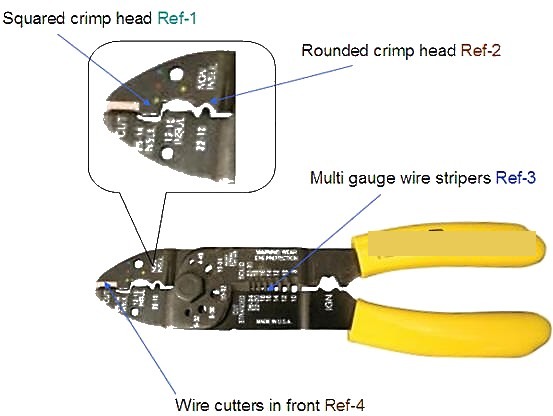 A cheap
crimper gives a cheap install. That simple. The crimper is the tool that
decides whether a connection holds for ten years or backs out in ten
months.
A cheap
crimper gives a cheap install. That simple. The crimper is the tool that
decides whether a connection holds for ten years or backs out in ten
months.
What to look for:
For heat-shrink butt connectors, use a crimper with the wider dies made for them so the insulation isn't cut.
Heat shrink needs a heat gun. A lighter works in a pinch and leaves soot on the connector and a burn on the carpet. Carry a small cordless heat gun or a butane one.
Used less than the crimper but required for the connections a crimp can't make: a wire too short to reach a terminal, a broken lead on a plug, a diode or resistor in line. A cordless butane iron heats fast and doesn't need an outlet. Use rosin-core electrical solder, never acid-core plumbing solder.
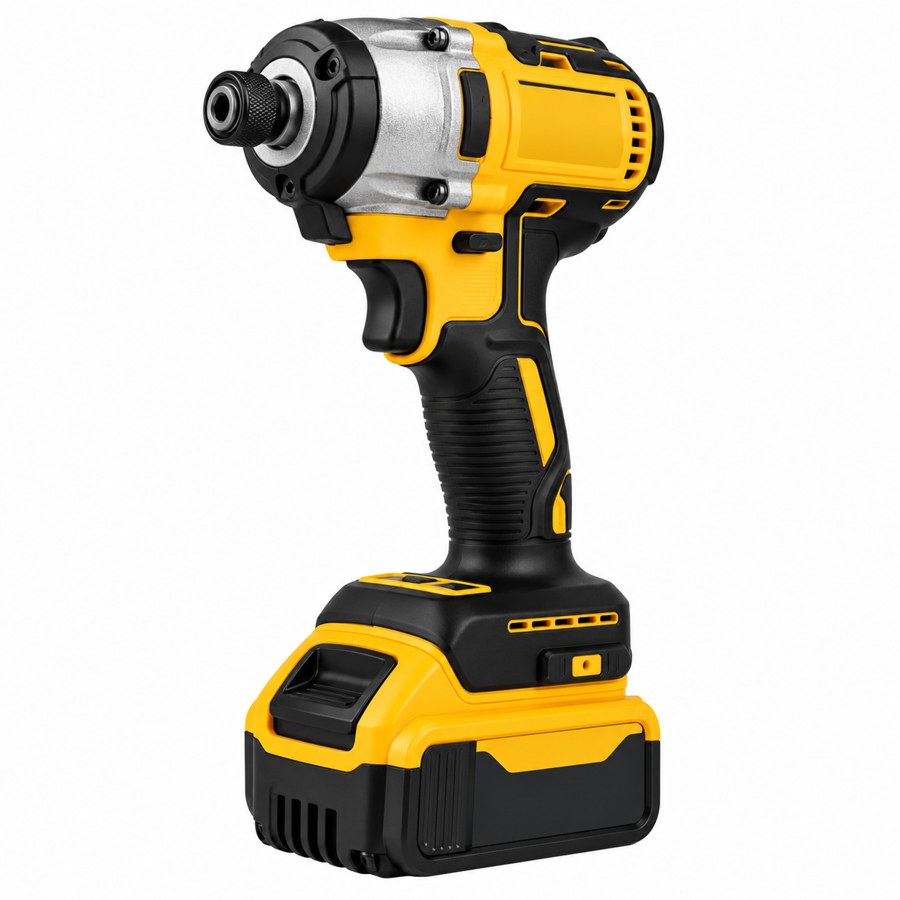 Cuts install
time roughly in half on fasteners alone, and you'll need the torque for
self-tapping screws into metal for a ground. The one risk: too much
torque strips or cracks dash plastic. Set the clutch low for interior
work and finish by hand where the fastener seats against plastic.
Cuts install
time roughly in half on fasteners alone, and you'll need the torque for
self-tapping screws into metal for a ground. The one risk: too much
torque strips or cracks dash plastic. Set the clutch low for interior
work and finish by hand where the fastener seats against plastic.
Carry more than you think you need:
A magnetic 1/4 inch bit holder makes bit changes instant. Buy a good one; cheap ones crack under torque or lose the magnet. A long extension reaches screws buried in steering column covers and kick panels. A flexible extension gets around corners, but keep it away from glass. It can whip out of your hand with enough force to crack a windshield.
For seat bolts, battery hold-downs, ground studs, and the Deutsch connector housings on heavy trucks. Deep sockets in 10mm and 13mm earn their space.
 A
set of nylon pry tools pops clips and trim without scratching or
marring. Metal screwdrivers gouge plastic and leave a mark the fleet
manager will see. The forked clip tool slides behind a panel clip and
levers it straight out so the clip doesn't break.
A
set of nylon pry tools pops clips and trim without scratching or
marring. Metal screwdrivers gouge plastic and leave a mark the fleet
manager will see. The forked clip tool slides behind a panel clip and
levers it straight out so the clip doesn't break.
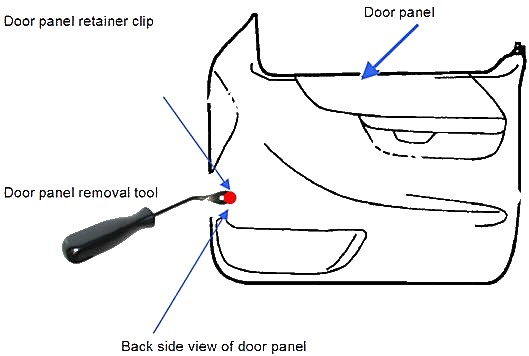 Not
every panel uses push clips. Many newer vehicles use hook-and-slide
retainers that pull straight up or slide sideways. When a panel won't
come, stop and look up the vehicle. Forcing it costs more than the time
it saves.
Not
every panel uses push clips. Many newer vehicles use hook-and-slide
retainers that pull straight up or slide sideways. When a panel won't
come, stop and look up the vehicle. Forcing it costs more than the time
it saves.
 Only for
vehicles with manual window cranks. A forked tool that pushes the
retaining clip off the crank. Still found on base-model fleet trucks and
vans.
Only for
vehicles with manual window cranks. A forked tool that pushes the
retaining clip off the crank. Still found on base-model fleet trucks and
vans.
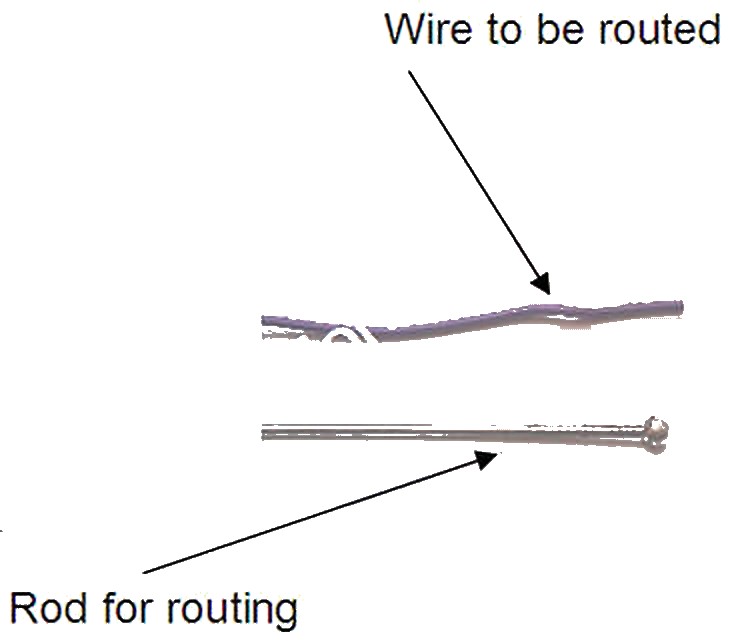 A stiff
fiberglass or spring-steel rod for pulling wire through the firewall,
behind the dash, under carpet, and along a headliner. A stiff coat
hanger works when nothing else is at hand.
A stiff
fiberglass or spring-steel rod for pulling wire through the firewall,
behind the dash, under carpet, and along a headliner. A stiff coat
hanger works when nothing else is at hand.
How to attach the wire to the rod:
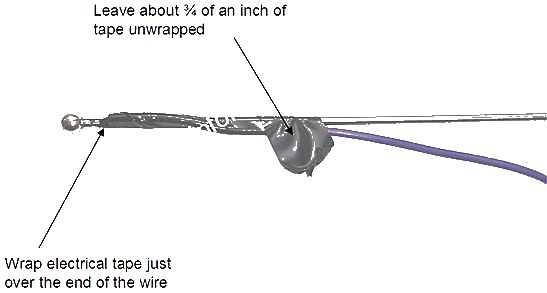
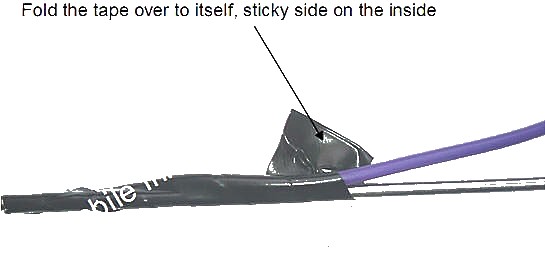 If a wire snags
on the way through, stop. Don't force it. Back it out, re-wrap, and try
again. A snagged wire that's yanked can strip the connector right off
the end, and some device connectors can't be replaced in the field.
If a wire snags
on the way through, stop. Don't force it. Back it out, re-wrap, and try
again. A snagged wire that's yanked can strip the connector right off
the end, and some device connectors can't be replaced in the field.
 A
spring-loaded claw on a flexible shaft. Reaches into a hole and grabs
the wire on the other side. Saves a lot of time at the firewall.
A
spring-loaded claw on a flexible shaft. Reaches into a hole and grabs
the wire on the other side. Saves a lot of time at the firewall.
For the screw that fell into the dash. You'll use it on every job.
Drilling is rare but sometimes required. Most holes are 1/8 inch (pilot and self-tappers) and 1/4 inch (grommet pass-throughs). Carry a small set of good bits.
One bit, many hole sizes, and it leaves a clean edge in both plastic and sheet metal. Pricey, and worth it.
Before drilling anything: look at the other side. Wiring, fuel lines, brake lines, and airbag components live behind panels. Put a grommet in every hole you drill.
For cutting or notching plastic to fit a bracket or pass a connector. Use a small bit, keep the chuck tight, and keep both hands on it. It spins fast enough to hurt you and the vehicle.
There's a big difference between cheap tape and the good stuff. Cheap tape dries out, loses its bond, and unwraps in the heat, and the connection under it fails months or years later. We use 3M Super 33+ or Super 88 and nothing else. It's the difference between a factory look and a callback.
Before leaving the shop for an install:
Rather have us do it? We install GPS, dash cams and telematics across Georgia, South Carolina, North Carolina, Tennessee, Virginia, Alabama, Florida and Mississippi, at your yard. Get a free quote or call/text 803-513-1009.
This information is provided as a guide. Verify every circuit with a digital multimeter before connecting to it. Proper installation is the responsibility of the installer.
We install GPS, dash cams and telematics across GA, SC, NC, TN, VA, AL, FL & MS — at your yard, on your schedule.