
A modern bus carries more electronics than most trucks: GPS, cameras inside and out, stop-arm cameras, card readers, Wi-Fi and more. We install bus systems for school districts and transit fleets across Georgia, South Carolina, North Carolina, Tennessee, Virginia, Alabama, Florida and Mississippi, scheduled around routes so buses are ready when the students and riders are.
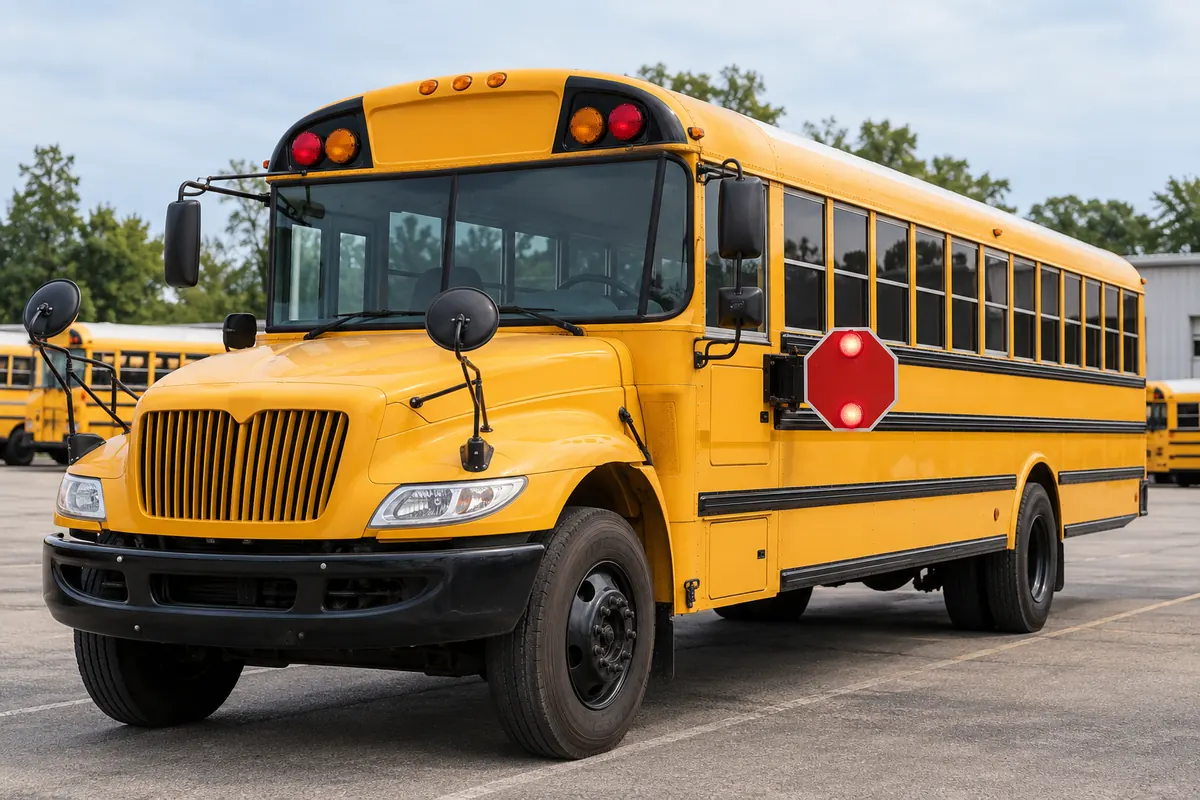
Most bus projects are several systems on the same vehicle. These are the ones we install, each with its own page:
A bus is a long vehicle with a lot of people in it. Cables run the full length of the body, behind panels and along the roof, and every one of them has to be secured and out of reach of passengers. Newer buses often use multiplexed electrical systems, where many circuits are controlled by modules rather than simple switched wires, so finding the right signal for a stop-arm camera or a door input takes metering and the bus maker's information, not a guess.
Then there is the schedule. A school bus runs mornings and afternoons, five days a week. Installs happen midday, evenings, weekends, school breaks and summer, and every bus has to be back in service and working for the next route.
We start with a list of the buses by make, model and year, and what goes on each one. Many districts install several systems at once, which saves pulling panels twice. From there we schedule in batches around routes and the district's calendar, test each system on the bus against the platform before it goes back out, and keep a record of what went on which bus.
If a district is changing providers, the old equipment comes out in the same visit, with its wiring removed rather than left spliced into the bus. Old splices left behind are how a bus ends up with electrical faults a year later.
School districts, private school and contractor bus fleets, and city and county transit agencies. We work with the systems the district or agency has already chosen, and we can work with its IT staff when the equipment has to join their network.
The bus list, the systems for each bus, the providers involved, and the windows when buses are available. Tell us where the buses park overnight and whether we can work in the lot. See all the types of GPS trackers and fleet systems we install for everything else we install.
Common questions
Yes. We schedule installs between routes, in the evenings, on weekends and during school breaks, and test each bus before it goes back out.
Yes, and it usually saves time, because panels only come off once. We plan GPS, cameras, RFID and Wi-Fi together when a district wants them.
Yes. We take out the old equipment and its wiring in the same visit so nothing is left spliced into the bus.
Yes. We install on city and county transit buses, including passenger counters, CAD/AVL and mobile data terminals.
We install across Georgia, South Carolina, North Carolina, Tennessee, Virginia, Alabama, Florida and Mississippi, at your yard, on your schedule. Call or text 803-513-1009.
Constant. Ignition. Ground.
API Signal