
You fix it, but you don't sell it. Most installers do clean work, pack up and leave, and the customer is left with a working tracker and no idea what else could solve the next problem in their fleet. Selling during an install doesn't mean pitching. It means noticing one real thing and saying one honest sentence about it.
We have worked on thousands of vehicles, and the same pattern shows up every time: a customer trusts the installer more on install day than at any other point in the relationship. You are inside their vehicle, they are watching you work, and you have just seen things about that vehicle that no salesperson ever sees. This page shows how to use that moment without turning into the person customers dread.
The customer asked you to be there. Nobody has to be talked into letting you open the dash. A cold sales call starts with resistance, but an install starts with permission. You are also the one holding the facts: you can see the condition of the vehicle, how the driver actually uses it, and what is already bolted on or hanging loose under the dash.
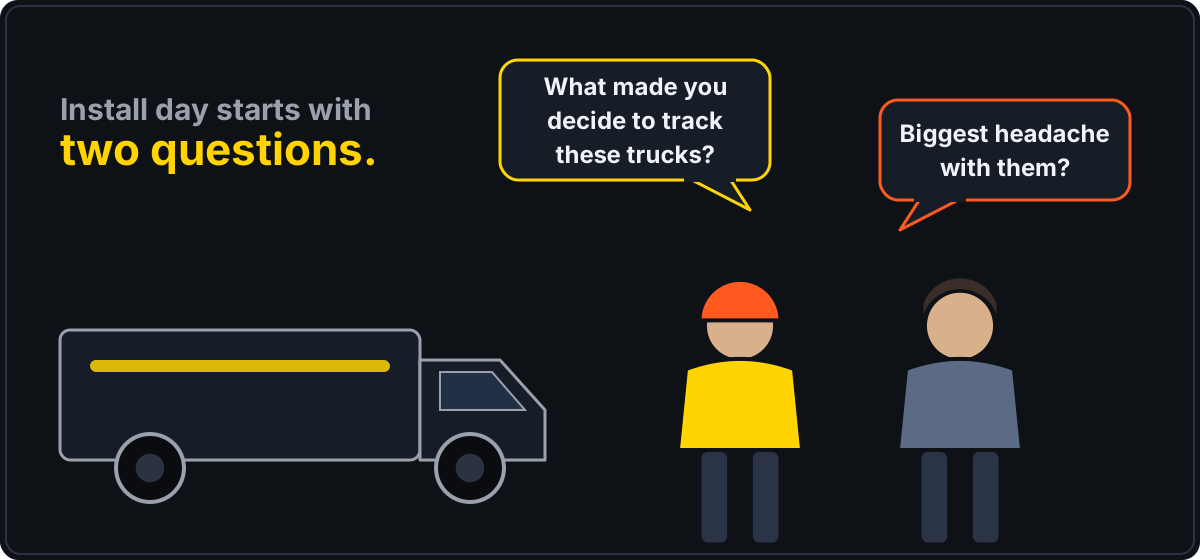
Before you touch a wire, spend two minutes with whoever is on site. Ask what made them decide to track these vehicles, and what has been the biggest headache with them so far. Then stop talking and listen.
Write the answers on your work order. You will use them at the end of the day.
While you work, say what you are doing and why, in the customer's language. "This wire stays hot so the tracker keeps reporting with the key off" is worth more to them than any brochure. People who understand the work tend to respect it, and they argue less about what it costs. It also shows you are careful, which is the reason they will listen when you suggest something later.
The vehicle usually shows you what the customer needs before they say it. Look for these:
Pick the one that matters most. One real observation lands. Five sounds like a sales script.
Keep the offer short and make it about the customer's problem rather than your product. These lines work because they are specific and easy to say no to:
Then let them answer. A yes becomes a quote request. A no costs you nothing, and you don't repeat the question on that visit.
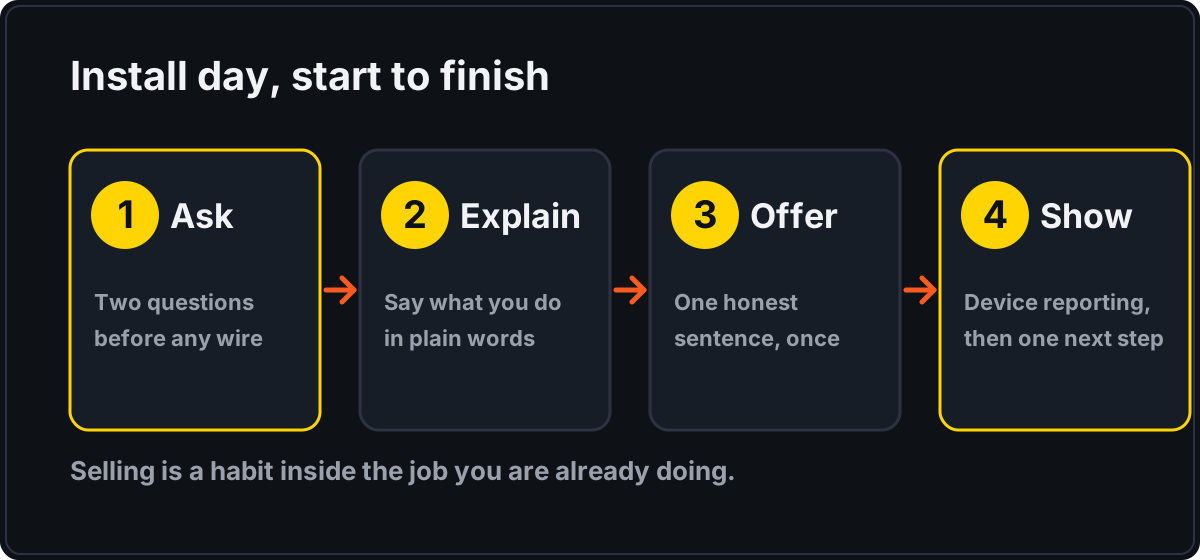
Show the customer the device reporting before you leave. That is the moment the install becomes something they can see. Then give them exactly one next step: a quote for the other vehicles, a camera price, or a date for the next batch. If you did good work, you can also ask for an honest review. Ask plainly, and never offer anything in exchange for it.
A lot of installers hold back because they think selling means stocking hardware and fighting over price. It doesn't. Your edge is the install, and nobody in the field beats a good installer at that. When a customer says yes to equipment, send the request to a reseller you trust, or point them to our install parts page, and keep doing what you do best. The product rides along with the install, and you stay the person the customer calls next time.
That is what Built by Installers, for Installers means to us: you already do the hard part well, and we want you to earn more from every job you are already on. If you want install work in your area to practice this on, join the installer network.
This is lesson 1 of 5 in our Sell While You Install short course. Next, lesson 2 shows how to notice what a customer needs before they ask, and the course page lists all five lessons in order.
Join the API Signal installer network and find install work near you. We install GPS, dash cams and telematics across GA, SC, NC, TN, VA, AL, FL and MS.