
The best thing you can offer a customer is something they would have asked for if they had known it existed. You don't need a sales pitch to find it. You need to look around while you work, and to know what you are looking at.
Most installers already notice a lot: the tangle of wiring behind the dash, the camera someone stuck up with tape, the truck in the next bay that still has no tracker. The gap between noticing and selling is one small habit. Before you start, decide that you will take one deliberate look at the vehicle and one at the yard, and write down what you see. This page gives you a short checklist for doing that, plus a way to turn each observation into a question instead of a pitch.
Look once when you arrive and once before you pack up. The first look is about the vehicle as it comes to you. The second is about what you learned while you had it apart. Anything you notice in between is a bonus, but two passes keep the habit small enough to stick. Put a line or two on the work order so you still have it when the customer asks what else you saw.
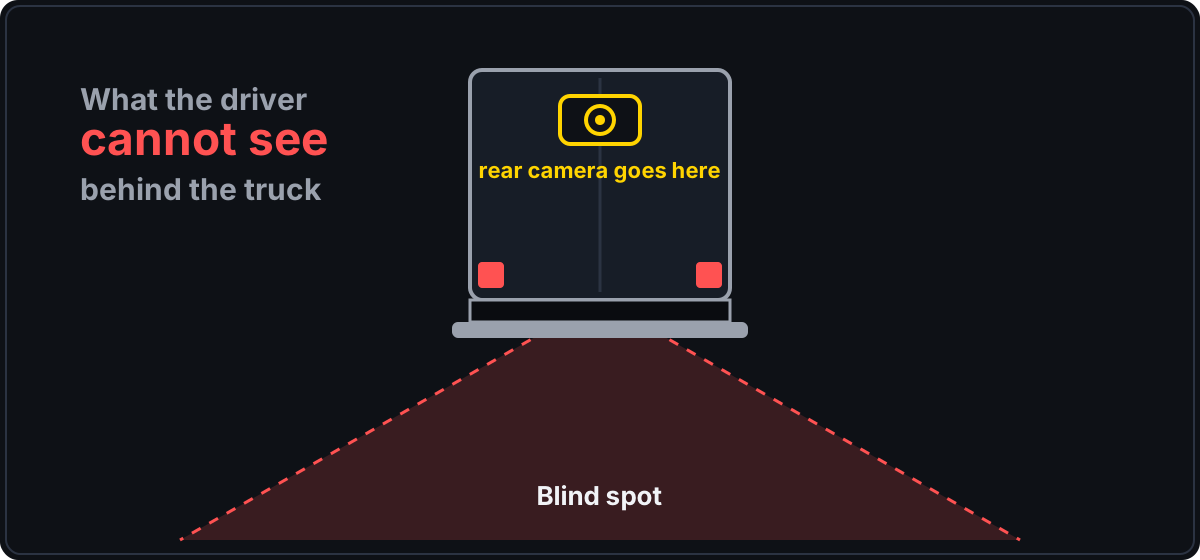
Walk around the vehicle before you open a door. Rear visibility is the big one. Box trucks, step vans, cutaway vans and anything pulling a trailer can have a rear view that is mostly the vehicle itself, and backing is when a lot of small, expensive hits happen. If there is no rear camera, that is worth a question. Check the trailer or towed equipment too. A tracked truck pulling an untracked trailer leaves a gap many customers have never thought about.
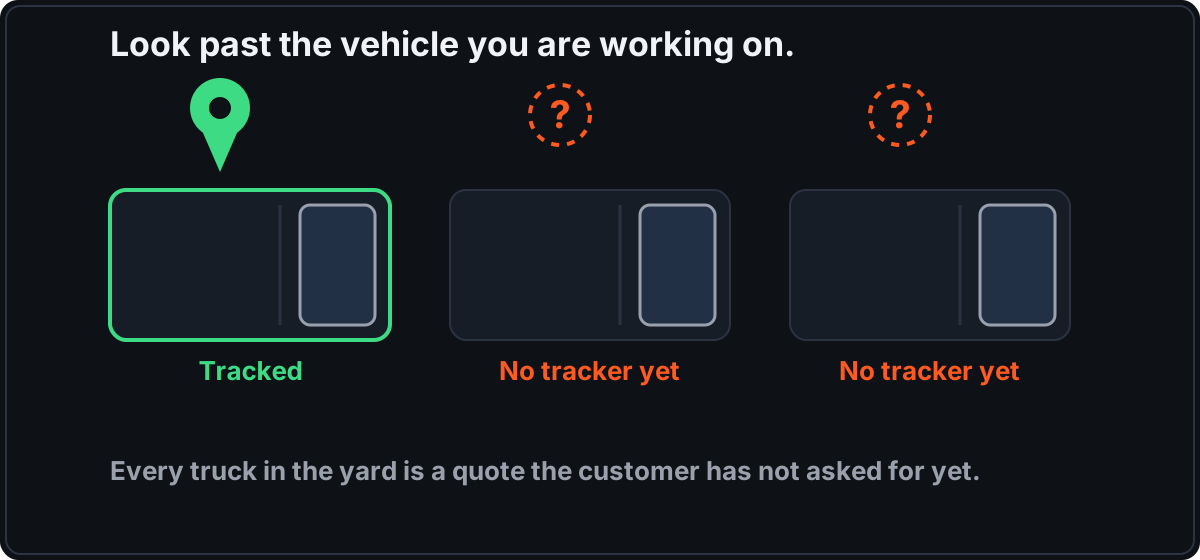
The most valuable look is often away from the vehicle. If you are on the customer's lot, count what you see: how many vehicles are parked there, how many match the one you are working on, and how many already carry a device. Customers usually start with the vehicles that hurt the most. The rest of the lot is a second visit waiting to happen.
Once you have noticed something, ask about the customer's own experience. A question keeps the conversation about them, and it tells you quickly whether the thing you noticed matters to them at all.
Listen to the answer before you say a word about a product. If the answer is no, move on. If it is "actually, last month...", you have your opening.
Not everything you notice is a sales opportunity. If you see damaged wiring, a failing battery connection or anything that looks unsafe, tell the customer plainly and keep it separate from any offer. A safety concern should never arrive wrapped in a pitch. Be honest about what you don't know, too. If you are not sure a certain camera or sensor works with that vehicle or platform, say you will check, and then check.
A note on the work order is a start, but it is not enough on its own. Send the customer a short message the same day that repeats what you noticed and what they told you, and ask whether they would like a quote. It ties your offer to their own words and gives them something simple to forward to whoever approves the spending.
This is lesson 2 of 5 in our Sell While You Install short course. If you missed it, lesson 1 covers the conversation on install day. Next, lesson 3 shows how to explain what you installed in words a customer remembers.
Join the API Signal installer network and find install work near you. We install GPS, dash cams and telematics across GA, SC, NC, TN, VA, AL, FL and MS.