
When a customer says the price is too high, they are rarely saying the work isn't worth it. More often they don't see what is included, they are comparing against something different, or the timing is wrong for their budget. If you know which one you are dealing with, you can answer calmly and keep the quality of the job where it belongs.
Price is the part of the conversation installers dislike most, so it is also the part where many give in too fast. A discount offered in the first ten seconds teaches the customer that the first number was never real. This page gives you a few ways to stay steady, stay friendly and protect the work.
Before you respond to the number, ask one question: "That's fair. What are you comparing it to?" The answer usually falls into one of four groups.
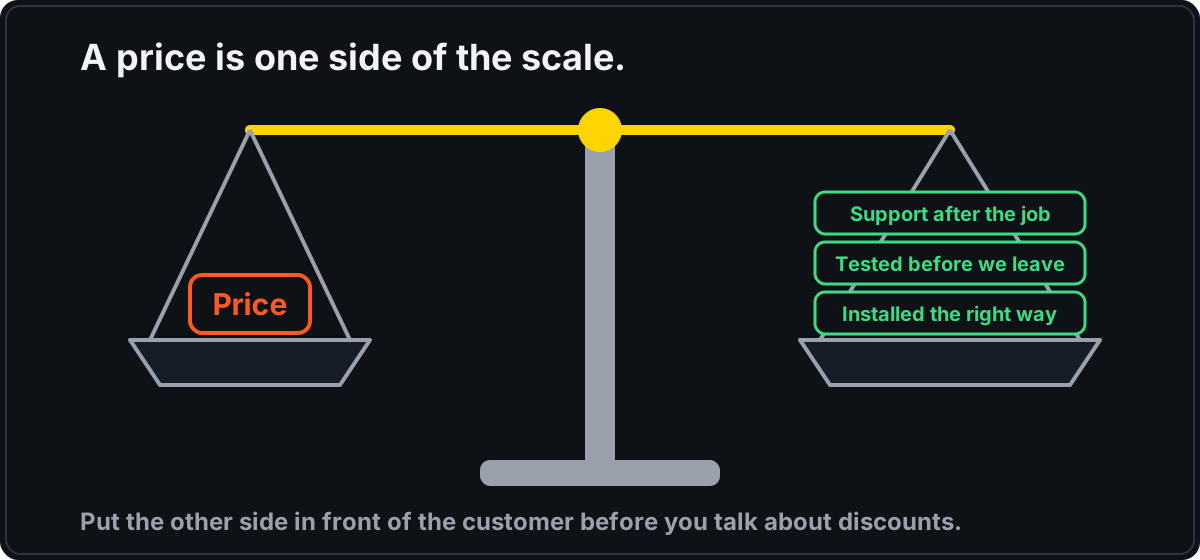
A price on its own is just a number. Before you talk about any change, walk the customer through what the number covers: the vehicle prepared properly, the device wired and secured the right way, a test before you leave, and someone to call afterward. You are not defending yourself. You are showing them what they get.
Whenever you can, put the install and the equipment on separate lines of the quote. Customers often assume the whole figure is labor, or that it is all hardware. Seeing the pieces apart helps them judge fairly and makes it easier to compare with other quotes on an equal footing.
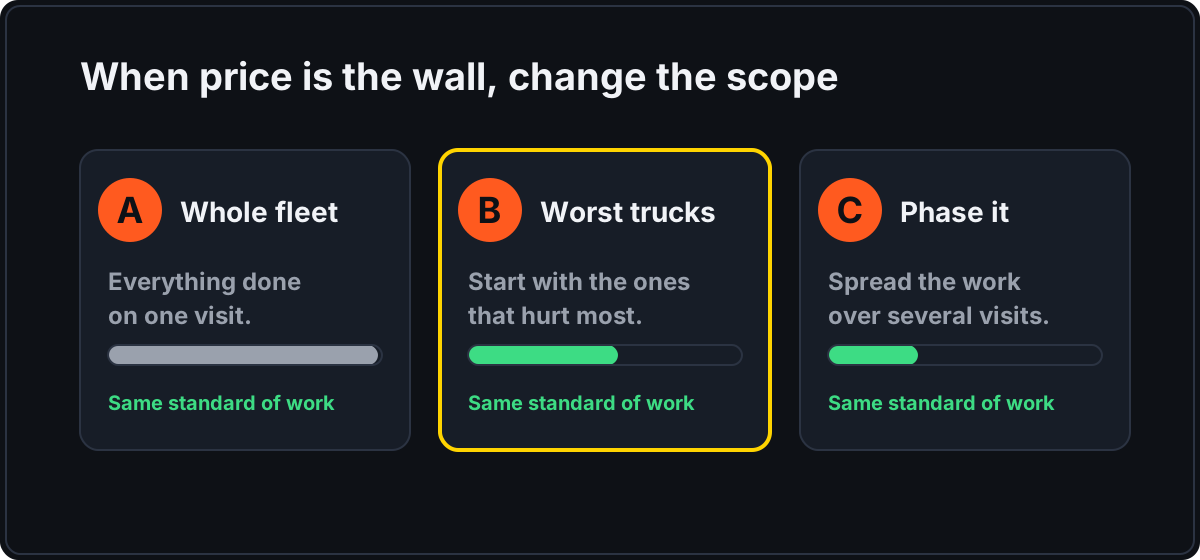
If the number is still a problem, change what you are doing instead of how well you are doing it. There are usually three honest options: do the whole fleet in one visit, start with the vehicles that cause the most trouble, or spread the work across several visits. Each keeps the same standard of work. Only the timing and the total change.
It is tempting to skip the test, use cheaper connectors or rush the wiring to hit a lower figure. Don't. Shortcuts show up later as callbacks, dropped connections and angry phone calls, and the customer will remember who did the work. A job that costs a bit more up front and works for years is the one that gets you referred.
If you work for a company, find out beforehand what you are allowed to offer and who can approve a change. If you set your own prices, decide your lowest number before the conversation starts, not during it. Either way, being clear with yourself keeps you from agreeing to something you will regret on the drive home.
Some jobs are not worth taking at the price the customer can afford, and some customers are not a good fit. Leaving on good terms costs you nothing. Thank them, tell them they are welcome to call again, and follow up in a few weeks. Customers who were treated fairly often come back when the budget changes.
This is lesson 4 of 5 in our Sell While You Install short course. The last lesson, lesson 5, shows how to turn a well-done job into referrals and honest reviews. To go back, lesson 3 covers explaining the work in plain words.
Join the API Signal installer network and find install work near you. We install GPS, dash cams and telematics across GA, SC, NC, TN, VA, AL, FL and MS.