
A fuel level sensor reports how much fuel is in the tank to your tracking platform, so you can see every fill-up, how fast fuel is used and any drop that happens while the truck is parked. We install fuel level sensors on trucks, equipment and generators across Georgia, South Carolina, North Carolina, Tennessee, Virginia, Alabama, Florida and Mississippi.
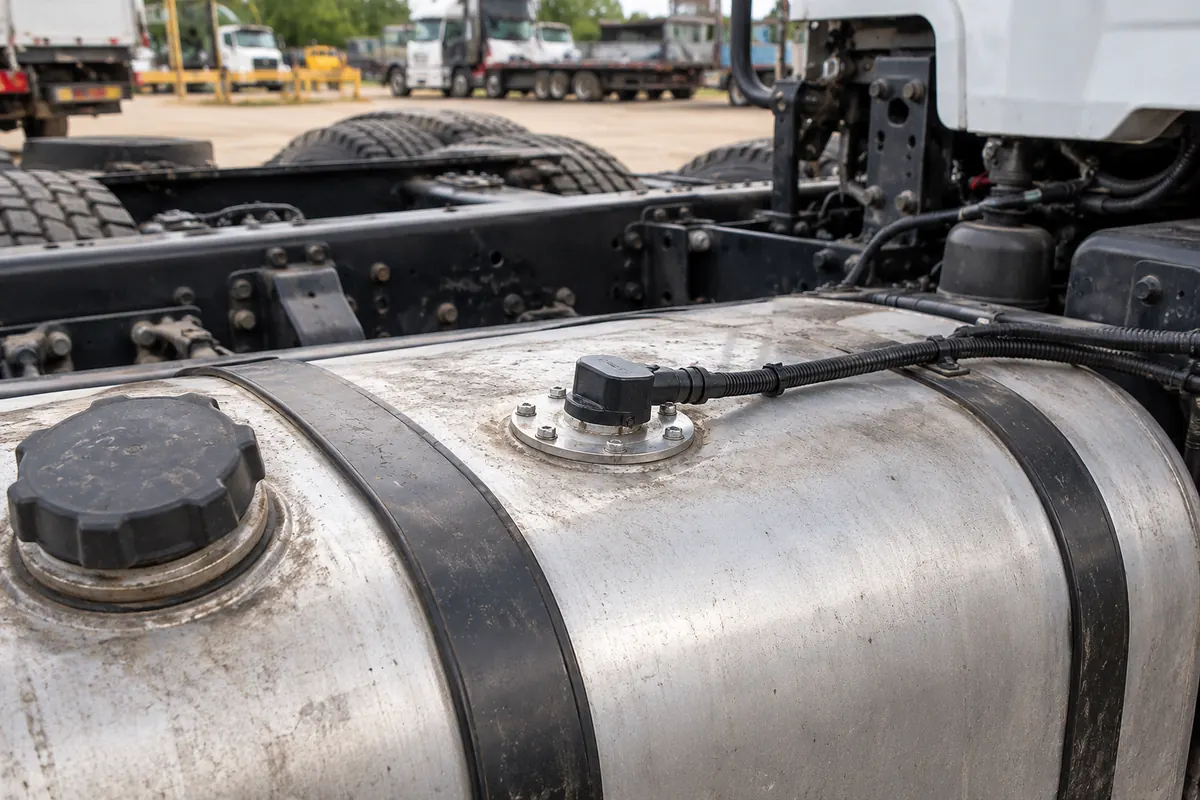
Fuel is one of the biggest costs a fleet has, and one of the hardest to watch. A fuel card shows what was bought. A fuel level sensor shows what actually went into the tank, how it was used and where it went. On the map and in reports that looks like:
Many trucks do. Most modern engines report a fuel level reading over the diagnostic port, and many telematics devices pick it up without any extra hardware. For basic reporting that is often enough, so it is the first thing to check.
The factory reading comes from a float in the tank that was built to drive a dash gauge, not to catch a few gallons going missing. Where fuel theft is the concern, or the vehicle or equipment doesn't report fuel at all, a dedicated sensor gives a steadier and finer reading.
Which one fits depends on the tank, the vehicle and what your tracking platform can read, so we confirm that before the install.
For a probe sensor, the tank is prepared, the hole is cut in the top, the probe is cut to length and sealed in place, and the cable is routed back to the telematics device along the frame, away from heat and moving parts. Working on a fuel tank is work that has to be done carefully and by the book, which is why we plan it as its own job, not something squeezed into a tracker install.
Then comes calibration. The sensor is set against known amounts of fuel so the platform reports gallons, not just a raw number. Saddle tanks, odd shaped tanks and trucks with two tanks each need their own calibration.
Yes. Generators, light towers and other equipment that sit on a job site for weeks are some of the easiest targets for fuel theft and the hardest to check. The same sensors report through an asset tracker or a telematics gateway on the equipment. For other tank types, such as water and hydraulic tanks on service and vacuum trucks, see our fleet sensor installation page, and see all the types of GPS trackers and fleet systems we install for the rest.
Common questions
Yes. A sudden drop in fuel level while the vehicle is parked shows up in the platform with the time and place, which is the usual sign of siphoning.
Not always. The factory reading is often enough for basic reports. A dedicated sensor gives a finer reading when theft is the concern.
A probe sensor does. Ultrasonic sensors mount outside the tank without drilling. We confirm which fits your tank before the job.
Most major platforms accept fuel sensor data, but not all read every sensor. We check your platform first.
We install across Georgia, South Carolina, North Carolina, Tennessee, Virginia, Alabama, Florida and Mississippi, at your yard, on your schedule. Call or text 803-513-1009.
Constant. Ignition. Ground.
API Signal